Ben Holmes (@BHolmesDev) header
Ben Holmes (@BHolmesDev) profile picture

The Whiteboard Guy and Factory Foreman @warpdotdev

Ordering more markers
Joined September 2018
Photo by Ben Holmes (@BHolmesDev)Photo by Ben Holmes (@BHolmesDev)Photo by Ben Holmes (@BHolmesDev)Photo by Ben Holmes (@BHolmesDev)Photo by Ben Holmes (@BHolmesDev)Photo by Ben Holmes (@BHolmesDev)Photo by Ben Holmes (@BHolmesDev)Photo by Ben Holmes (@BHolmesDev)Photo by Ben Holmes (@BHolmesDev)Photo by Ben Holmes (@BHolmesDev)
We built a skill for addressing the code review bottleneck: /merge-risk This assesses the risk of any PR across 5 criteria: alignment, impact, verification, rollback cost, and error monitoring. 1. Alignment: Does the code follow the issue and PR description, or are there drive-by fixes and unintended side effects? 2. Impact: What is the blast radius of the change, and is it touching sensitive code paths like auth, permissions, or billing? 3. Verification: Is the code well verified, both with test coverage and end-to-end computer use artifacts? 4. Rollback cost: How easily can this be rolled back, and what is the rollback procedure in the case of an incident? Think one-way vs. two-way doors. 5. Error detection: If something goes wrong in production, how much visibility will we have? Are errors swallowed, logged, or reported to an error monitoring service? You can run it as a PR comment automation, or make it a pre-PR check for the agent to derisk its own work before tagging in a human.
51
38
7
882
65,935
Ben Holmes retweeted
We’re hiring at @warpdotdev in NYC/SF! You’ll be working among some of the best engineers in the world
Which startups are actively hiring? (November thread) Reply with company name, career page, location
8
4
109
5,289
Introducing Warp Learn: A free, hands-on course on how to build a software factory of your own. Start with the fundamentals, write your first automation, and build up to a full software factory with specs, verification, and risk assessment.
7
11
2
173
8,307
I've been working on an agent-friendly markdown editor called Hubble.md for a while now. I just added Sign In with ChatGPT for a native chat panel, and it works quite well! I'm also exploring how voice can make live collaboration feel seamless. This demo auto-captures text selections as you speak, adding as in-line context so the agent knows what you're talking about. Sound on 🔊 Feels like the start of a much deeper exploration on letting agents see what you see. I want to try this with OpenAI's voice mode next...
13
48
4,247
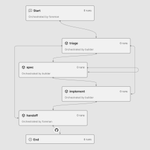
To create a software factory, you’ll need a shared setup that both agents and the engineering team have access to. That means moving away from local setups and towards some centralized system, either in the cloud or on your own compute. The system should also be configurable by humans and agents: the environment where the agent runs, the agent’s access levels, and the pipeline of steps an agent follows to produce work. That last part has a number of sub-components, including points that require human interaction. Here’s the software factory pipeline our team uses, with human gates called out at the "spec" and "pull request" stages.
14
9
1
174
7,313
Great course to bookmark over the holiday weekend if you've been wanting to build a software factory:
If you're ready to build a software factory, Warp Learn is a great starting point. It's a free, hands-on course building up from a backlog agent to a multi-stage factory with specs, verification, and risk assessment. Start learning: warp.dev/learn
3
36
6,820
Most comprehensive guide I've seen on how to set up a software factory from scratch. Worth a read:
How do you build a software factory your team actually wants to use? Let's do a deep dive: - How to encode the steps a factory should take, as code - Where to add gates for human judgment - What verification and risk assessment should look like
4
11
337
55,844
Ben Holmes retweeted
If you're setting up a software factory from scratch, read this:
How do you build a software factory your team actually wants to use? Let's do a deep dive: - How to encode the steps a factory should take, as code - Where to add gates for human judgment - What verification and risk assessment should look like
3
40
8,050
How do you build a software factory your team actually wants to use? Let's do a deep dive: - How to encode the steps a factory should take, as code - Where to add gates for human judgment - What verification and risk assessment should look like
69
57
10
729
90,364
Great deep dive on building a software factory yourself! We spent a long time building out the videos and example snippets for you to follow:
If you're ready to build a software factory, Warp Learn is a great starting point. It's a free, hands-on course building up from a backlog agent to a multi-stage factory with specs, verification, and risk assessment. Start learning: warp.dev/learn
2
1
44
5,746
If you're going to become a factory engineer, you'll need tools to measure and improve your system of coding agents. These are the main components our team uses: Spending metrics: Track what agents are costing you, both in terms of token usage and on-device compute. For these numbers to be useful, you’ll want to translate raw metrics to real value, like cost-per-PR and cycle time (aka initial prompt to release). LLM-as-a-judge scoring: It’s also worth tracking agent quality metrics that you can’t check statically. These may include architecture quality, the number of redundant / tautological tests, the efficiency of the agent's tool calls, or any other agent behavior you want to tune. These scores require another agent to monitor past agent conversations. Self-improvement: Once you’re tracking these metrics, make them accessible to agents. This allows agents to improve their own performance. For example, you may have a “redundant tests” scorer that performs poorly on 60% of conversations. A self-improvement agent would notice that trend and suggest improvements to your skills and code architecture to try and reduce those failures. Benchmarking: Test theories on how different factory configurations can improve cost and quality. Think like a researcher. The biggest lever is model selection, but you might experiment with reducing the number of stages in your factory, adding or removing subagents, etc. Treat these as hypotheses to test in an experiment, changing one variable in your factory to see how the metrics are affected.
34
8
4
200
13,700
All teams need a factory engineer now. These are the types of questions they might help answer: Our agent keeps adding test cases and code comments that it really shouldn’t. Could someone make the agent write better code? I keep copy/pasting these error monitor reports into an agent when I’m on call. Could we automate this? Our API bill skyrocketed after the latest model release. Could we be moving some workflows to cheaper models without sacrificing code quality? The larger your product becomes and the more agents you deploy to build it, the more valuable factory engineering becomes.
25
7
2
201
13,856
A starting point to factory-ize your agents: outline the steps an agent should take as markdown. 1. Triage whether this needs human input 2. Implement 3. Verify with /test-ui-e2e 4. Draft a PR From there, you can level up to a template, or even a state diagram. Here's ours:
If coding agents are becoming part of how your company builds software, their setup shouldn’t live in someone’s head, or even on an individual's laptop. Define the agents, their roles, their skills, their triggers, and their workflow in shared code. That makes the factory versionable. You can test a change on a branch. You can see what changed. If it makes things worse, you can roll it back. It also opens up a possibility of agentic self-improvement: an agent can identify a recurring failure and propose a change to the factory definition itself. The goal isn’t a perfect configuration on day one. It’s a system you can deliberately improve.
7
4
124
8,129
I benchmarked whether it was more or less effective and efficient to have different factory stages use their own subagents. On Warp's setup, the subagent approach was 40% more expensive compared to using a simpler approach, with no meaningful quality gain. This matches the online narrative on subagents, but still it was cool to prove with real data. Sharing a video around the results and what it looks like to do some factory engineering on our own setup.
35
6
2
103
7,729
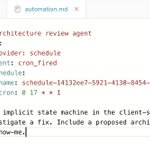
There's a whole set of "back office" agent automations that feels under-explored. - Weekly system architecture reviews - Daily UI verification to fix missed papercuts - Daily user feedback triage to implement 1 piece of low-hanging fruit
I built a skill called /ui-sweep for our mobile app to autonomously catch and fix UX papercuts It's set on a cron to run overnight to sweep my entire codebase testing for things like visual flashes, jank or lag, layout shifts, and edge cases with computer use in sandboxed macOS runners. When it catches something, it'll file Github issues with video and screenshot evidence (like the one attached) and reports back to Slack. Once the issue is filed, I have another trigger set up so that the factory picks it up and puts up a PR attached to the issue!
6
53
3,711
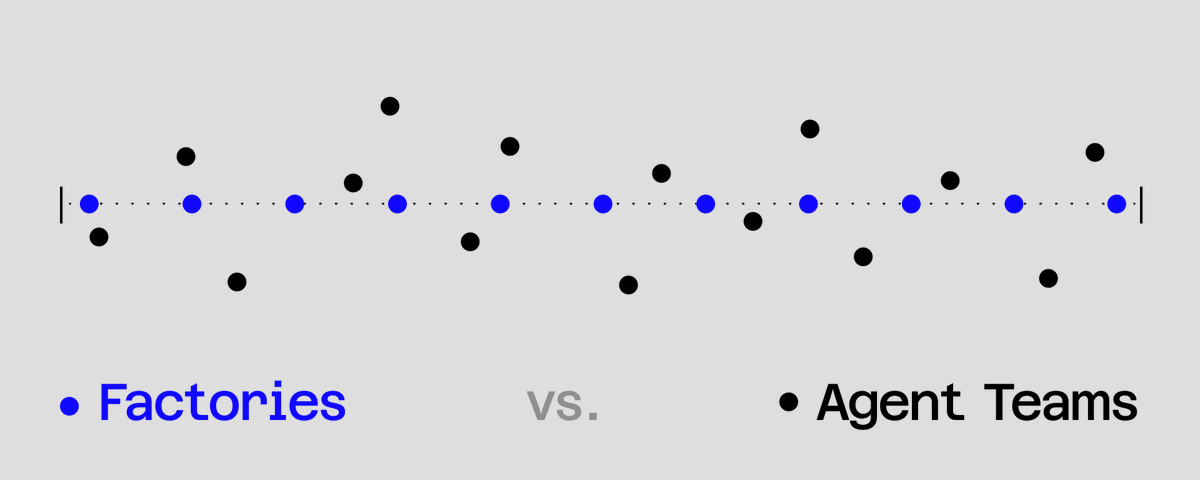
I think agent teams make sense for ambiguous and personal work. But to hand off to writing code on your team's codebase, you'll want to have a software factory. Main reason: to measure and improve code as a team, instead of every engineer having their own coding setup
After two years of rapid change in software development, we are again at a crossroads, with two competing visions for what the future might hold: - agent teams that we orchestrate - software factories that we build, measure, and improve
17
4
77
5,911
Many things are being called software factories right now: agent swarms, shared skills, collections of automations. Those can be useful. But they aren’t what I mean by a software factory. I mean a code-defined, closed-loop system for running coding agents, measuring how they perform, and improving them over time. As @dexhorthy says, declarative beats imperative, so define your system in code and then you can test, measure, and improve it over time.
21
3
67
6,321
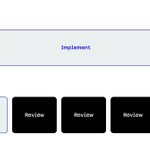
There are two types of engineering now: product engineering and factory engineering. Product engineering: building the product itself. This is the “planning” piece – deciding what needs to exist and how it should be architected. Factory engineering: building the system of agents that builds the product. This is what you might call a “software factory,” hence factory engineering. This optimizes the “implementation” and “review” pieces through automation. That doesn’t mean full automation, though; it means automating low-risk work and only requiring human attention when absolutely necessary.
53
37
11
611
34,386
Great skill. A bit prescriptive for my tastes, but I’ve started asking agents to “talk to me using the Socratic method” whenever I’m researching a new topic
4
2
94
13,377