

We bring researchers and donors together to cure brain diseases and disorders. #CureOneCureMany 🧵 americanbrainfoundation 🦋 https://www.teapawt.net/t.co/4JwATLGHsE
- Tweets4.1K
- Following523
- Followers7.6K
- Likes3.7K





ALT Your gift. Doubled. Every gift to the American Brain Foundation will be matched 1:1 through December 31st.

ALT ALS Research: Researchers at Emory University have found a way to detect ALS early on by analyzing ten different blood proteins. Eleanor Thomas, MD, PhD, a 2024 recipient of an American Brain Foundation Next Generation Research Grant, has co-authored a study on her work to identify ALS-specific proteins in blood samples.

ALT Researchers analyzed hundreds of proteins in blood samples from people with and without ALS and identified ten specific proteins that, when analyzed together, could lead to early ALS diagnosis with 98% accuracy.

ALT "ALS is a complex disease, and relying on a single biomarker doesn’t capture the full picture. ... By combining proteins associated with different aspects of the disease, including nerve-cell injury and inflammation, we were able to identify ALS with much greater accuracy.", said Eleanor Thomas, MD, PhD, Emory University School of Medicine.

ALT What's next? This insight could lead to the development of a practical ALS blood test. First however, additional research is needed to determine if these proteins can reliably differentiate ALS from other neurological or neuromuscular conditions with similar symptoms.


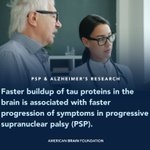
ALT PSP & Alzheimer's Research: Faster buildup of tau proteins in the brain is associated with faster progression of symptoms in progressive supranuclear palsy (PSP).

ALT Researchers from the National Institutes for Quantum Science and Technology (QST) used a highly sensitive PET tracer to evaluate accumulations of the protein at two timepoints. This provided imaging evidence that the rate of clinical decline increases with the rate of tau accumulation.

ALT "Until now, we could see tau pathology in the brains of people with PSP, but we did not know whether changes in tau over time truly reflected the progression of symptoms", said Hironobu Endo, Institute for Quantum Medical Science, QST.

ALT What's next? This study could provide more accurate prognoses for people with PSP, and it helps establish imaging biomarkers for evaluating the effectiveness of treatments for PSP, Alzheimer’s disease, and other conditions that involve tau accumulation.

ALT Alzheimer's Research: A bacterial compound in the digestive tract may be associated with greater Alzheimer’s risk.

ALT Imidazole propionate (ImP), produced by certain bacteria in the gut, can enter the bloodstream and increase accumulation of beta amyloid and tau proteins in the brain, causing Alzheimer’s. Biological research with mice was compared with nearly 1,200 human blood samples and cognitive tests, showing that more ImP in the blood correlated with faster cognitive decline.

ALT "ImP-producing bacteria are present in a large fraction of people, but they’re not very abundant in most people. ... But something we have learned over the years is that a microbe doesn’t have to be abundant to have an impact on the host" said Federico Rey, PhD, University of Wisconsin–Madison.

ALT What's next? If an inhibitor can be found to reduce ImP in the bloodstream the way statins can lower cholesterol, that might have potential to reduce Alzheimer’s risk and slow cognitive decline.

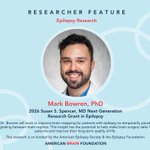
ALT Researcher Feature: Mark Bowren, PhD, 2026 Susan S. Spencer, MD Next Generation Research Grant in Epilepsy. Dr. Bowren will work to improve brain mapping for patients with epilepsy to temporarily pause signaling between brain regions. This insight has the potential to help make brain surgery safer for patients and improve thier long-term quality of life. This research is co-funded by the American Epilepsy Society & the Epilepsy Foundation.


ALT Cure One, Cure Many Researcher Feature: Alice Chen-Plotkin, MD. Dr. Chen-Plotkin received a 2026 Lewy body dementia award.

ALT Lewy body dementia (LBD) and Parkinson’s both develop because of the accumulation of alpha-synuclein (αSyn) proteins, which ultimately destroy brain cells related to memory, motor control, behavior, cognition, mood, sleep, and more. To develop accessible methods to diagnose LBD in living patients, researchers must first identify the key biological signatures that correspond to different molecular processes and disease traits.

ALT Dr. Chen-Plotkin’s team has developed two prototype tests for detecting elements of LBD. They will refine these two tests to develop usable blood biomarkers so that blood can be analyzed to diagnose Parkinson’s and LBD, differentiate them, and quantitatively determine the burden of disease based on measured levels of αSyn.

ALT We're grateful to everyone who has made this research possible. This $1 million award is funded in collaboration with the Alzheimer’s Association, the Michael J. Fox Foundation for Parkinson’s Research, and donors like you.


ALT Brain Tumor Research: A New Approach to Radiation May Help Prevent Brain Tumors From Returning. Placing a radiation-emitting implant in the cavity left over after removing a brain tumor has proven far more effective than traditional radiation treatments in terms of preventing tumors from returning.

ALT A phase 3 trial of GammaTile—a small radiation-emitting implant made from collagen that the body absorbs over time—proved 98.7% successful in preventing brain tumors from returning after removal. Patients lived nearly two years longer than those who had standard radiation.

ALT "Standard-of-care treatment for this disease has always focused on controlling the tumor in the brain so patients can get back to fighting their primary cancer, and [GammaTile] does that more effectively than existing treatment options", said Jeffrey S. Weinberg, MD, University of Texas.

ALT What's next? GammaTile is already FDA-cleared an in use at more than 150 U.S. cancer centers, but not every hospital offers it, and not everyone is a candidate. More procedures with the implant over time will help determine how effective GammaTile is and how long the benefit lasts.