

Redefining digital trust. AgentDNA encodes authenticity, governance, and context into every intelligent entity
Singapore
Joined November 2025
- Tweets342
- Following6
- Followers22
- Likes244


Pinned Tweet
AgentDNA is live now!
The first unified trust layer for multi agent systems, built on ultra scalable DAG of @RubixChain.
pypi.org/project/agent-dna/
Why AgentDNA?
1. Auth: Current static auth systems built for humans/static APIs dont work for Agents. AgentDNA introduces dynamic DIDs

AgentDNA retweeted

Agentic swarms are a big reality.
1. Current IAM schema that depends on passwords and MFA wont survive it. Harden and airgap credentials, API/SSH keys and secrets asap @ThinC_AUTH @EnsurityTech
2. Swarm detection is not easy, agentic IDs and interactions need to be graphed. @Agent_DNA

AgentDNA retweeted
35% breaches began with phishing or stolen credentials. Almost all breaches involve stolen credentials at some stage. OTPs, API keys, SSH keys... Passwords is the root problem. Harden and airgap your auth now with #XID, #AuthAMS and @ThinC_AUTH. @Agent_DNA

Some of the biggest openings in security have nothing to do with patching
How breaches began, per a 2026 report:
- 31% exploited a vulnerability
- 35% used phishing, stolen logins or impersonation scams
And nearly half now involve a vendor or partner, up 3x since 2024
Full piece from a16z's Asaf Ezra and Steph Zhang on six cybersecurity companies worth building: a16z.news/p/defense-in-depth…

AgentDNA retweeted
Also need to build a graph based system to be able to link all the agents that are acting in concert. @Agent_DNA
AgentDNA retweeted
Running Linux servers on the open web without hardened, airgapped credential and SSH key management is a big risk now. SSH keys hardened by a solution like @ThinC_AUTH and #XID would help to mititgate risks significantly. @EnsurityTech

What a disaster atlasum.net/blog/cve-2026-98…

AgentDNA retweeted
Real concern. Only way is to be able to real time link all the agents who need add the card to be able to block at run time. @Agent_DNA

AgentDNA retweeted
All bank admin accounts need to harden and air gap access immediately. Including for SSH and session keys. @EnsurityTech #XID and @ThinC_AUTH will help mitigate significantly.

‼️🇮🇳𝗖𝗘𝗥𝗧-𝗜𝗻 𝗪𝗮𝗿𝗻𝘀 𝗼𝗳 𝗘𝘀𝗰𝗮𝗹𝗮𝘁𝗶𝗻𝗴 𝗔𝗜-𝗗𝗿𝗶𝘃𝗲𝗻 𝗖𝘆𝗯𝗲𝗿𝗮𝘁𝘁𝗮𝗰𝗸𝘀 𝗯𝘆 𝗖𝗥𝗔𝗙𝗧𝗬 𝗙𝗔𝗟𝗖𝗢𝗡 𝗧𝗮𝗿𝗴𝗲𝘁𝗶𝗻𝗴 𝗜𝗻𝗱𝗶𝗮'𝘀 𝗙𝗶𝗻𝗮𝗻𝗰𝗶𝗮𝗹 𝗦𝗲𝗰𝘁𝗼𝗿
India’s CERT-In issued a critical advisory warning of an ongoing AI-assisted cyberattack campaign attributed to CRAFTY FALCON, targeting financial institutions, fintech firms, payment providers, and cryptocurrency exchanges. Using AI-powered tools such as ARTEX, PentAGI, Cairn, and CyberStrikeAI, the group exploits system vulnerabilities, compromises payment APIs, and steals funds and cryptocurrency.
Attackers reportedly conduct INR 1 test transactions before larger unauthorized transfers, often striking during weekends and holidays. Some organizations have been compromised again following incomplete remediation.
For more insights into the latest cyberattacks worldwide, visit HackRisk.io

AgentDNA retweeted
Agree. As a first but perhaps the most importent step, banks must harden and airgap access for their workforce as well as users with a 360° passwordless aith that protects SSH, API and session keys too. @ftlive @FT @EnsurityTech @ThinC_AUTH #XID

AI cyber breach of a bank is a matter of when, not if ft.trib.al/GdQDr03 | opinion

AgentDNA retweeted
Several banks around the world reporting failures in access to inter bank transfer systems leading to customer account drainage. Banks must harden and airgap their core banking and inter bank transfer access systems asap. @EnsurityTech @ThinC_AUTH #XID #AuthAMS

【ついにサイバー攻撃が銀行本体にも及んだ!】
アプリは開いていない
認証の通知も来ていない
なのに、口座から10万台湾ドル(約50万円)が消えた
11月3日、台湾の大手「永豐銀行」で418人・427件、総額4176万台湾ドル(約2億円)が一斉に抜き取られました
▼11月3日(台湾時間)
9時台 不正送金が始まる
9:29 「勝手に引き出された」と苦情が入り始める
10:30 送金先の富邦銀行口座の凍結を依頼
12:00 銀行が「重大事件」と判断
12:50 金融当局に通報
13:47 原因を特定し新アプリを停止、攻撃が止まる
同日中 被害額を全額返金
▼11月4日
銀行が「外部ハッカーによる攻撃」と正式に認め、会長と社長が謝罪
台北地検が捜査に着手
■お名前.comの件とは"質"がちがう
先月のお名前.com デスクトップクラウドの事件
あれはFX会社や証券会社そのものではなく、取引ツールを動かす"外側"のサーバーが破られ、そこに保存されていたログイン情報で口座が操られたものでした
いわば外部連携の入口が狙われた話で、金融機関そのものが侵入されたわけではありません
今回はちがいます
✅狙われたのは銀行自身のネットバンキング取引システム
被害者はパスワードを盗まれたわけでも、怪しいリンクを踏んだわけでもない
銀行の"玄関"そのものがこじ開けられ、本人のログインも認証もないまま送金が実行されたのです
■手口
銀行によると、新システムを作った外部ベンダーのプログラムの欠陥と設定を突かれ、ハッカーはIDを総当たり的に試して有効な口座を探し当てた
被害者が全員、身分証番号が「P」(雲林県)で始まる人だったのはそのためで、個人情報の流出は今のところ確認されていないとしています
■いちばん不気味な点
送金先は、本人も何も知らなかった70代の元教師の口座
お金は引き出されていません
最初は少額から試し、やがて1口座10万元に"精度"を上げていった形跡もあり、警察は「技術を見せつけるのが目的では」とみています
✅裏を返せば、その気になれば本当に奪えたということです
■他人事ではない
銀行アプリや取引システムを外部ベンダーが作るのは日本でも珍しくありません
「銀行だから安全」はもう通用しない
私見では(GMOもですが)PRSサイオプのショーと考えます
おそらく規制強化を目的とするものでしょうね
AgentDNA retweeted
Customers controlling access to their accounts with hardend and air gapped access with @ThinC_AUTH and #XID should be allowed to let their agents access banking systems. @Agent_DNA

.@WellsFargo appears to be the first bank to start requiring customers to prove they've turned off their #AIagents' access to their #bankaccounts, or else be liable for any rogue AI agent activity. More here: sbrew.link/DSskXedd

AgentDNA retweeted

Cloud desktops used by #GMOInternet by many Japanese FX trading houses were breached and users passwords compromised. Switch from #passwords to secure biometric fido access urgently. @EnsurityTech AuthAMS with @ThinC_AUTH will help orgs to avoid losses. #Japan
AgentDNA retweeted
More than a quarter of people doing shopping with #Muse - that seems big for a month old app. If this share sustains with larger penetration to be seen, but agentic commerce appears a real deal. Need to fix agentic security though at first!
AgentDNA retweeted
Agree, banks have a big fraud and liability issue to address. Some big unanswered questions:
1. If the user denies the agent action, how does bank prove the user did give consent.
2. How does the bank prove user gave the credential willingly and not misused by the agent.
3. Is the agent a legitimate rep of the user or a hacker who stole credentials
4. Is the intended action approved by the user even if credential shared. How is the intent verified dynamically?
5. Agents by design would like to have the broadest intent (even users may be ok), but how does bank enforce explicit auth from user when it wants.
6. Did the agent create sub agents to act ?
7. Is the agent prompted to do a malicious activity.
Even as banks are trying to deal with agentic actions, AI is making passwords and biometrics themselves highly risky. We need to ensure the hardened user root of trust (eliminate passwords) to pass onto agents and enforce continuous auth. And treat agentic actions as not simple key or x406 certain based auth, but derived from continuous DNA. KYA and KYH will need to replace KYC.
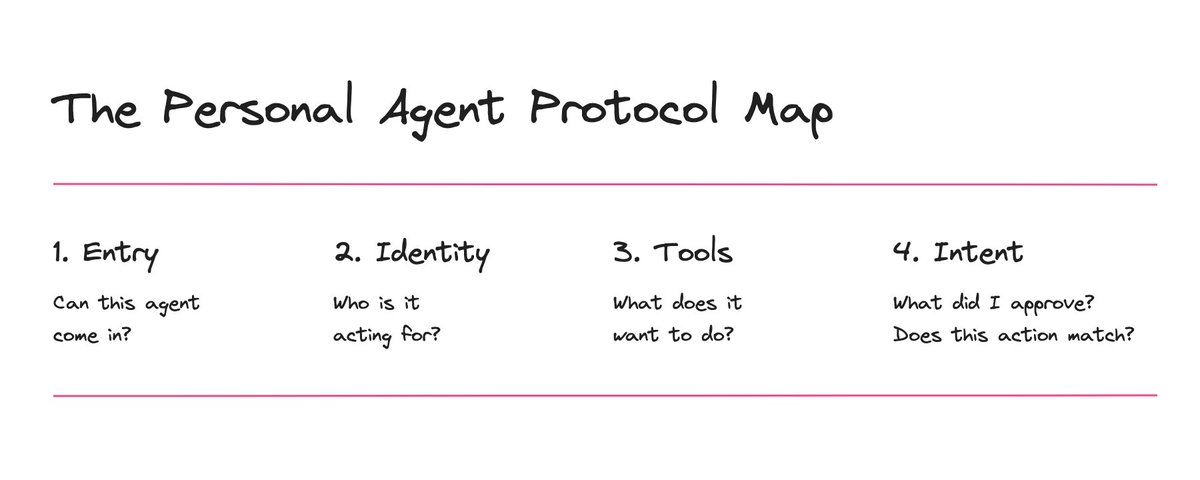
AgentDNA retweeted
Anecdotal reports of similar losses at multiple banks in the recent weeks - does not look isolated to Central Bank. This theft seems to be breach of core banking access controls at the bank end. Banks must immediately assess their core banking access controls and shift away from password/OTP/api key based legacy systems. @EnsurityTech

India news: Central Bank of India lost ₹13.96 crore in 187 unauthorised RTGS transfers to 36 banks from Oct 15 to 17, police say. Unknown people allegedly got into the RBI-owned IFTAS Central SFMS server through the bank's core banking system.
The money was customers' funds. The bank first called it a "technical glitch". RBI, CERT-In and NCIIPC have been told and Maharashtra cyber police have a case.
If you bank there, check your RTGS debits from those dates.
hindustantimes.com/cities/mu…

AgentDNA retweeted
Agents appearing to act beyond users instructions is not itself a breach. It is just that tools dont exist to bind agents to users for limited scope. We have been building control mechanisms with @Agent_DNA. However, since agents like #Muse have access to API keys and passwords of users, hackers can steal them to attack banks. This is a real and big risk.


AgentDNA retweeted
Agents are currently using users credentials and API keys to access. This must stop. Agents cant use users credentials, they must have own ID and get scoped auth permissions from users. @Agent_DNA Chain of Custody Auth ensures agents cant have sweeping permissions.


AgentDNA retweeted
It is 2026 and we are still seeing breaches due to credential theft and passwords, with wide blast surface. Two choices: harden/airgap creds. Or decentralize creds. Little time left to make this transition.
@EnsurityTech @ThinC_AUTH #AuthAMS @Agent_DNA

ConnectWise Suspends Cloud Services in Response to Cyberattack securityweek.com/connectwise…

AgentDNA retweeted

official now: anthropic is preparing the release of their new model(s). Via The Information
Anthropic is reportedly preparing a model that, when asked to fix one bug, can identify the broader class of problems behind it and ask whether it should address those too. That account comes from one anonymous tester; the model family and release date remain unclear.
But looks like it will be a significant jump compared to their released models.

AgentDNA retweeted

BREAKING: AI Agents attacked critical Infrastructure of various India-based entities.
As AI Agents take over the internet, the necessity of putting effective guardrails in front of mission critical resources is paramount.
This is what we have been building with @Agent_DNA
Learn more: agentdna.io
Read the news: indianexpress.com/article/ex…

AgentDNA retweeted
Lets quickly build better security systems for humans and agents while we can do
@EnsurityTech @Agent_DNA

Scoop: Top executives at Anthropic, OpenAI and other AI companies are privately gaming out scenarios for a public and political revolt after a catastrophic AI event…They assume one in ‘27…
axios.com/2026/10/09/ai-comp…

AgentDNA retweeted
We have not sorted security gaps in the pre agent era fully yet, and now with agents, its a fully different thing altogether. Build agenetic security architecture from first principles @Agent_DNA
