

Systems Biology Lab @ 🔬Weizmann Institute of Science. # Understanding design principles of biological circuits.
Israel
Joined September 2017
- Tweets418
- Following896
- Followers2.6K
- Likes774




Thanks, Anshul. Thank you for discussing this with us and for making the models and the data publicly available. It is really appreciated. We are looking forward to hearing more and comparing our approaches.

Great to see instant use of our resource. This is the advantage of fast open releases of data and model resources. But I disagree with the conclusions from this analysis. We have been working on a detailed analysis of these data & come to a very different conclusion. 1/
1
7
1,239
How transcription factors (TFs) selectively recognize their genomic targets among numerous sites containing similar DNA motifs remains an open question. (1/n)
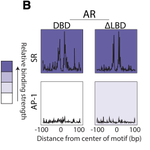
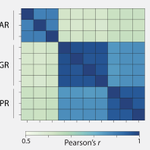
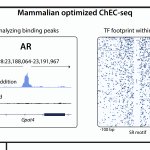
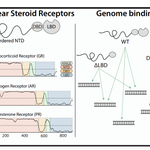
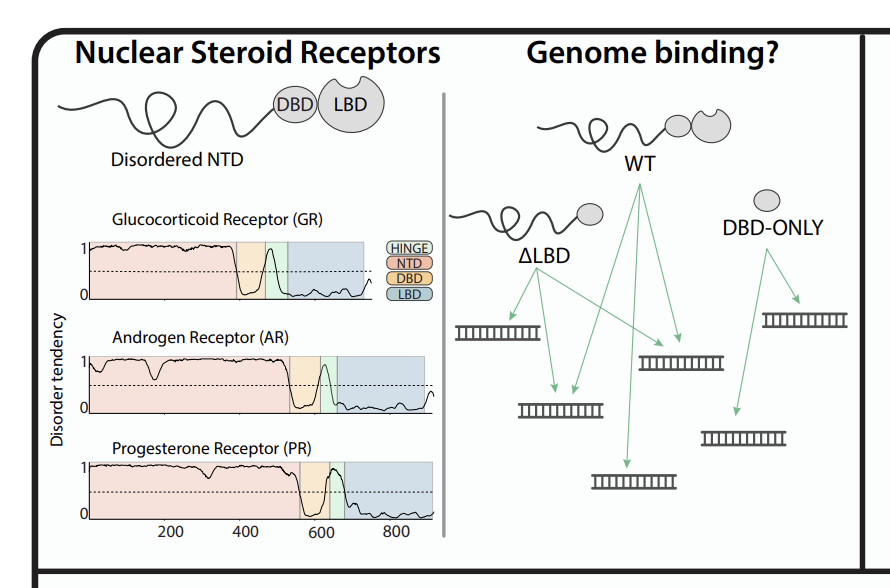
(1/7) How do steroid receptors identify their target sites within the mammalian genome, despite the abundance of similar DNA motifs? We tackled this question by adapting ChEC-seq for mammalian tissue culture, enabling footprint-resolution mapping of transcription factor binding.

The paradigm says that coactivators are passively recruited to targets by transcription factors (TFs). But is that the whole story?
We explore the Mediator subunit Med15 to ask: Do its activator-binding domains (ABDs) alone drive UAS targeting?
biorxiv.org/content/10.64898…

How do transcription factors (TFs) that recognize the same DNA motif end up binding different places in the genome? 🧬
We're excited to show you how we tackle this question in our new bioRxiv pre-print!
doi.org/10.64898/2026.04.27.…
(1/8) Still wondering how low complexity intrinsically disordered regions (IDRs) guide transcription factors (TFs) to bind in genomes? Previous studies on sequence grammars; our new @MolCell paper takes the next step: de novo design of functional TF IDRs!
cell.com/molecular-cell/full…
A recent study reported a surprisingly low overlap between TF binding and regulatory targets. But this may depend on how binding sites are defined, as we report; Should one include all statistically significant peaks or focus on top-bound targets?
biorxiv.org/content/10.1101/…


Now out on @NAR_Open
academic.oup.com/nar/advance…


New 📄 by @tamar_jana + @SagieBr
We introduce MPBA, a novel method allowing parallel measurement of TF binding to thousands of designed DNA sequences within cells. We use it to answer a fundamental question - how prevalent is TF binding cooperativity. 1/9 tinyurl.com/2s4bbu65
(1/13) Exciting findings from our latest study, now published in @NAR_Open as a breakthrough article! academic.oup.com/nar/advance…

(2/13) @MindelVladimir and @SagieBr challenge the classical model of coactivator recruitment, showing that Med15, a key coactivator, can independently select its target sites breaking the long-held belief that coactivators are passively recruited by specific transcription factors
1
1
426
New 📄 by @tamar_jana + @SagieBr
We introduce MPBA, a novel method allowing parallel measurement of TF binding to thousands of designed DNA sequences within cells. We use it to answer a fundamental question - how prevalent is TF binding cooperativity. 1/9 tinyurl.com/2s4bbu65

🎉Happy to share our new paper! Intrinsically disordered regions (IDRs) in transcription factors (TFs) encode for complex binding patterns using diverse sequence grammars and interaction types. (1/9)
academic.oup.com/nar/advance…
@bhurieva @Divya_KKumar guided by @FJonas15 @NaamaBarkai
Exciting news! Our latest paper "Ordered and disordered regions of the Origin Recognition Complex direct differential in vivo binding at distinct motif sequences", led by Michal Chappleboim is now out in @NAR_Open. Check out the highlights below.
doi.org/10.1093/nar/gkae249

Check out our new paper: “Intrinsically disordered regions of the Msn2 transcription factor encode multiple functions using interwoven sequence grammars” published @NAR_Open. The work of @MindelVladimir and @SagieBr. academic.oup.com/nar/advance…


Amazing work @voichek, we're proud of you
This post is from an account that no longer exists. Learn more
🔥Hot from the oven🔥! Our new paper led by @OffirLupo on the role of TF cooperativity in binding specificity is now out in @CellSystemsCP
see🧵below for highlights (1/10)
@WeizmannScience
authors.elsevier.com/c/1hVy6…
TF cooperativity is a prevailing model for TF binding specificity, and a possible explanation for the intriguing role of regions outside the DBD in guiding TF binding preferences (see @SagieBr and @tamar_jana previous work tinyurl.com/sbzvsstm) (2/10)
1
1
294
New @NAR paper by @FJonas15 & Gilad defining main activities of histone chaperones & chromatin remodelers in nucleosome exchange 🐣
Do they mainly incorporate nucleosomes displaced by transcription? Increase exchange in promoters to enable TF binding?
doi.org/10.1093/nar/gkad615

Neither! The main activity is to retain H3-H4 tetramers in place during RNA pol passage.
We conditionally deplete nearly every chaperone/remodeler & measure the immediate consequence on histone exchange and occupancy using our histone exchange timers⏲️
nature.com/articles/s41587-0…
1
1
62
🥳🎉We are delighted to share our new paper that deciphers the complementary strategies by DNA binding domains (DBDs) and IDRs in directing transcription factor (TF) target specificity. 🎉🥳
cell.com/molecular-cell/full…
@Divya_KKumar
@FJonas15
@BarkaiNaama

Together with Marko Dunjic, @ymayshar and Yonatan Stelzer, we have implemented the genetically encoded histone exchange timers⏲️into mESCs🐁!!
We uncover specific histone variant exchange patterns genome-wide in mice 🐭 !
biorxiv.org/content/10.1101/…


New preprint monitoring histone exchange from the lab🎉🎉👏👏!!!Great collaboration with @BarkaiLab Congratulations Marko and all !! 🎊🎊| Histone exchange sensors reveal variant specific dynamics in mouse embryonic stem cells | bioRxiv biorxiv.org/content/10.1101/…
Inspiring review by @maxvstaller dealing with transcription factor specificity

My review went live today. I argue that transcription factors find their binding sites using both protein-protein interactions and DNA binding interactions. It's halfway between a review and a perspective. academic.oup.com/genetics/ad…
9
