

Bashor Lab in Houston, Texas | Mammalian Synthetic Biology et al.
Houston, TX
Joined December 2022
- Tweets244
- Following818
- Followers1K
- Likes844




Pinned Tweet
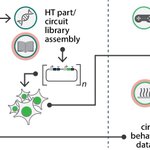
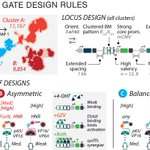
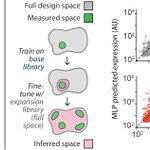
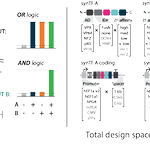
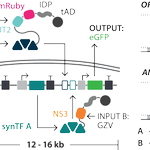
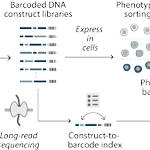
We are pleased to share a paper from our lab out in this week’s issue of @Nature, where we show that HT + ML can dramatically speed up the synbio DBTL cycles, profiling gene circuit design spaces at unprecedented scale: nature.com/articles/s41586-0… (1/16)

Bashor Lab retweeted

In 2006, I wrote a short essay called "The End of Insight".
We're not quite there yet, but the stunning proof of the Riemann hypothesis hints at what might lie ahead.
For more on this, see johnhorgan.org/cross-check/t…

Bashor Lab retweeted

Excited to share our latest preprint with @JShendure, led by Aidan Keith. We wanted to know which, where and how TFs open chromatin when they are newly expressed in a given cell state, using CRISPRa and single cell multiome. 1/7 biorxiv.org/content/10.64898…

Bashor Lab retweeted

Check out our new Review on "Modeling gene regulation across cellular contexts with deep learning"
This Review covers the next stage of seq2fun evolution:
cell state models + seq2fun -> context-aware seq2fun models
It's open access on Genomics x AI Blog!
genomicsxai.github.io/blogs/…

Bashor Lab retweeted

Rice Bioengineering's Sangyeon Cho has helped developed a major breakthrough: one of the world’s smallest lasers, opening new possibilities for tracking biological structures far smaller than individual cells. ow.ly/tZ295107wcX

Bashor Lab retweeted

Our preprint is out on bioRxiv! We measured monomeric protein yield in E. coli at scale and built predictors to help guide protein design. Huge thanks to all my co-authors and collaborators! 1/6
biorxiv.org/content/10.64898…

Bashor Lab retweeted

Excited to share the second piece of my postdoctoral work with @JShendure. We solved the last remaining "tangle" -- the nucleolar organizer region (NOR) -- in the telomere-to-telomere assembly of the human genome with gene editing. (1/n)
biorxiv.org/content/10.64898…

Bashor Lab retweeted

Efficiently finding a desired set of mutations to push protein toward a desired property in the sea of 20^L possible mutations is one of the holy grails of molecular engineering. Introducing ProTEUS: a mutation-resolved World Model for closed-loop protein evolution with SOTA performance on various protein engineering tasks and a new axis of scaling.
Bashor Lab retweeted

What can we learn from all cytokines in the human genome? For most, we have limited info on what they do and when to target them
Meet TAPAS & EPICURE: tools to synthesize all human cytokines➡️scRNA data of primary human immune responses➡️🖥️methods to use them in your work (1/n)

Bashor Lab retweeted
Generative protein design is transforming macromolecular drugs, but de novo designed therapeutics could still be hindered by immunogenicity in the clinics. Excited to introduce MESSI, a discrete diffusion model for generative protein deimmunization.

Bashor Lab retweeted

1/ Even bacterial communities can get caught in a bad romance they just can't get over.
A brief encounter with antibiotics can leave a lasting ecological memory of resistance plasmids persisting for weeks after the drug is gone. @DukeBiodesign @DukeUBME
nature.com/articles/s41467-0…

Bashor Lab retweeted
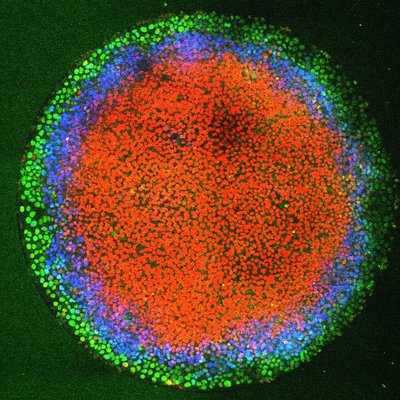
Happy to share our latest preprint in collaboration with @BashorLab. Great work by first author Alena Streletskaia. biorxiv.org/content/10.64898…

ALT Circular stem cell colonies with BMP activated on one side. Brachury and N-CAD positive cells are seen migrating from the light-induced source.
Bashor Lab retweeted

Highly multiplexed mammalian metabolic engineering with a shotgun approach - @sudpinglay @JefBoeke nature.com/articles/s41587-0…


Beautiful work from Ron Weiss and team - a significant step forward for ML-driven design of synthetic circuits. biorxiv.org/content/10.64898…

Bashor Lab retweeted

AI in biology may have a data problem before it has a model problem.
It’s easy to use AI to make drug discovery faster & more efficient. The much harder challenge is discovering impactful medicines humans would never have found.
AI models are only as useful as the data they learn from, and it’s especially hard in biotech. The biggest and most valuable goals in AI in biotech are to cure diseases we haven’t been able to cure and design therapeutics capable of doing things that haven’t been possible before. By definition, these goals aren’t represented in our training data.
For our second essay at Waypoint Bio, we wrote about the data we think we’ll need to build out-of-distribution medicines: waypointbio.com/writings

Bashor Lab retweeted

Cell–cell interactions are key to all biological processes, but there hasn't been a good way to perform inter-cellular screens for genetic regulators of these interactions in vivo.
We developed match-seq (multiplexed associative tagging of cell interaction histories) - using engineered virus-like particles to transfer barcoded mRNAs from 'sender' to neighboring 'receiver' cells, so you can reconstruct cellular interactions with sequencing alone, no imaging required.
We coupled match-seq with CRISPR + scRNA-seq in cancer, revealing cancer-immune interaction neighborhoods at scale, and new cancer genes that can be targeted for tumor rejection via immune cell interactions.
Led by the brilliant @peterdu_ with Bassik lab!
biorxiv.org/content/10.64898…


Bashor Lab retweeted

Excited to share our latest work, led by Surbhi Sharma! We study the kinetics of RNA localization to the outer mitochondrial membrane (OMM), building on our 2019 APEX-seq work showing that hundreds of RNAs go to the OMM for local translation. biorxiv.org/content/10.64898…

Bashor Lab retweeted

Excited our ratiometric transcriptional activation (RTA) work led by @Melissa_Gray234 is out online today @CellCellPress! Measurements determine what we can discover in biology; we use RTA to turn protein abundance changes into amplified signals.
cell.com/cell/fulltext/S0092…
Bashor Lab retweeted

Excited to share our new preprint!
We asked how inducible SynNotch-CAR circuits can better discriminate on-target from off-target cells when they share similar antigens.
biorxiv.org/content/10.64898…
Congratulations to Daniel Hoces, Jaclyn Ng and Julian Perez!

Bashor Lab retweeted
1/ Let’s face it: we synthetic biologists are control freaks. We want every component to do exactly what we intend and nothing else.
Our new paper asks what happens if we stop fighting biological “messiness”.
@DukeBiodesign @DukeUBME
nature.com/articles/s41467-0…
