

🏰 Dividend Growth Investing 📚 One Dividend At A Time 🎓 Dividend Expert: TJ
Joined January 2024
- Tweets8.2K
- Following61
- Followers40.8K
- Likes870




Compounding Dividends retweeted

Tesla vs. Everyone
Market Capitalization Gap:
Tesla: $1.50T
Next 12 Automakers Combined: $712B
(Tesla is worth 2.1x the combined value of Toyota at $250B, BYD at $110B, Ferrari at $72B, GM at $71B, Ford at $45B, Honda at $44B, Mercedes at $42B, plus VW, Rivian, Li Auto, XPeng, and NIO)
TTM Revenue Disconnect:
Tesla Revenue (TTM): $104B
Combined Revenue of the Other 12 Automakers: $1.52T
(Peers generate roughly 15x more revenue while trading at less than half of Tesla's market valuation).
🔍 Discover more market trends & opportunities → sensamarket.com


Financial Ratios
Formulas, examples, and explanation
Here’s what you’ll learn:
• Liquidity Ratios
• Profitability Ratios
• Solvency Ratios
• Efficiency Ratios
• Valuation Ratios
• Return Ratios
• Coverage Ratios
• And more!
Source: Mohamed Samir, CIA, CMA, DipIFR
📚 Grab the free PDF file in high resolution here: lnkd.in/dTkqD7Uh


7 Cognitive Biases That Influence Buying Decisions
1. Ambiguity Bias
People avoid what they don't understand.
Use: Clearly explain price, features, benefits, and value.
2. Bandwagon Bias
People trust what others already trust.
Use: Add reviews, testimonials, case studies, and social proof.
3. Anchoring Bias
The first number people see shapes perception.
Use: Show the higher-priced alternative first.
4. Confirmation Bias
People seek information that supports their beliefs.
Use: Speak to their existing problems and goals.
5. Story Bias
Stories are more memorable than facts alone.
Use: Tell a simple, authentic customer story.
6. Humor Effect
Funny content is easier to remember.
Use: Keep your copy light, friendly, and conversational.
7. Primacy Effect
People remember the first thing they read most.
Use: Lead with your strongest benefit or unique selling point (USP).
Want to learn more, get this Behavioral work of Daniel Kanheman for free here : lnkd.in/dd64uNAd


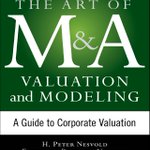
The Art of M&A Valuation and Modeling
Here’s what you’ll learn:
• The difference between price and value, and why valuation measures intrinsic worth instead of market price
• How valuation frameworks use comparable companies, comparable transactions, and Discounted Cash Flow (DCF) analysis
• How valuation multiples work using metrics like EBITDA, earnings, sales, cash flow, and book value
• Why DCF estimates business value through future cash flows discounted to present value
• How enterprise value and equity value differ when analyzing company worth
• How M&A valuation changes based on growth goals, synergies, diversification, efficiency, and transaction structure
📚 Grab the free PDF file in high resolution here: lnkd.in/dzQADCs8


💰 Finance Explained Simply: 4 Concepts Every Beginner Should Know
Understanding business finance starts with these basics:
📊 EBITDA: Measures operating performance before interest, taxes, depreciation and amortization.
🏗️ CAPEX: Money spent on long-term assets like machinery, equipment and buildings.
💵 Cash Flow: Tracks the money coming into and going out of a business.
🏛️ Taxes: Help fund public services such as roads, schools and hospitals.
Remember:
Profit doesn't always mean cash in the bank.
CAPEX is an investment in future growth.
EBITDA is not the same as net profit or cash flow.
📌 Understanding these four concepts is a great first step toward financial literacy.
Want to learn more about finance get this premium pdf for free - lnkd.in/dyUt_qsj


Learn more on Technical Analysis from here: compounding-quality.kit.com/…

Grab this guide on Technical Analysis here: compounding-quality.kit.com/…
1
129


Ratio Analysis
Here’s what you’ll learn:
• The 8 major categories of financial ratios: profitability, liquidity, turnover, coverage, leverage, cash position, valuation, and miscellaneous ratios
• How to measure profitability using ratios such as Gross Profit Margin, Net Profit Margin, Operating Profit Margin, ROCE, ROA, and Return on Shareholders’ Funds
• How liquidity ratios like Current Ratio and Quick Ratio assess a company’s ability to meet short-term obligations
• How turnover ratios evaluate operational efficiency through asset, inventory, receivables, payables, working capital, and capital utilization metrics
• How coverage and leverage ratios help analyze debt-servicing capacity, financial risk, solvency, and capital structure decisions
• How valuation ratios such as EPS, P/E Ratio, P/B Ratio, Dividend Yield, and Tobin’s Q are used to assess shareholder value and market expectations
Download this PDF in High Resolution Here - lnkd.in/dr_SS4qt


📚 7 Finance Books Worth Reading
Want to improve your investing knowledge and money mindset? Start with these books:
Rich Dad Poor Dad — Robert Kiyosaki
💡 Chapter 1: The Rich Don’t Work for Money
The Psychology of Money — Morgan Housel
💡 Chapter 4: Confounding Compounding
How to Make Money in Stocks — William J. O’Neil
💡 Chapters 3–9: The CAN SLIM Strategy
Atomic Habits — James Clear
💡 Chapter 1: The Surprising Power of Atomic Habits
Think and Grow Rich — Napoleon Hill
💡 Chapter 3: Faith, Visualization and Belief
Common Stocks and Uncommon Profits — Philip Fisher
💡 Chapter 3: What to Buy
The Intelligent Investor — Benjamin Graham
💡 Chapter 8: The Investor and Market Fluctuations
📈 The goal isn’t just to read more books, but to apply what you learn.
Small improvements in financial knowledge and decision-making can make a big difference over time.
Want to learn more, get this Free PDF of 9 Favourite investing books everyone should read - lnkd.in/dKjErPyn

Want to learn more get this Financial Reports Understanding Guide for Free
linkd.kit.com/5d75e8af64


