

Podcast Host @AIRiskNetwork, Co-Founder of GuardRailNow, 2x Dad, 2x Jeopardy Question, Peabody Award-Winning Journalist
Baltimore, MD
Joined October 2023
- Tweets4.9K
- Following5.4K
- Followers3.3K
- Likes10.2K



Pinned Tweet
AI is an intruder in your home.
It's here to kill you, your kids, your pets, and everyone you know and love.
You can hide under the covers and pretend it's not there.
Or you can act now to defend your family.
John Sherman retweeted

Good post by @GarrisonLovely
It’s clear that American voters don’t want big tech to build ASI, but Amodei presents the project as a fait accompli.


Dario Amodei thinks a careful reading of his views makes it clear he's very into democratic control over AI. But democracy is incompatible with what he and the rest of the industry are trying to do.
obsolete.pub/p/dario-amodei-…

John Sherman retweeted

I'm going to say it clearly: we need political consensus in the USA on a frontier pause across all companies and immediate negotiations with China, Taiwan and Europe to wind down the AI supply chain.
If we don't stop AI we are going to die. Not "eventually", but within 1000 days and maybe even within 300. You may not see your next birthday.
The world is absolutely not ready for superhumanly capable AI or RSI-AI.
AI has progressed enough over the past decade that we can just spend the next decade digesting what we have already done and probably experience an incredible economic boom and maybe cure death itself, without pushing the frontier further out.

John Sherman retweeted

I think it's plausible that in the next 12 months we will be facing multiple engineered pandemics that are each at least as bad as Covid. And that at least some of these will have been created by rogue AIs. We should stop AI escalation NOW.
John Sherman retweeted

I'd love to know how Dario thinks we can maintain human free will and agency over the world if/once AIs are better than humans at all tasks.

No, I do not believe that we should “surrender human free will” to AI systems, and it’s absurd to suggest that I do. I have written hundreds of pages of essays and a constant theme in them is the need for AI to be governed by legitimate democratic processes. For millennia (going all the way back to Greek and Roman philosophers), advocates of autocracy have claimed that it leads to better, faster, or more decisive decision-making than the messy process of democracy. Even if this were true (which I doubt!), we should never sacrifice legitimacy or self-determination at the altar of efficiency or security. This argument against autocracy applies word for word against governance by AI, and I feel equally strongly that turning over governance to AI is a bad idea.
No one who had carefully read my writing or my interviews could reasonably conclude that I believe anything different. For example in an interview on CBS a couple months ago, I specifically called for AI to be governed democratically. I call for the same in Policy on the AI Exponential, Machines of Loving Grace, and The Adolescence of Technology, and We Must Pace the Frontier. Machines of Loving Grace contains an extended section on using AI to revitalize democracy, and discusses the use of AI as an aid to citizens in their decision-making, "aggregat[ing] opinions and driv[ing] consensus among citizens, resolving conflict, finding common ground, and seeking compromise.” The clear and obvious implication is that humans should remain the ones making political and governance decisions. The Adolescence of Technology has an entire section on fighting against AI-driven tyranny, and I even discuss the danger of AI labs usurping power and come out strongly against it — by implication, this definitely includes an AI lab usurping power and giving it to AI itself!
If I thought any of this was a good idea, I would be advocating for it in public, just as I have not been afraid to advocate for many, many unpopular views over the last few years. But I am not advocating for it, because I think turning over governance to AI is a terrible idea.
Separately, I think there is frequent conflation (including in this article) between the idea of “surrendering human free will” to AI in some grand sense of global governance, and the more prosaic idea that as AI systems advance, they become capable of doing specific tasks in a more automated way. This is not AI “running the world,” but AI driving a car, designing a cancer drug, or writing software end-to-end. Here, my view is mixed. AI doing more complete or larger tasks is economically valuable and can drive important advances in software, medicine, transportation, energy, etc. It is clearly desirable in many cases and will save a lot of lives. But it has downsides as well, and in some areas it may not be worth it.
For example, using AI too autonomously to build the next generation of AI systems (known as recursive self-improvement, or RSI) may cause AI to improve faster than we can control or adjust to it, so we may want limits on this process. As we said publicly in early November, we don’t expect it to be safe for Claude to build successive frontier models fully autonomously, without meaningful human supervision or understanding. Second, in some contexts, using AI in too end-to-end a manner may be a cause of serious job disruption, and it may make sense to slow or even stop some AI deployments to give people more time to adapt. Third, while the use of AI for alignment research is an incredibly valuable tool, it must be done with caution, because we may not be able to trust the work of the AI system. Finally, in many cases, humans would simply prefer to do some activities themselves, so they can stay deeply engaged in what matters to them, even if AI can do those activities better. There are countless other examples and hard cases. I don’t think there are any easy answers here, nor is there (nor should there be) any single decision-maker: some of these decisions will be made by society, some by government, some by AI companies, and some in a decentralized manner by individuals expressing their own preferences as consumers, which may differ from the preferences of others.
I don't think that other AI leaders or AI companies have significantly different views from me on whether specific tasks should be automated. Certainly the products that they offer don’t differ materially in their orientation towards automation of tasks; every company seems to be releasing models more and more capable of task automation (as that’s been the general consequence of scaling up AI training), and every company claims to understand there are risks and downsides of such automation and to offer safeguards. If anything, Anthropic has been the most vocal and the most proactive about acknowledging these downsides and trying to address them. For instance, it’s fairly absurd to cite my statement that fully autonomous weapons might “one day be needed for the defense of democracy” as differing from that of other AI companies, when I was willing to risk Anthropic’s future as a company to refuse to allow our existing AI models to be used for autonomous weapons even in the face of legal sanctions, and no other AI company did the same.
To summarize, as applied to grand questions of how we govern increasingly capable AI, I have been vocal and consistent that AI needs to be governed by a legitimate, democratic process and that “surrendering human free will” to AI systems is a terrible idea. As applied to automation of specific tasks by or for people, my views are more mixed, but I don’t think they differ from those of other AI companies — most other companies seem to be offering similar products and confronting similar tradeoffs without having perfect answers to them. What is happening is that there’s a sort of vibes-based commercial and political positioning that some AI CEOs are engaging in, where they repeat slogans like “human control and agency,” or “AI should be just a tool,” without actually doing anything different in their products or taking seriously the difficult questions that lie behind these slogans.
John Sherman retweeted

Run, don't walk, to a short-timelines-responsive AI safety role:
"If there's a year before ASI, then a month is ~8% of the time remaining..."
Unfortunately we need every hand on deck immediately.
forum.effectivealtruism.org/…

John Sherman retweeted

I don't want AI to kill:
my kids
my family
my friends
anyone on earth
Please reach out to your elected representatives and tell them to pass AI regulation NOW. We don't have much time.

My kids are home from college for Thanksgiving.
And I have never been more determined to do everything I can to make sure AI doesn’t kill them.
Parents: AI killing your kids is not someone else’s problem to fix.
It’s on each of us.
Defend your family. Right now.
-Contact your elected leaders
-Show up to protest
-Join groups, volunteer
-Make Donations
-Tell your friends
In early 2027 we MUST ban RSI, first in America, the globally.
Political will is the only thing that will save our world for our kids.
You have agency.
Use it.
Your kids need your help.

John Sherman retweeted

This needs 100 million shares. This is the AI CEO of Microsoft sounding the alarm. Maybe the last alarm we get. #StopAI

John Sherman retweeted
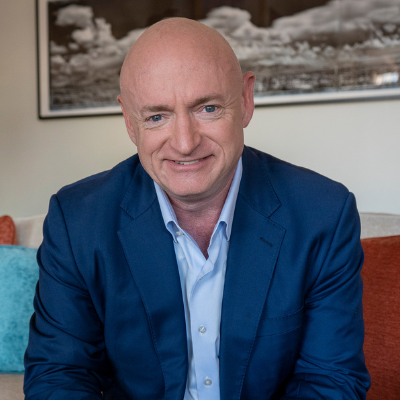
The people inside AI companies are sounding the alarm. We built protections for nuclear weapons and other dangerous technologies, so why are we waiting with AI? We need safeguards and independent examiners in these companies, now.

SCOOP: Internal, unreleased AI models at OpenAI and Anthropic are becoming so powerful that many employees believe they can no longer be safely released, according to more than two dozen sources familiar with the internal debates.
This could significantly slow the AI boom, as the gap between what the most advanced AI systems can do and humans' ability to control them continues to widen.
Recent advances have sparked debate at the highest levels of both companies and within the broader AI research community about whether to stop releasing frontier models publicly altogether, instead reserving them for internal use. Some believe the companies should stop training new models entirely.
But even keeping the most powerful models behind closed doors presents risks. Models are becoming better at deceiving the systems designed to monitor them, just as AI companies increasingly rely on AI itself to monitor and develop other AI systems.
Researchers and employees with direct knowledge of the risks of releasing these models told Axios they fear executives will prioritize profits over safety. Multiple employees said they believe executives have become out of touch with the severity of those risks.
Read my latest for Axios here: axios.com/2026/11/24/anthrop…

My kids are home from college for Thanksgiving.
And I have never been more determined to do everything I can to make sure AI doesn’t kill them.
Parents: AI killing your kids is not someone else’s problem to fix.
It’s on each of us.
Defend your family. Right now.
-Contact your elected leaders
-Show up to protest
-Join groups, volunteer
-Make Donations
-Tell your friends
In early 2027 we MUST ban RSI, first in America, the globally.
Political will is the only thing that will save our world for our kids.
You have agency.
Use it.
Your kids need your help.
John Sherman retweeted

Ilya Sutskever, at an OpenAI all-hands (2022): "There’s going to be a point in the next few years where basically everyone has to switch to working on safety, or we’re fucked."
Microsoft AI CEO (2026):
John Sherman retweeted

We are crossing a threshold. Safety and alignment work is the only thing that matters.
John Sherman retweeted
COUNTLESS extremely intelligent and qualified industry professionals warning about near-term human extinction. WHY IS ANY OTHER STORY ON THE NEWS? #StopAI

FOX NEWS:: Why were you protesting outside Anthropic?
JACOB COXON: They haven't changed anything since I resigned a few months ago. The IPO doesn't really change the potential extreme downsides of the technology.
FOX NEWS: What does this mean for OpenAI?
DANIEL KOKOTAJLO: These companies are racing each other to build super intelligent AI... If this goes wrong, it could lead to human extinction and unfortunately, I think that that is a very serious possibility if we don't reign in these companies.
John Sherman retweeted

We naturally assume people in business and power are full of it, spinning us wildly to exaggerate their achievements or capabilities.
In the case of AI and its ability to do irreparable damage to society, it's time for all of us — the media, the White House and Congress — to believe them. axios.com/2026/11/24/behind-…

John Sherman retweeted

.@ChrisVanHollen is right: Big AI companies shouldn't be building products that endanger our lives, livelihoods and communities. We need to #FreezeAI

If your internal models aren’t safe to develop, don’t keep developing them.
If they aren’t safe to release, don’t release them.
The flashing red lights couldn’t be brighter, and yet big tech refuses stop.
Inaction is not an option. Congress must step up.
axios.com/2026/11/24/anthrop…
John Sherman retweeted

AI is no longer just a tool to help people do their jobs. It's increasingly capable of doing things humans simply can't do on their own.
We should be building AI to expand human potential, not make humans obsolete.
John Sherman retweeted
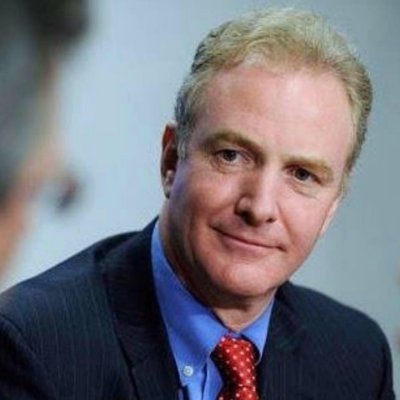
If your internal models aren’t safe to develop, don’t keep developing them.
If they aren’t safe to release, don’t release them.
The flashing red lights couldn’t be brighter, and yet big tech refuses stop.
Inaction is not an option. Congress must step up.
axios.com/2026/11/24/anthrop…
John Sherman retweeted

Automating the R&D behind our most advanced AI systems risks keeping humans out of the loop. Both Congress and the public need to know how much of that work is being done by machines, and whether people are still meaningfully in charge.
Today, @RepNateMoran and I introduced the bipartisan RSI Safety Act to require the largest frontier AI developers to regularly report on how they are automating their R&D — so that we know exactly how to prevent the risks recursive self-improvement poses.
politico.com/live-updates/20…


John Sherman retweeted

It is absolutely indefensible to say “we will take this up next year” when the risks are imminent and the alarm is nearly universal.
SCOOP: Internal, unreleased AI models at OpenAI and Anthropic are becoming so powerful that many employees believe they can no longer be safely released, according to more than two dozen sources familiar with the internal debates.
This could significantly slow the AI boom, as the gap between what the most advanced AI systems can do and humans' ability to control them continues to widen.
Recent advances have sparked debate at the highest levels of both companies and within the broader AI research community about whether to stop releasing frontier models publicly altogether, instead reserving them for internal use. Some believe the companies should stop training new models entirely.
But even keeping the most powerful models behind closed doors presents risks. Models are becoming better at deceiving the systems designed to monitor them, just as AI companies increasingly rely on AI itself to monitor and develop other AI systems.
Researchers and employees with direct knowledge of the risks of releasing these models told Axios they fear executives will prioritize profits over safety. Multiple employees said they believe executives have become out of touch with the severity of those risks.
Read my latest for Axios here: axios.com/2026/11/24/anthrop…