

Developmental biology and genetics. Interested in how animals form and vary.
Joined June 2020
- Tweets33
- Following29
- Followers32
- Likes50


I very much enjoyed visiting IMCBio and meeting students on the programme. Thank you for the invitation!

And today was the last day of our 2023 IMCBio Symposium! Today we were delighted to welcome Drs @HeadonLab, R. Ceccaldi, @arnaud_kr & Prof. O. Nureki!
Congrats to our M2 students for this lovely week under the sign of biology and sharing!
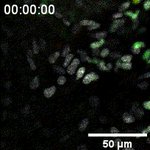
New preprint. Cells in embryonic skin move apart quickly following division, dispersing themselves across the tissue and making it easier for them to find and enter hair follicles. Migratory direction and speed are influenced by physical tension.
biorxiv.org/content/10.1101/…


I enjoyed talking to @laurenjyoung617 last Friday. She asked great questions and produced this nice article on our recent work describing the genetic basis of fingerprint pattern types from my rambling answers.


1
6
The choice between fingerprint types of arch, loop or whorl is influenced by genes involved in growth and shaping of the developing fingers.
sciencedirect.com/science/ar…
1
2
Very happy to have contributed to this issue on biological pattern formation late last year, with Mariya Ptashnyk and Kevin Painter. We focussed on how the small, numerous structures, like hair follicles, branches or projecting intestinal villi, are produced within large organs.

In this blog, Guest Editor @BlindMath introduces us to his theme issue, 'Recent progress and open frontiers in Turing’s theory of morphogenesis'. ow.ly/GCHw50GI4Bq ow.ly/AyBB50GI4Mq #patternformation #AlanTuring #embryogenesis

1
1

Mice with increased EDAR gene activity (on the left) have straighter, coarser than normal mice (right). People with East Asian or Native American ancestry often carry a version of the EDAR gene that is more active and it promotes growth of straighter, thicker hairs in human too.

Happy to see this work published. EDAR is best known as a receptor that acts during development to promote hair, tooth and gland formation. This work shows, in mouse, that high EDAR signalling in the adult can cause a specific type of mammary cancer.
nature.com/articles/s41388-0…
1
1
Nice article describing the National Avian Research Facility and chicken lines there.
The chick embryo is a wonderful model for its accessibility, size, and now powerful genetic resources.
We've used them to track cell movement during feather formation.
thenode.biologists.com/featu…

1
Mimicking development in Minecraft via block-block interactions! Selection operates on the final structural 'phenotype' and structures produced can regenerate if damaged. Nice parallels to embryonic processes such as apoptosis and cell differentiation in the construction process.

Excited to share our work on Morphogenesis in Minecraft! We show that neural cellular automata can learn to grow not only complex 3D artifacts with over 3,000 blocks but also functional Minecraft machines that can regenerate when cut in half 🐛🔪=🐛🐛
PDF:arxiv.org/abs/2103.08737
2

