
OpenAI Foundation science!
San Francisco, CA
Joined June 2015
- Tweets2.1K
- Following995
- Followers8.6K
- Likes6.8K




Pinned Tweet
Alzheimer’s is one of medicine's hardest unsolved problems, and one of the most devastating.
At the OpenAI Foundation, we believe AI is well suited to its complexity. We're directing over $100M to scientists mapping the disease, designing drugs, & more.
I wrote about it here:
openaifoundation.org/news/ai…

New episode:


New episode of HARD DRUGS!
Will AI progress be crushed by Eroom’s law?
Even as technology has advanced, drug development has gotten more and more expensive over time.
In the 1950s, one billion dollars of R&D spending got us roughly fifty new drugs. Today, it gets us about one.
This trend is called Eroom’s law, or Moore’s law spelled backwards. It seems pretty bleak: the R&D cost per new drug has roughly doubled every nine years, in inflation-adjusted dollars, meaning drug development has become exponentially more expensive.
What could explain this? Here are some possibilities:
• Our standards of evidence and requirements for safety testing have risen, through regulation, public expectations, and risk aversion.
• We’ve picked the low-hanging fruit already. Perhaps we’ve already made the easiest discoveries, and diseases that are harder to understand or treat are left.
• Or perhaps it’s the ‘better than the Beatles’ problem: New drugs not only have to be effective, but have to compete with existing treatments, which are already effective. Plus, some of them have gone off-patent and become cheap generics, making the price contrast starker.
Relatedly, as diseases become rarer or milder, it takes more effort to demonstrate that new drugs are effective, with larger or longer clinical trials.
But there are also reasons to question these explanations. We still lack effective treatments for many diseases. And our tools for studying biology have improved enormously. Why hasn’t that been enough?
Will our best efforts be crushed by Eroom’s law, too? Or can AI reverse the trend?
In our latest episode of HARD DRUGS, @JacobTref and I chat about all this and more. Listen wherever you get your podcasts!
Chapters:
00:00 Introduction
02:53 Eroom’s law trivia
12:33 How much does it really cost to develop a drug?
22:35 The better than the Beatles problem
33:06 Clinical trials are larger and more rigorous today
42:01 Have we picked the low-hanging fruit?
01:01:22 Is Eroom’s law slowing down because of rare disease drugs?
01:06:18 Can AI reverse Eroom’s law?
01:15:09 Conclusion


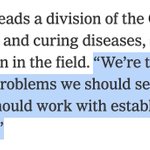
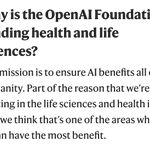
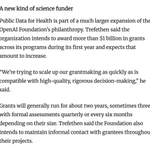
A.I. Fortunes Could Bring Critical Funds to Global Health. The Scramble Is On. nytimes.com/2026/10/20/us/po…

Makes you think


I believe that 1) siRNA will change medicine, with new treatments for tens of diseases, 2) tens of millions of people will take an siRNA drug in the 2030s, with some chance of >100M people, and 3) I will have taken at least one siRNA drug within a decade.
I have never worked on siRNA, and I also don't think of myself as a hypester. So, why the confidence? There's the technical answer, then the structural answer.
The technical answer is that siRNA has several attractive properties as a drug modality, and enough of the chemistry problems have been solved that I'm confident more drug approvals are on the way (though there are many important unsolved problems left, e.g. in delivering siRNA to organs other than the liver). The four most attractive properties are that with siRNA you can reduce production of previously undruggable proteins by going after the RNA that codes for them; they’re “programmable” to a gene/protein you’re going after; siRNA can last long, with slow release inside cells; and siRNA drugs have the potential to be relatively cheaply made and self-administered.
The structural answer, I believe, is biotechnology’s combination of long timelines with particularly un-juicy, hard-to-remember concepts. If something takes 20 years, you can often spot it 10 years in -- but when it’s an acronym and involves chemical conjugation steps, it’s hard to remember to care. Many important ideas in biology are messy and technical and, unless you've caught the bug (intellectual or literal), boring. That means there are many important secrets lying in plain sight, as per @nayafia's last book.
While disagreements and unknowns remain, it is not particularly controversial among scientists that siRNA holds a lot of promise (alongside some realised promise already!) -- and, yet, most people who will benefit from siRNA drugs in the 2030s have never heard of it.
(PS: given my job involves stewarding charitable dollars related to science, I don’t invest in individual pharma/biotech stocks personally; this post isn’t about the financial prospects of particular companies.)
Can we switch off diseases?
siRNA drugs are, in my view and @JacobTref’s too, one of the most exciting developments in medicine. So we decided to do an episode!
It’s a technology that can ‘silence’ harmful genes in the body. And there are lots of cases where you might want to silence genes:
- Infectious diseases, where you can silence pathogen proteins or human proteins that pathogens depend on
- Rare genetic diseases, where you can silence the production of mutated proteins
- Cardiovascular diseases, by silencing proteins that raise cholesterol
- Cancers, by silencing proteins that help tumour cells grow, survive, metabolize, metastasize, or resist treatment
- and more!
What’s even better is that siRNA drugs are:
• Potentially tunable, meaning you could reduce the production of a protein, rather than silencing it entirely
• Programmable, meaning you can quickly switch out which gene it targets by changing its sequence
• Long-lasting: some drugs last for months, even half a year, with a single injection
• Off-the-shelf: they typically don’t involve complicated surgeries or procedures, because of the way they’re delivered in the body
Today, siRNA drugs are largely used to treat liver diseases, partly because that’s the easiest starting point.
And they are extremely effective at it. One example is as a cholesterol drug: siRNAs can reduce PCSK9 levels by around 70%, reducing cholesterol levels by 50-60%, beyond the effect of statins.
But we think it’s just a matter of time before they can be used to target other organs too.
Will siRNA treat diseases of other organs? And what’s the catch?
Listen to our latest episode of HARD DRUGS to find out!
Chapters:
00:00 Introduction
09:58 siRNA trivia
28:14 The 20 year journey to make siRNA drugs
36:07 Which diseases could siRNA treat?
50:45 Programmable, long-lasting, scaleable drugs
54:32 The limits of siRNA
1:08:23 Conclusion
More details on our plans in the linked interview. But, this is the gist:


@JacobTref nails the challenge of drug disco on the head
"...we collectively don’t know enough to deliver treatments that are excellent for patients"
Looking forward to seeing what else comes out of @FoundationOAI
nature.com/articles/d41586-0…


Here's more on our initial strategy behind these grants, and other grants we're investigating in Public Data for Health, that may be of interest to researchers:
Our starting hypotheses for areas OpenAI Foundation support can be most useful are: connected data, scarce data, and direct data. Datasets we fund will usually have one or two of these properties, described in more detail in the next tweets, and in rare cases will share all three properties.
Across all datasets, we believe making data broadly accessible, while ensuring privacy whenever that relates to patient data, will become increasingly important. This will allow researchers to build on each other’s work, and scientific progress to emerge from unexpected places.
At the OpenAI Foundation, we believe breakthroughs against disease will come from pairing intelligence with more observations of the world – in other words, more data.
Today, we're announcing over $125M in grants, launching our second science program:
openaifoundation.org/news/pu…

1. Connected data: Following biology across multiple steps 🔗
Biology unfolds at different scales, but most life science datasets capture only one part of reality. A cell atlas may measure molecules across thousands of cells, while single-molecule imaging follows one cell only. Both views are valuable, but because such datasets are usually created independently, it can take years of follow-on work to determine how scientific results relate to each other. We want to support individual research teams to move deliberately between these scales and to create rich, connected datasets whose different layers reinforce one another.
For example, our grant to @UCSF will allow the OpenADMET team to measure key molecular properties and interactions for tens of thousands of compounds. The team will then connect this broad profiling to two views of drug transport: experimentally determined structures of transporter proteins with selected molecules bound, and assays measuring how these proteins functionally interact with the molecules. Finally, they will test a subset of these compounds in models of the human blood-brain barrier, comparing those results with in vivo animal measurements.
This approach to data collection will create an unusually complete account of what determines a drug’s movement through the body – one that enables better prediction from AI models at the level we humans care about.
Proud of owl 😊

Also can't heap enough praise on the grant process with @owl_posting, he got deep into the domain and crafted the project with us from a place of shared understanding. Even if OAIF hadn't funded the proposal, it still would have been worth it for the improved conceptual clarity
29
3,848
I talked more about our strategy in Public Data for Health, and these first grants, with @GrinsteinJ:
insideprecisionmedicine.com/…

At the OpenAI Foundation, we believe breakthroughs against disease will come from pairing intelligence with more observations of the world – in other words, more data.
Today, we're announcing over $125M in grants, launching our second science program:
openaifoundation.org/news/pu…
At the OpenAI Foundation, we believe breakthroughs against disease will come from pairing intelligence with more observations of the world – in other words, more data.
Today, we're announcing over $125M in grants, launching our second science program:
openaifoundation.org/news/pu…
Here are some of the projects we're supporting:
OpenADMET will create open datasets, benchmarks, and blinded competitions to test whether AI models can be trained to predict how small molecules are absorbed and distributed across the body, to make drug development more predictable and reduce the failure rate of new drugs.
90% of drug candidates fail in clinical trials. That is often due to the difficulty of predicting how they will be absorbed and move around the body – their “ADMET” properties.
Unsolved prediction challenges like this can be a good fit for AI, when paired with high quality data to ground the accuracy of predictions from different models. For example, AlphaFold2 transformed protein structure prediction using data from the Protein Data Bank, in a competition against other modeling approaches run by CASP. Protein structure prediction is now integrated into many drug discovery programs that will likely go on to benefit patients.
To better predict ADMET properties of drug candidates, the OpenADMET team will develop high quality datasets to ground new predictive models, and run open challenges that researchers around the world can enter:
openadmet.ghost.io/mapping-t…

This $60M grant will help some of the people with the fewest backup options -- smallholder farmers -- know when to plant, fertilise, harvest.
Weather forecasting is traditionally a problem for supercomputers. Now, many useful predictions are cheap and deliverable locally:


The OpenAI Foundation is investing $60M to help bring AI-powered weather and crop disease forecasts to 100 million smallholder farmers across South and Southeast Asia and East Africa over the next three years.
As climate change makes weather more volatile and extreme, farmers with little to fall back on if a harvest fails need timely, reliable forecasts to make critical decisions about when to plant, harvest and protect their crops.
Advances in AI are making high-quality weather forecasts more affordable, localized and accessible.
Through our Civil Society & Philanthropy team, we’re supporting @UChicago, @UCBerkeley, Precision Development, AIM for Scale, @digitalgreenorg and @CIMMYT who will work alongside governments and local institutions to turn these advances into useful, actionable guidance for farmers.
Learn more: openaifoundation.org/news/ai…


On behalf of the Intercept team, I’m excited to share that we’re launching our first “Request for Candidates”! We’re looking for the best science (and teams!) in the world that could plausibly meet our target product concept. Our ultimate goal is to radically reduce the burden of respiratory viruses, and an easy-to-use, safe, and effective preventative is a critical part of that puzzle.
This request for candidates will be open until at least December 31st, but proposals received by October 12 will be prioritized.
interceptfund.com/apply/broa…

Here's a 3,000 word second post on progress across these ten technologies.
It was fun to write, especially to learn more about drivers of progress that don't get much coverage. Ever heard of @NIH's RADx ITAP?
2020-22 was frustrating for at-home tests; 2023-26 better:

I started a blog in 2024 to write about ten technologies I wished existed. Today, I posted an update on them.
Nine out of ten are still unavailable. But I feel differently about that now:
blog.jacobtrefethen.com/half…


I started a blog in 2024 to write about ten technologies I wished existed. Today, I posted an update on them.
Nine out of ten are still unavailable. But I feel differently about that now:
blog.jacobtrefethen.com/half…
The original: www.teapawt.net/JacobTref/status/17535…
I started a blog about scientific research and science funding. You can subscribe on the site to receive future posts as emails.
Here’s the first one. Society is not focused on some of the most important technical problems: blog.jacobtrefethen.com/10-t…

Some more about these four roles, since I will work closely with everyone we hire into them. (Salary ranges are posted on the job descriptions for these and other roles across the Foundation: openaifoundation.org/careers)
First, I am excited to share that, 8 weeks ago, Vidya Vasu-Devan joined the OpenAI Foundation to lead our work in High-Burden Diseases. Before this, Vidya led the investment team for a global health biotech VC fund; before that, she was Chief Strategy Officer at a vaccine company; and before that she was Director of the $2.5 billion portfolio of strategic investments at the Gates Foundation.
In an earlier draft of this tweet I wrote two more paragraphs bragging about some of the things Vidya achieved in those roles, but unfortunately for me she doesn’t like being bragged about. Which relates to why you may have a lot of fun working with her if you join our team -- Vidya is unusually humble, has helped protect an unusual number of people from infectious diseases through her work, and most importantly has complementary skills to mine in bar trivia.
We are hiring a Program Officer and/or Program Director on High-Burden Diseases. These are open-ended roles with a broad mandate to help solve some of the world's biggest problems in health. They will work with Vidya to figure out: what is newly possible due to AI progress, in tuberculosis drug development? In newborn health, where roughly 2 million infants die each year? In stroke, in hepatitis B, in other diseases facing market failures where we may be able to unlock rapid progress for patients? If you have a scientific or technical background and would like to spend your time thinking about those questions, we would love to receive your application.
One of the other two open roles on our team is a Chief of Staff reporting to me. If you've made it this far into a long tweet, that bodes well for your attention to detail, so perhaps you should apply (put "ATN" in the "Anything else?" field on the form). I am looking for someone with excellent judgement and organisational skills who 1) moves fast, 2) is comfortable with ambiguity, 3) takes ownership without waiting to be asked, and 4) enjoys thinking about how teams can operate at their best in the presence of growth + time constraints. I'm open to a range of backgrounds, though some science in your past helps. Vibecoding addiction is a positive too.
Finally, we are hiring a Head of AI for Alzheimer's. Our goal is straightforward and extremely hard: help scientists invent new tools to finally prevent and treat Alzheimer’s. We have made some initial investments (openaifoundation.org/news/ai…), but much of what we do next remains deliberately undefined. We are seeking a flexible and highly autonomous leader to help us figure out the path. This role is similar to what Nan Ransohoff describes as a General Manager: nanransohoff.substack.com/p/…. If the role sounds exciting but you are not sure you fit the profile, I recommend reading that essay to see how much you resonate with applying something like it to AI for Alzheimer’s.


I've made it to organoids, danger up ahead.
(Great listen so far, recommend.)


We bring you an absolute biotech banger this week. The good doctor @eryney_ok comes on the show with @owl_posting to tell us whether AI will fix biology and provide us with a new age of miracle cures . . . . or not. Also, some lighter topics like bioweapons doom and CHINA. corememory.com/p/ai-will-cur…

We are building a team to help define the future of the OpenAI Foundation.
This is our first major hiring round, and what we are able to accomplish as an institution will be shaped by who joins now. openaifoundation.org/careers
Thread on roles and areas:
The OpenAI Foundation is hiring people to help turn AI’s capabilities into benefits people can feel.
Doing that takes more than advances in AI itself. It takes new scientific infrastructure, stronger institutions, and organizations that can turn new capabilities into real-world impact.
We’re hiring talented and passionate people to help us advance our mission: openaifoundation.org/news/co…

In AI Resilience, we are funding efforts to reduce risks that could prevent society from realising AI’s benefits. That includes securing cyber infrastructure, making sure the AI models themselves are safe, preventing biological misuse, ensuring AI’s impact on young people is positive, and more.
Solving these problems requires an ecosystem of talented people and capable organisations. We have started to fund some of those organisations over the last five months, and are hiring so that we can do more, quickly:

This first grant from our Civil Society division aims to double hepatitis C cure rates over 2 years, starting in Alabama, Illinois, Louisiana, and Massachusetts.
The theory behind these grants -- which will range public health and other areas -- is that organisations with local context are best placed to reach people for whom the current system isn't working, and AI can help those organisations do their best work. In many areas/contexts, the tools are ready.
So, financial and technical support is powerful in combination:

The OpenAI Foundation is launching AI for Civil Society and Philanthropy to help nonprofits, community organizations, and other trusted partners put advanced AI to work on urgent challenges, develop practical solutions and scale what works.
The first effort is a $100 million commitment with Common Health Coalition to launch Breakthroughs to Follow-through to help care teams use AI to reach more patients with proven treatments - starting with the goal of doubling hepatitis C cure rates in Alabama, Illinois, Louisiana, and Massachusetts. Breakthroughs to Follow-through will work to identify patients who have fallen out of care, synthesize records, track progress, and focus limited staff time where it can have the greatest impact.
The OpenAI Foundation wants to empower those who are closest to issues and to put AI to work where it can make a meaningful difference in people’s lives.
openaifoundation.org/news/ci…
In the back half of this episode Saloni and I talk through which drugs we're most hopeful could be repurposed against new diseases, as well as how prizes, patents, grants can be used to get there.
Happy anniversary, @salonium!
New episode of HARD DRUGS!
Are miracle drugs hiding in plain sight?
GLP-1 drugs have transformed diabetes and obesity, can help treat heart disease, kidney disease, sleep apnea, and may also work against dementia.
But they’re far from the only medicine with more multiple uses. Aspirin, colchicine, minoxidil, Botox, and, famously, Viagra were all found to treat more conditions than expected. (Did you know that BCG vaccines are used to treat bladder cancer?)
In fact, about a third of FDA-approved small molecule drugs are later approved for a second use.
But sometimes, it takes several decades - and public funding - to learn whether existing drugs could work for more conditions.
Moxidectin, for example, went untested for human diseases for decades; we now know that it can cure ~70% of whipworm infections in kids. Aspirin was used for over a century before we found it had cardiovascular benefits.
Why? The commercial incentive to test further is time-limited: once a drug goes off-patent and generics can enter, drug developers can get undercut, so it’s no longer worth it to run expensive clinical trials to test other uses.
The problem is even larger for tropical diseases, which are often not profitable to treat in the first place.
The result is that we’re missing out on knowing about a lot of additional uses of already-approved drugs!
There may be more miracle drugs hiding in plain sight. And economists estimate the ‘missing innovation’ would be worth 100 to 400 billion dollars in social value annually(!)
How do we solve this?
In this episode, @JacobTref and I chat about all the above and more!
It was fun to be one of the judges for this essay competition, mostly as an excuse to read essays about science, and secondly to reflect on how AI is affecting scientific writing.
The essays that read like they were 100% LLM-generated usually didn't contain the best ideas, according to my human judgement. But, some of the best essays were LLM-assisted at the level of sentences (according to Pangram's judgement).
Perhaps most surprising for me was that some *good* essays contained LLM sentences AND typos!


