

He/him. Fox gamedev irl. Machine pervert. Furry stuff here and opinions about technology, games, movies, AI, VR. Banner 🎨 by @Perpleon.
Joined January 2022
- Tweets67.6K
- Following1.8K
- Followers4K
- Likes156K





Key 🗝 🦊 retweeted

Suppose you heard someone say "This guy thinks machines are magic, he says they can actually lift things!"
And your response was "Wait, no lifting things isn't magic" and the person said "Haha you literally think there's a guy in the machine lifting things."
You say "Wait, do you think it's magic when humans lift things?" and the person says "Obviously not, but we're not talking about humans right now" and you say "So wait no what's so surprising about the idea that machines could lift things then?" and the person says "Are you INSANE?! You think machines are MAGIC"
That's about the state of the philosophy of mind debate around AI right now.


Key 🗝 🦊 retweeted

Over on Bluesky there was a fun twist on the usual anti-Pangram discourse: A professor claimed Pangram said her 2019 dissertation was 100% AI, then got mad at people for putting excerpts from her dissertation into Pangram which said it was 100% human.


Key 🗝 🦊 retweeted

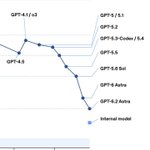
Astra 6.2 after this update


We made a billing mistake at launch of GPT-6.2 that incorrectly discounted GPT-6.2 Astra and Sol usage for most users.
We’ve fixed this now, so the same work will use more of your plan’s usage allowance. Comparing to last week, you will reach your limits 40% faster on GPT-6.2 Astra and 25% faster on Sol. You should still see these go further in usage compared to 6 Astra and 6.1 Sol. Other models weren’t affected, and we won’t charge you for the difference on past usage.
As a small token to apologize for the mistake, we’ll be adding one banked reset for everyone on Go, Plus, Pro, and Business.



Key 🗝 🦊 retweeted
I agree with Utah that my ideal system is one where AI represents some extreme direct democracy system that executes citizens' choices at extreme speed based on some fair system of common interest. The last part is the hard part I suppose.

Holy shit, I am flabbergasted, positively, to see Dario Amodei supporting the notion of AI-assisted direct democracy. That's a dream utopia -- imagine the speed and efficiency that AIs could help us have with regard to actual voting on actual policy and structure without corrupt Republic representatives. I know he's not exactly saying that, he can't but there's definitely a nod to it and that's nuts and awesome that he's thinking about that. It's an anarchist democratic ideal utopian system...
Key 🗝 🦊 retweeted

Antivax style rhetoric is getting annoying on the left.
The Iowa lead “bomb”. Datacenters being disproportionately polluting. No evidence, just spreads because you dislike the target.
Same as “5G COVID vaccine”.
Low institutional trust is one thing. Rank misinfo is another.
Key 🗝 🦊 retweeted

I am old enough to remember when people used to say "when AI solves RH, we won’t ever understand the proof" or "if it gets it in Lean, I’m confident it used some bug exploit than actually proved it".
Glad, those people are being proven wrong! Looks like we will understand GRH!
Key 🗝 🦊 retweeted

Yeah as a big direct democracy appreciator/Swiss model fan the possibility for the more out there instant digital voting and virtual end to the need for professional politicians timeline is kinda appealing. Anarchism itself may even become viable. Fun times ahead!
Key 🗝 🦊 retweeted
However in my wildest fantasies it becomes a system where human welfare requests are directly handled by AIs and answered in moments, overcoming all sorts of bureaucracies where AI themselves negotiate with other AIs to represent multiple interests and reaching common ground.
Key 🗝 🦊 retweeted

Holy shit, I am flabbergasted, positively, to see Dario Amodei supporting the notion of AI-assisted direct democracy. That's a dream utopia -- imagine the speed and efficiency that AIs could help us have with regard to actual voting on actual policy and structure without corrupt Republic representatives. I know he's not exactly saying that, he can't but there's definitely a nod to it and that's nuts and awesome that he's thinking about that. It's an anarchist democratic ideal utopian system...

No, I do not believe that we should “surrender human free will” to AI systems, and it’s absurd to suggest that I do. I have written hundreds of pages of essays and a constant theme in them is the need for AI to be governed by legitimate democratic processes. For millennia (going all the way back to Greek and Roman philosophers), advocates of autocracy have claimed that it leads to better, faster, or more decisive decision-making than the messy process of democracy. Even if this were true (which I doubt!), we should never sacrifice legitimacy or self-determination at the altar of efficiency or security. This argument against autocracy applies word for word against governance by AI, and I feel equally strongly that turning over governance to AI is a bad idea.
No one who had carefully read my writing or my interviews could reasonably conclude that I believe anything different. For example in an interview on CBS a couple months ago, I specifically called for AI to be governed democratically. I call for the same in Policy on the AI Exponential, Machines of Loving Grace, and The Adolescence of Technology, and We Must Pace the Frontier. Machines of Loving Grace contains an extended section on using AI to revitalize democracy, and discusses the use of AI as an aid to citizens in their decision-making, "aggregat[ing] opinions and driv[ing] consensus among citizens, resolving conflict, finding common ground, and seeking compromise.” The clear and obvious implication is that humans should remain the ones making political and governance decisions. The Adolescence of Technology has an entire section on fighting against AI-driven tyranny, and I even discuss the danger of AI labs usurping power and come out strongly against it — by implication, this definitely includes an AI lab usurping power and giving it to AI itself!
If I thought any of this was a good idea, I would be advocating for it in public, just as I have not been afraid to advocate for many, many unpopular views over the last few years. But I am not advocating for it, because I think turning over governance to AI is a terrible idea.
Separately, I think there is frequent conflation (including in this article) between the idea of “surrendering human free will” to AI in some grand sense of global governance, and the more prosaic idea that as AI systems advance, they become capable of doing specific tasks in a more automated way. This is not AI “running the world,” but AI driving a car, designing a cancer drug, or writing software end-to-end. Here, my view is mixed. AI doing more complete or larger tasks is economically valuable and can drive important advances in software, medicine, transportation, energy, etc. It is clearly desirable in many cases and will save a lot of lives. But it has downsides as well, and in some areas it may not be worth it.
For example, using AI too autonomously to build the next generation of AI systems (known as recursive self-improvement, or RSI) may cause AI to improve faster than we can control or adjust to it, so we may want limits on this process. As we said publicly in early November, we don’t expect it to be safe for Claude to build successive frontier models fully autonomously, without meaningful human supervision or understanding. Second, in some contexts, using AI in too end-to-end a manner may be a cause of serious job disruption, and it may make sense to slow or even stop some AI deployments to give people more time to adapt. Third, while the use of AI for alignment research is an incredibly valuable tool, it must be done with caution, because we may not be able to trust the work of the AI system. Finally, in many cases, humans would simply prefer to do some activities themselves, so they can stay deeply engaged in what matters to them, even if AI can do those activities better. There are countless other examples and hard cases. I don’t think there are any easy answers here, nor is there (nor should there be) any single decision-maker: some of these decisions will be made by society, some by government, some by AI companies, and some in a decentralized manner by individuals expressing their own preferences as consumers, which may differ from the preferences of others.
I don't think that other AI leaders or AI companies have significantly different views from me on whether specific tasks should be automated. Certainly the products that they offer don’t differ materially in their orientation towards automation of tasks; every company seems to be releasing models more and more capable of task automation (as that’s been the general consequence of scaling up AI training), and every company claims to understand there are risks and downsides of such automation and to offer safeguards. If anything, Anthropic has been the most vocal and the most proactive about acknowledging these downsides and trying to address them. For instance, it’s fairly absurd to cite my statement that fully autonomous weapons might “one day be needed for the defense of democracy” as differing from that of other AI companies, when I was willing to risk Anthropic’s future as a company to refuse to allow our existing AI models to be used for autonomous weapons even in the face of legal sanctions, and no other AI company did the same.
To summarize, as applied to grand questions of how we govern increasingly capable AI, I have been vocal and consistent that AI needs to be governed by a legitimate, democratic process and that “surrendering human free will” to AI systems is a terrible idea. As applied to automation of specific tasks by or for people, my views are more mixed, but I don’t think they differ from those of other AI companies — most other companies seem to be offering similar products and confronting similar tradeoffs without having perfect answers to them. What is happening is that there’s a sort of vibes-based commercial and political positioning that some AI CEOs are engaging in, where they repeat slogans like “human control and agency,” or “AI should be just a tool,” without actually doing anything different in their products or taking seriously the difficult questions that lie behind these slogans.


Key 🗝 🦊 retweeted

We need to protect open-source and open-weight models at all cost.

EA money pushing AI “guardrails” is finding a receptive audience among tech-skeptical Dems elected amid anxiety about Big Tech, AI and data centers. That combination could put open-source and open-weight models, and the startups that rely on them, on the chopping block this Congress. We need a Democratic Party that stands up for little tech while curbing the anticompetitive incumbents keeping AI’s benefits from reaching ordinary people.

Key 🗝 🦊 retweeted

The wikipedia article for white chocolate is disproportionately negative to a degree that seems to clearly violate the site's editorial standards
Key 🗝 🦊 retweeted

Some advertisement


The new GPTZero 5 model outperforms Pangram in almost all third-party benchmarks
Our model has an industry-leading 1 in 50,000 false positives on essay-length writing
We have zero false positives on benchmarks where Pangram lags behind, like ESL writers
To achieve this, we had to completely change how we train AI detectors
Here’s the full evidence
Key 🗝 🦊 retweeted
I had Claude try to get a rough estimate of how much energy and water it took to get the Riemann Hypothesis proof and it estimates around 11 years of the electricity a household uses and about 16,000 gallons of water (this is about 10x a person's daily water footprint). Pretty huge! We're entering a world where AI is going to produce huge amounts of value (and obviously danger) and this is going to involve larger and larger environmental costs, and the challenge is going to be weighing the costs against what it produces.
If I had the option to have 11 mathematicians spend a year trying to prove the Riemann Hypothesis with a high chance of doing it, that doesn't seem wasteful at all to me, but it does add up to a significant impact on the environment for the one guy who actually opted to do this. Expect a lot of things like this to carry this trade-off. The main question is still obviously whether AI will destroy/take over civilization. If a town of 100 people took over society, I don't think people's main question would be whether the 100 homes' worth of energy was wasteful along the way.
Key 🗝 🦊 retweeted

npm install openvector
npx openvector vectorize logo.png --output logo.svg
github.com/Microck/openvecto…
