

Build infra for AI agents. ☁️ Lexmount Browser: cloud browsers & control plane 🏆 Moli: open-source Rust headless browser 🏅on Product Hunt 🌟 Github 24k+
Joined July 2026
- Tweets72
- Following68
- Followers1.5K
- Likes75






The web changed how we share knowledge. AI agents will change how we put it to work. For the teams building those agents, a lot depends on what happens after the model finds the right link.
A research agent opens a source and gets a 200 OK. A developer looking at the logs sees a successful request. The model sees a bot challenge, or a heading with the table underneath still waiting to load. Everything downstream depends on evidence the agent never received.
That gap is why we started with the browser. At Lexmount, we built Moli, our open-source browser engine for AI agents, to run the page’s JavaScript, read its structure directly, and render it when the task needs a visual check. For Web Fetch, we judge success by whether the agent gets usable content. Across 430 live-web test cases, Moli passed 89.8% overall, including 88 of 100 cases on sites with bot protection. We published the test cases and evaluation code so developers can see where it works and where it still falls short.
Reading is only the first step. Once an agent takes action, it needs to know what actually happened. If it clicks “Download report,” the page may look exactly the same afterward. Our Content, Action, Effect protocol lets the browser report that a download started. The agent can then check that it received the file it needs. When a run goes wrong, the team can review the execution trace and see which step needs fixing.
For an agent product, reliability and cost meet in one number we care about: the cost of a successfully completed task. In a separate 557-task browser benchmark, Moli used about one-seventh of Chrome’s median CPU time per task. In an evaluation of 10 simulated web tasks, our CAE workflow also had 19.8% lower estimated model cost than Browser Use. Those savings come from two places a team pays for at scale: running the browser and asking the model to decide what to do next.
These choices reflect the company we want to be. We’re willing to rethink a tool as familiar as the browser, build the engine ourselves, and put our results where anyone can test them. We want the developer whose agent fails on one particular site to have as much say in what we improve as the benchmark where we score well.
Our ambition is for teams to build agents people can trust with real work, from researching the open web to completing a workflow inside an organization’s own systems. Developers should be able to define what a good result looks like, see how their agent got there, and make the next run better. At Lexmount, we’re building the infrastructure that makes that possible.
🤖 Made with AI

Lexmount AI retweeted

e2e web tests now run in Moli, the open-source Rust browser from @LexmountAI.
Each parallel worker gets its own Moli, started in milliseconds. Layout is computed only when a test needs it
e2e.com/examples/moli

We teamed up with @e2e so you can run web tests locally in Moli. Each worker gets its own browser, which e2e starts and stops for you.
Try our sign-in demo to verify that signing out blocks dashboard access. No API keys needed.
Docs:e2e.com/docs/integrations/mo…
Demo:e2e.com/examples/moli

Today, we’re introducing Awesome Moli, our open-source directory.
Explore 52 projects, examples, and deployment guides. Browse the directory in 7 languages.
Test web apps. Extract data from dynamic pages. Give AI agents a browser.
Built something with Moli? Add yours.
Checkout our link: github.com/lexmount/awesome-…

1
5
557
We teamed up with AI Explained Daily to give an agent a Hacker News reading assignment: find stories about AI agents, follow the links, and write a short summary of each article.
Watch it go from headline to source in Lexmount Cloud Browser 👇
youtube.com/watch?v=F_yFLlJe…
5
11
1,871
We brought Lexmount Browser into @NVIDIAAI’s NeMo Gym for Agent RL on the real web. 🚀
With Qwen3-1.7B + GRPO, we ran the full loop:
Agent → Browser → Reward → Model Update 🔁
Across 40 unseen MiniWoB++ examples, average reward improved:
0.162 → 0.315 📈
Then we pushed it further — multi-step tasks on real websites, running with 64 concurrent browser sessions.
That’s where we found a critical issue:
Environment failure ≠ model failure.
A browser timeout shouldn’t become a bad training signal.
So we improved session recovery, failure detection, and end-to-end tracing — making browser environments more reliable for Agent RL at scale.
That’s what we’re building Lexmount Browser for: reliable browser infrastructure for agents to operate and learn on the real web. 🌐
Try Lexmount Browser ↓
browser.lexmount.com

1
5
539
Our web search benchmark is live. 🔎
This evaluation compares Lexmount, Serper, Browserbase and Bright Data across speed, search quality and published pricing.
⚡ Lexmount averaged 1.46s latency across 980 calls per provider, including failures and retry waits — the lowest in this comparison.
🎯 Lexmount scored 77.2% Success@5 on 149 scenario queries and 72.1% Answer Match@5 on 773 SimpleQA Verified questions — the highest scores on both metrics among the four providers.
For ranking quality, Lexmount scored 64.0 nDCG@5 ×100, close to Serper’s 64.4.
Explore all eight metrics in the four charts, including published pricing. Read the full results, methodology and limitations:
browser.lexmount.com/blog/we…
#WebSearch #Lexmount #AIAgent #Moli


2
8
529
Introducing Lexmount Web Search API 🔎
Search the web. Choose your sources. Build it into your agent.
⚡ Fast retrieval: 1.46s average latency across 980 calls in our benchmark, including failures and retry waits.
🎯 Control your sources: include or exclude domains to focus on the documentation and sites you need.
🧩 Structured results: ranked titles, URLs and snippets in JSON, ready for your app or agent to process.
Pair Search with Moli Web Fetch to read selected pages and take your research workflow further.
Watch the demo, then try your own query in the Playground:
browser.lexmount.com/playgro…
11
17
566
Moli Takes the #1 Spot on Product Hunt 🥇
We’re excited to share some great news: Moli by Lexmount was named Product Hunt’s #1 Product of the Day for October 25, 2026! 🎉
When an AI agent needs to visit websites, read information, or fill out forms, the browser is an essential tool for getting things done. Moli provides page structure, web interaction, and on-demand rendering capabilities, helping developers bring these actions into their AI workflows.
🌐 Read web pages and extract informationGive agents access to page content and structure for tasks like web research and data collection, so information from the web can flow into the next steps of your workflow.
🖱️ Interact with pages and move tasks forwardMoli supports web interactions such as clicking and filling out forms, giving agents the browser capabilities they need to take action on the web.
☁️ Run locally or in the cloudDevelopers can run Moli locally or use managed browsers through the Lexmount cloud platform, with multiple isolated sessions running in parallel. Cloud Live View lets you watch tasks as they happen and take manual control when needed.
During the launch, we also heard from the community about parallel sessions, workflow integration, and human takeover. These specific questions and suggestions helped us better understand what people need.
Thank you to everyone who tried Moli, joined the conversation, shared feedback, and supported us 💙
We’ll keep improving Moli to help agents accomplish real-world web tasks. Visit the Lexmount Playground to try a cloud browser powered by Moli.
Give Moli a try: github.com/lexmount/moli

Our open-source project Moli just hit 20,000 stars on GitHub! ⭐
Honestly, seeing so many developers believe in what we're building has been incredibly motivating.
So we took the next step.
We brought Moli, our browser engine built specifically for AI agents, to the cloud.
Why? Because we want more developers to experience a browser that's actually designed for agents.
Here's what makes Moli different:
⚡ 5× faster cold starts than Chrome
🧠 Just 1/7 of Chrome's memory usage
☁️ No browser infrastructure to manage
Now imagine running 100 browser tasks simultaneously.
Your agents browsing websites, extracting data, filling out forms, and getting real work done. All in the cloud.
That's what we're building with Moli by Lexmount.
🚀 We're launching on Product Hunt today!
If you're excited about the future of agent-native browsers, we'd love your support and feedback.
👉 producthunt.com/products/lex…

🏆 Moli takes #1 in Web Fetch with an 89.8% task pass rate!
We tested 5 browsers across 430 real-world web tasks and 545 saved pages. Moli ranked first in both benchmarks.
📊 Real-world retrieval
89.8% task pass rate vs. Chromium's 54.4%.
📄 Content extraction
39.27 overall on WebMainBench vs. Lightpanda's 35.00.
Moli also passed:
• 88/100 bot-protected cases
• 91/100 popular sites
• 90/100 dynamic cases
⚡ Built for AI agents
Built from scratch in Rust, with JavaScript support, iframe handling, and native Markdown extraction.
In a separate benchmark, Moli's median CPU time was about 1/7 of Chrome's.
🔗 Explore Moli on GitHub:
github.com/lexmount/moli

How reliably can AI browsers extract content from the real web?
We tested Moli against Chromium, Lightpanda, Obscura, and Kitesurf across 150 Web Fetch tasks.
Moli came out on top. 🏆
Here’s what we found:
✅ 90.0% task pass rate (vs. Chromium's 83.3%)
✅ 80.0% pass rate on document & media tasks (vs. 46.7%)
⚡ 42.8% faster on average than Chromium across 98 mutually successful tasks
From web pages to PDFs, images, and videos, reliable extraction matters for AI agents.
That's why we built Moli, an open-source browser engine for AI agents.
Explore Moli on GitHub 👇
github.com/lexmount/moli

2
5
260
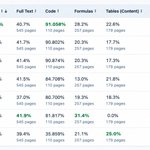
Not all browsers extract web content equally well.
We benchmarked Moli against Chromium, Lightpanda, Kitesurf, and Obscura across 545 web pages.
The results 👇
🏆 #1 in overall Web-to-Markdown extraction quality — 39.27%
💻 Highest code extraction score — 91.06%
✅ Markdown output generated for all 545 pages
For AI agents, loading a webpage is just the first step.
What matters is extracting meaningful content while preserving its structure.
That's what we're building with Moli — an open-source browser engine designed for AI agents.
Explore Moli on GitHub:
github.com/lexmount/moli

2
7
433
Let AI agents reliably complete real web tasks in the cloud.
AI agents can think.
But they still can't reliably complete real web tasks without a browser.
Lexmount AI provides:
→ Cloud Browser: isolated browser sessions for browsing, clicking, and filling forms
→ Web Fetch: extract titles, text, and links from public pages in one request
No browsers to deploy. No infrastructure to maintain.
Build agents that can actually use the web.
browser.lexmount.com/
We just opened an official community for Moli 🚀
A place to ask questions, share what you build, suggest features, and help shape where the browser for AI agents is headed.
Join us → discord.gg/4eXGtdWWnq
10
10
1,617
As agents get more capable, browser infrastructure can't be measured by speed and memory alone.
Isolation, permissions, session boundaries, and observability are now part of the browser's core product surface.
The browser is no longer just where an agent acts — it's a security boundary.
That's exactly the philosophy behind how we're building Moli. 🧺
10
5
804
🔐 **Session boundaries.**
Profiles, cookies, and HTTP cache are scoped per session. Start clean, finish clean — with full control over what persists across runs.
1
25