

The global standard for benchmarking and valuing energy assets.
London, New York, Sydney
Joined March 2020
- Tweets743
- Following377
- Followers2.2K
- Likes655






Modo Energy retweeted
ERCOT: Texas approved hourly energy certificates, which stamp every MWh with the hour it was produced. Batteries can't generate clean power, but they can shift it to evening when it's scarcest. If that spread runs $10 to $20/MWh, a 2-hour battery earns $6 to $13/kW-yr.

ALT Chart: ercot eac 03 charge discharge clean share
Batteries don't scale without grid operators' trust. Flexible connection agreements (FCAs) are helping to build it.
That's the view of Georg Gallmetzer (Managing Director, ECO STOR). Grid operators are responsible for keeping the network stable. With around 500 GW of connection requests in the queue, they need certainty on how batteries will behave before connecting them.
Georg puts it with a German saying: the grid operator has been the rabbit frozen in front of a poisonous snake, the BESS industry.
FCAs provide that certainty: clear limits on charging, feed-in and ramp rates, with operators staying in control. What began as a pilot is becoming the standard across Germany's DSOs.
For developers, the trade-off is some operational limits. The upside is a credible route to gigawatts of connected capacity.
Full episode of Transmission below.
#BESS #EnergyStorage #Germany #FCA
Modo Energy tracks 231 GW of operating and planned data centers in PJM and forecasts 19.2 GW of added demand at the system peak in 2030.
Only 23 GW is built or has both a permit and a stated grid connection. PJM's planning forecast has about twice as much, 38.8 GW in 2030.

3
4
442

Batteries are earning more than solar in Australia right now. But batteries don't make electricity. They move it around.
With coal retiring and demand growing, the NEM still needs new generation, and solar is the cheapest source. Modo Energy's forecast has solar building out economically at a rapid pace into the 2050s and beyond.
Data centres and industrial users are already signing contracts for the combination: cheap solar, with a battery to make it more reliable.
The strongest hybrids maximise storage. A bigger battery, or one that stores energy for longer, gives more choice over when to sell. That's where the value is.
#Solar #BatteryStorage #BESS #DataCentres #NEM #Australia
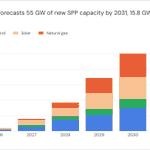
Modo Energy expects 55 GW of SPP's 140 GW interconnection queue to come online by 2031 if historical pass rates hold.
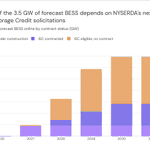
Solar would add 16.3 GW, BESS 15.8 GW and gas 15.6 GW. Developers are expected to withdraw 24.1 GW of the 39.9 GW BESS pipeline due by 2031.

2
3
194

Once a renewables developer reaches scale, bringing everything in-house can look like the obvious next step.
Mehmet Energin, Chief Commercial Officer at OX2, sees the risk: vertical integration can be a very expensive way of delivering worse results than a specialist partner would.
OX2 keeps mission-critical capabilities in-house and partners where the market offers strong alternatives, including optimisation. That works as long as incentives are aligned: if the asset performs, the partner is rewarded too. If the market shifts and incentives drift apart, the decision changes.
Full episode of Transmission below.
#BESS #Renewables #EnergyStorage #EnergyTrading


Australia has built batteries faster than any other country per capita. With more batteries competing for the same evening hours, NEM evening prices have more than halved in a year.
That makes solar valuable to batteries too. The two sit on opposite sides of the midday price. When midday prices crash, solar earns less but the battery charges for almost nothing. When midday prices hold up, solar earns more, even if charging costs the battery a bit extra.
In New South Wales this August, one day's midday prices collapsed and the battery earned about three times what the solar did. A week earlier, prices held up and it was the other way round.
Pair them, and one side covers the other as the daily price shape shifts.
#BatteryStorage #Solar #BESS #EnergyMarkets #NEM #Australia
Modo Energy retweeted

Monday was a big day for energy policy nerds.
I finally got through the (dozens of) show cause responses this week at @FERC.
One big takeaway: curtailment.
Four ISOs propose a new class of non-firm transmission service. A data center on it connects with the stipulation that it curtails under certain grid conditions. MISO, NYISO and ISONE would set those conditions with a price threshold: $100/MWh in MISO, $200/MWh in NYISO and $250/MWh in ISONE.
These are not emergency-level prices. MISO’s threshold is the first step of scarcity pricing. Since July 2023, the average MISO hub has been above $100/MWh for 246 hours a year, and the average NYISO zone above $200/MWh for 164.
Most data centers are designed for 99.99% uptime, under an hour of downtime a year. A campus on non-firm service would need on-site generation or storage to keep running through those hours.

