ARCHIVED - Dr. Nicky Fox (@NASAScienceAA) header
ARCHIVED - Dr. Nicky Fox (@NASAScienceAA) profile picture

This account has been archived.

Washington, D.C.
Joined September 2022
Photo by ARCHIVED - Dr. Nicky Fox (@NASAScienceAA)Photo by ARCHIVED - Dr. Nicky Fox (@NASAScienceAA)Photo by ARCHIVED - Dr. Nicky Fox (@NASAScienceAA)Photo by ARCHIVED - Dr. Nicky Fox (@NASAScienceAA)Photo by ARCHIVED - Dr. Nicky Fox (@NASAScienceAA)Photo by ARCHIVED - Dr. Nicky Fox (@NASAScienceAA)Photo by ARCHIVED - Dr. Nicky Fox (@NASAScienceAA)Photo by ARCHIVED - Dr. Nicky Fox (@NASAScienceAA)Photo by ARCHIVED - Dr. Nicky Fox (@NASAScienceAA)Photo by ARCHIVED - Dr. Nicky Fox (@NASAScienceAA)
A team from @UofMich is working with @NASA to create a new approach to measure Earth’s magnetic fields by developing a new system that can both take scientific measurements and provide spacecraft attitude control functions. Learn more: science.nasa.gov/science-res…
8
77
7
306
34,618
Reminder: Over the next few weeks, this X account will soon be archived. To find the latest news, announcements, and resources regarding NASA Science and its leadership, please make sure to follow our blog and the NASA Science website, both linked below. Blog: science.nasa.gov/about-us/ni… Web: science.nasa.gov
4
3
18
2,196
Sundays are for perspective. From tracking ocean currents and wildfires to studying distant galaxies, #NASAScience helps us see the beauty and fragility of our home planet and beyond. Take a moment to look up, and remember: science is how we explore, protect, and understand our world. Discover more: science.nasa.gov/
1
2
23
1,788
The #NISAR mission is one step closer to liftoff! This NASA-ISRO satellite, designed to monitor Earth’s changing ecosystems, land surfaces, and ice, has safely arrived at India’s Satish Dhawan Space Centre. Launch is targeted for July. Details: go.nasa.gov/45Gdytd
4
18
1,601
During its early years, our universe was immersed in a fog of neutral hydrogen gas, but today this gas is ionized. Until now, astronomers have wondered what objects caused this transformation. Using @NASAWebb data, a team of astronomers have identified dozens of small galaxies that played a starring role in shaping our universe into the one we know today. More: go.nasa.gov/4kX9sky
4
11
987
Have you seen the latest images of solar eruptions from @NASA's PUNCH mission? Using the mission’s highly sensitive, wide-field instruments, we’re able to capture a big-picture view of coronal mass ejections (CMEs) as they evolved and raced through the inner solar system in much greater detail than previously possible. The data from these images are helping scientists better understand space weather and its impact. More: go.nasa.gov/4kzAHBV
43
7
166
8,093
A year of terrestrial data on plant health, captured by @NASA’s PACE mission. 🔗: go.nasa.gov/3ZVNq9J
8
1,446
Update: The SunRISE team is reviewing its launch date, anticipating no earlier than September for liftoff. SunRISE, led by Prof. Susan Lepri of @UMich, consists of six small satellites that will detect storms of solar energetic particles that could pose a risk to spacecraft and astronauts. Learn more: go.nasa.gov/4jJS3ed
1
5
19
1,385
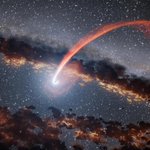
Three black holes have been caught snacking on stars, thanks to a new study combining many different telescopes including from @NASA, @ESA, and other institutions. These events will help us gain new insights into galaxy and black hole evolution: go.nasa.gov/43LIJAG
3
16
2
46
2,170
Two #NASAScience technologies are key components of a new high-resolution sensor for observing wildfires. This tiny sensor could be used by a constellation of small satellites to provide first responders with detailed wildfire data in less than an hour: go.nasa.gov/3HhHwJQ
12
650
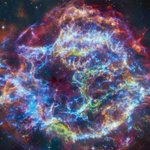
This month’s #NASAScience image features Cassiopeia A, one of the most studied supernova remnants. Using data from @chandraxray and @NASAWebb, researchers have uncovered previously unseen structures within the stellar debris, offering new insights into the complex aftermath of a massive star’s explosion. Explore the science: go.nasa.gov/4jGzkQU
10
71
4
271
25,950
Where did Mars' water go? And why? These questions have long puzzled scientists. Now, after a decade of searching, @NASAMars’ MAVEN has made the first direct observation of an elusive atmospheric escape process known as sputtering, offering new insight into the Red Planet’s mysterious water loss. go.nasa.gov/3Z4oUTB
7
25
2
101
7,672
On the ISS, bubbles don’t rise, tools float away and air doesn’t move on its own, so experiments in space need to be reimagined from the ground up. A NASA scientist explains how we do research in zero gravity. Learn more about science on @Space_Station: go.nasa.gov/3HcDxyd
2
3
1
11
1,900
Did you know that changes in nearby tree leaves can indicate when a volcano becomes more active and might erupt? New research from @NASA and the Smithsonian Institution suggests that we can now detect these changes from space. More: go.nasa.gov/3HaEZAY
2
3
1
19
2,119
This #MemorialDay, we honor the brave souls who gave everything for our nation. Their sacrifice echoes through time like starlight, their legacy shines on in the vast cosmos.
2
1
22
895
How big is space? Bigger than you think. And then some. A NASA scientist explains what we know — and don’t know — about the size of the cosmos. Explore more about the universe: go.nasa.gov/3Slqfl8
1
4
9
1,022
Ready to help scientists study noctilucent clouds and to learn how human activities affect our atmosphere? Join @DoNASAScience’s Space Cloud Watch project by observing the sky and uploading your own photos of noctilucent clouds to the project website: 🔗 go.nasa.gov/43uF21W
1
3
18
1,163
Nine students. One frozen Alaskan sky. From eclipse outreach to chasing auroras, learn how these @NASA Eclipse Ambassadors turned wonder into purpose through science: go.nasa.gov/3SOacwj
1
4
1
23
1,985
How did life begin on Earth? It’s one of the biggest questions in science. NASA’s Dragonfly mission, launching no earlier than 2028, is heading to Titan—Saturn’s icy moon that may hold some clues. About the size of a car, Dragonfly will fly across Titan’s surface, exploring an “untouched chemical laboratory” full of the organic molecules that make life possible without life complicating the picture. More: go.nasa.gov/44OVfl5
3
10
42
1,673
Tomorrow, Thursday, May 22, the @SpaceX Dragon spacecraft will undock from the @Space_Station, returning to Earth with valuable scientific samples and hardware. From experiments studying how various materials react to space to a successful tech demo to capture objects in microgravity, learn more about the science that’s shaping future missions to Mars and beyond: go.nasa.gov/3Sidh7L
6
10
1
48
2,357