
Pelotonia Institute for Immuno-Oncology. A bench-to-bedside research initiative accelerating therapeutics that use the immune system to fight cancer. #PIIO
- Tweets1.4K
- Following442
- Followers1.2K
- Likes2.3K




ALT Congratulations to Dr. Andreas Wieland on being named a 2026 Clarivate Highly Cited Researcher. This recognition places him among approximately the top 0.1% of scientists worldwide whose research is most influential in shaping their fields. A tremendous achievement for Dr. Wieland, the OSUCCC-James, and the @pelotonia Institute for Immuno-Oncology (PIIO). #CancerResearch #Immunology #ResearchExcellence

ALT photo of audience at night of impact announcement of funds raised in 2026


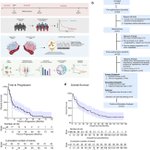
ALT Trial design & clinical outcomes for RCC patients treated with Sunitinib. a Overview of the clinical trial design, highlighting the treatment regimen with sunitinib, including cycles of administration and nephrectomy procedures. The time points of CT scans and patient categorization as responder or non-responder are also indicated. b CONSORT flow diagram including patient enrollment criteria, reasons for study discontinuation, and the numbers evaluated for primary, secondary, and post-hoc endpoints. c Kaplan–Meier curve showing Time to Progression (TTP) for all patients in the study. The number of patients at risk and cumulative number of events are shown for each time point. d Kaplan–Meier curve for OS, indicating survival rates over time for patients treated with sunitinib

ALT Graphical Abstract: We combined clinical survival analyses from an HNSCC cohort (ORIEN) with mechanistic studies in CRISPR/Cas9 Hsd11β2-knockout (KO) cell lines, an epithelial-specific Hsd11β2 conditional KO (eHSD−/−) mouse model, and an orthotopic model with exogenous GC exposure. Findings support a role for local GC metabolism as an immunometabolic checkpoint in HNSCC. In experimental models, restoring epithelial GC inactivation via HSD11β2 reduces immune suppression and restrains tumor progression. Pharmacologic induction of HSD11β2 represents a promising strategy to counter steroid-driven immune evasion and may enhance responses to immunotherapy.

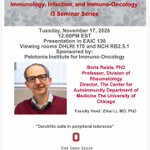
ALT Ohio State i3 Seminar flyer featuring a portrait of Boris Reizis, PhD, of the University of Chicago. He will present “Dendritic cells in peripheral tolerance” on Nov. 17, 2026, at noon ET in EAIC 130, with viewing rooms at DHLRI 170 and NCH RB2.5.1. Faculty host is Zihai Li, MD, PhD. Sponsored by the Pelotonia Institute for Immuno-Oncology.

ALT Resident macrophages occupy distinct anatomical niches and perform organ-specific homeostatic and immune functions. In the brain, microglia maintain central nervous system homeostasis, whereas LYVE1⁺ and MHC-II⁺ border-associated macrophages regulate cerebrospinal fluid flow, vascular integrity, antigen presentation, and host defense. Lung macrophages include alveolar macrophages involved in surfactant clearance and gas exchange, together with TIM4⁺, MHC-II⁺, and Ly6G⁺ interstitial populations associated with tissue repair, immune regulation, and type 2 responses. Kupffer cells and niche-associated liver macrophages coordinate detoxification, pathogen clearance, lipid metabolism, and inflammatory control. In the heart, TIM4⁺ and CCR2⁺ macrophages contribute to tissue remodeling, electrical conduction, hypertrophy, inflammation, and fibrosis. Splenic macrophages, including RPMs, MZMs, and WPMs, regulate erythrocyte clearance, iron recycling, heme metabolism, immune surveillance, and tis

ALT Graphical Abstract: Natural killer (NK) cells are key mediators of immune surveillance following hematopoietic stem cell transplantation (HSCT). However, despite the post-conditioning spike in interleukin-15 (IL-15), NK cell maturation is frequently delayed following HSCT. Here, we show that during in vitro NK cell development from CD34+ hematopoietic progenitor cells, early exposure to IL-15 drives aberrant mTOR activation, resulting in DNA methylation and transcriptional dysregulation with suppressed maturation and KIR acquisition. In contrast, transiently withholding IL-15 or inhibition of mTOR with rapamycin generates NK cell developmental intermediates intrinsically poised to mature into highly functional, KIR-expressing NK cells. Single-cell analysis of HSCT patients at early post-transplant time points reveals a similar aberrant transcriptional signature of IL-15/mTOR overactivation in circulating donor-derived NK cells. These findings identify a developmental window when IL-15

ALT Fig. 1. Tumors with high LCN2 expression correlate positively with genes and pathways related to ferroptosis.

ALT Fig. 2. Human PDAC cells that have low LCN2 expression are susceptible to ferroptosis.

ALT Fig. 3. Deleting LCN2 in mouse PDAC cells dysregulates ferroptosis-related pathways, making cells susceptible to ferroptosis.

ALT Fig. 4. Lack of tumor-derived LCN2 prevents IKE-associated tumor growth.



ALT Brutus Buckeye is sitting on a reclining chair in a blood donation setting. Several individuals are seated in similar chairs, donating blood. A person in a medical uniform is attending to one of the donors. The environment is a well-lit indoor space with equipment and chairs arranged in a row.

ALT Blake Wang speaking during the Presidential Award Session at SITC2026

ALT Elizabeth Garfinkle pictured beside her poster at SITC2026

ALT Dr. Yang Xu pictured beside his poster at SITC 2026

ALT Dr. Gaurav Shrestha pictured beside his poster at SITC 2026

ALT Blake Wang photoed behind backdrop of SITC2026 logo


ALT Explore the DKK1-CKAP4 axis at #SITC2026! Alessandro Canella presents how it enhances the immune evasion role of cancer-associated fibroblasts in high-grade endometrial cancer subtypes. Other authors include: Keith Brownewell, Nidhi Maddirela, Zachary Gentry, Caprice Eisele, Jordan Krull, Qin Ma, Aharon Freud, Casey Cosgrove

ALT Spotlight on macrophages at SITC 2026! Aki Inase presents how cachexia-associated tumor secretory factors reprogram macrophage Fc receptor expression and antibody handling. Other authors include: Adeoluwa Adeluola, Gregory Young, Juehui Mao, Thomas Mace, Dwight Owen, Latha Ganesan, Christopher Coss, & Mitch Phelps

ALT A Top 150 abstract at SITC 2026! Ziyu Wang presents dual targeting of GARP on tumor and Tregs with bispecific T cell engagers for effective cancer_immunotherapy. Other authors include PIIO Director, Zihai Li