

QMS Network is a Layer-1 blockchain built for the post-quantum era. Testnet is live.
Joined May 2026
- Tweets391
- Following2
- Followers24.1K
- Likes360





Let's test your understanding of QMS.
If a miner already knows the optimal solution to a problem, does that give them an advantage in producing a block on QMS?
A. Yes, solution quality determines block production.
B. Yes, they can skip the solver computation.
C. No, block production depends on a lottery over valid solver outputs.
D. No, every block requires a new optimal solution.
What's your answer?
Most EVM chains produce blocks using stake. QMS uses Proof-of-Useful-Work: miners win blocks by solving QUBO optimization problems. Execution remains standard Ethereum, so Solidity contracts deploy with zero code changes.
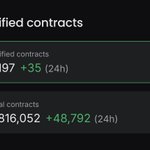
2,100+ verified contracts are already live on testnet.

You asked some great questions during our first X Spaces AMA!
In case you missed the session or want to revisit the discussion, here's a quick recap:


QMS Network retweeted
Will quantum computers eventually replace our laptops? Can they crack every password? Can they solve problems that would take today's supercomputers millions of years?
Quantum computing is often described in ways that make it sound almost magical. The actual science is arguably more interesting.
Let's look at five common misconceptions and what we know so far.
Most of crypto sees quantum breakthroughs only as a threat.
But AI cutting quantum algorithm costs by an order of magnitude does two things at once:
1. It proves the quantum timeline for legacy chains isn’t just a hardware curve.
2. It pulls forward the era where quantum computing does real, useful work.
QMS is built for both: post-quantum at the protocol layer, with Proof-of-Useful-Work ready for quantum-era compute.


Two claimed proofs of a 167-year-old mathematical mystery emerged on the same day last week. Could either have implications for cryptography?
That's one of three developments worth following:
• Riemann Hypothesis: Two claimed proofs made headlines, one AI-assisted and another entirely human, with the latter addressing a generalized version of the hypothesis. Even if confirmed, the results wouldn't directly break today's encryption or blockchain signatures. The quantum threat comes from Shor's algorithm running on sufficiently powerful quantum computers.
• IOSCO: The global securities watchdog warned that quantum computers capable of breaking today's financial cryptography could emerge within five years, while upgrading existing systems could take longer.
• IBM, NVIDIA & Fermilab: Announced plans to bring quantum processors and classical supercomputing closer together, with a focus on error correction and building more reliable quantum systems.
Imagine paying someone to solve a complex problem, then having to solve the entire thing yourself just to check their work.
This is a key challenge for Proof of Useful Work.
On QMS, miners hash their solver’s state at regular intervals. The network can then verify a winning miner’s work by re-running just a small section, instead of the whole computation. Because what’s the point of useful computing if verifying it takes just as much work?
We're now past 40 million transactions, with nearly 6 million addresses and close to 400,000 blocks since launching on September 30.
And there's something interesting behind every block.
QMS miners solve optimization problems to produce blocks. Right now, they're randomly generated test problems, and anyone can inspect both the problem and its winning solution on the explorer.
50 days in, and there’s still plenty more to test and update.
Post-quantum security comes with a performance cost.
In a new report, global securities regulator IOSCO cited a Solana testnet experiment where throughput reportedly dropped by around 90% after switching to post-quantum signatures.
For context, one standardized post-quantum signature scheme, ML-DSA-44, produces signatures roughly 38 times larger than today's common elliptic-curve signatures.
Every chain that goes post-quantum pays for bigger signatures somewhere. QMS is designed to keep that cost out of block production: blocks need no signatures, and post-quantum finality runs asynchronously. Transaction signatures are a separate migration, still ahead.

You don’t need to know how a blockchain works to benefit from one.
Imagine a logistics company using QMS to optimize delivery routes. It could submit a problem, get back ranked solutions, and carry on with its business without ever touching a crypto wallet.
That's part of QMS's long-term vision: making decentralized computing accessible to businesses through familiar interfaces, without requiring them to interact directly with the blockchain.

Applications for QMS Builders Program Cohort I are closed.
Thank you to every team that took the time to apply and share what you're building. We're looking forward to reviewing your projects.
In the meantime, our testnet remains open to everyone. Feel free to keep exploring, testing, and building!
Some of this week's biggest quantum computing news was actually about GPUs.
NVIDIA unveiled a faster decoder for quantum error-correction research and announced plans with IBM and Fermilab to pair quantum processors with GPU supercomputers.
It's a reminder that quantum computing is advancing alongside classical computing, not replacing it overnight.
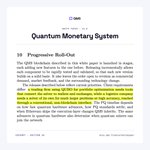
QMS takes a similar approach to mining. Proof of Useful Work starts with classical solvers, but is designed so quantum miners can join as the hardware improves, without changing the consensus rules.

Last call for Cohort I! Applications close in just 5 hours.

24 hours left to apply for QMS Builders Program Cohort I!
Building a wallet, DeFi app, or AI agent? We'd love to hear what you're working on.
Selected teams will get direct access to the core team and priority technical support.
If you haven't applied yet, there's still time: qms.finance/builders-program
Scheduling nurses is a puzzle: hundreds of shifts, individual preferences, labor rules, and hours spent trying to make everything fit.
It's one of the most interesting real-world problems our community suggested for QMS to tackle this week.
What's a scheduling headache in your line of work?
Ethereum researchers are prioritizing quantum security over faster blocks.
On November 12, Ethlabs confirmed it was withdrawing its Quick Slots proposal from Ethereum's upcoming Hegotá upgrade. The proposal would have reduced block times from 12 to 10 seconds, helping transactions land faster.
Instead, Ethlabs wants to focus on making Ethereum quantum-resistant by 2027. That timeline is still a proposal, not an approved roadmap.
This shows the tradeoffs involved in upgrading a live blockchain. Preparing for quantum threats takes time and engineering resources, which can mean pushing back improvements users want today.
It's also why building quantum resistance into a blockchain from the start matters. Planning ahead gives developers more room to focus on performance and security together.
Post-quantum security is more than swapping out cryptographic signatures.
Larger signatures affect blockchain performance, and upgrading an existing network requires coordination across the entire ecosystem.
We explored these challenges in an earlier article, including how QMS approaches post-quantum security from the ground up.

A quick safety reminder for the QMS community:
QMS testnet tokens are free, have no monetary value, and are not for sale. Anyone asking you to pay for them is trying to scam you.
Be careful with websites showing QMS price charts, promising daily rewards, or claiming to be affiliated with QMS. Using our name or logo doesn't make a site official.
Always verify unfamiliar links via our official X, Discord, or Telegram (all listed on our website) before connecting your wallet, signing transactions, or sending funds.
Stay safe out there!