Pinned Tweet
Big ideas need bold support.
Three MIT-led research teams have been selected for funding through the U.S. Department of Energy's Genesis Mission, an initiative that uses AI to accelerate scientific discovery and tackle major challenges in energy, manufacturing, biotechnology, quantum information science, and more.
Among the selected projects are two led by RLE faculty:
⚛️ Developing AI-driven approaches to design and optimize quantum devices.
🔬 Advancing next-generation materials and technologies through interdisciplinary research.
These awards highlight the power of collaboration across MIT and the growing role of AI in shaping the future of scientific discovery.
Read about it here: rle.mit.edu/mit-projects-sel…
#MIT #MITRLE #ArtificialIntelligence #QuantumScience #ScientificDiscovery #Research #Innovation #DepartmentOfEnergy #GenesisMission
RLE at MIT retweeted
MIT researchers have discovered that a process responsible for flushing waste from the brain during sleep is commonly impaired in older people. news.mit.edu/2026/waste-clea…
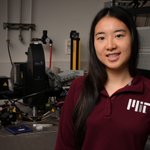
🔬 Researcher Spotlight: Sarah Spector
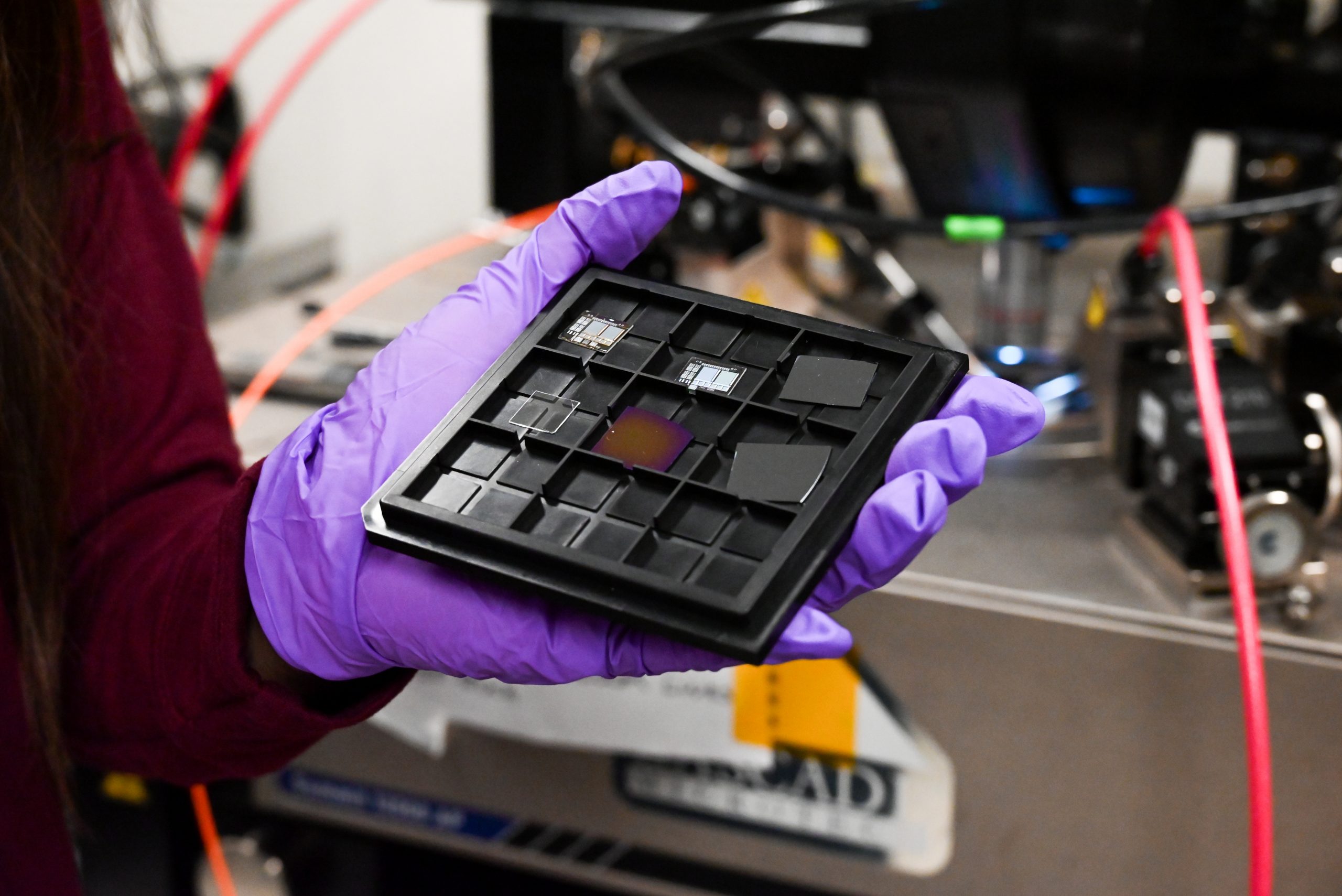
What happens when you stop fighting the forces that limit nanoscale devices and start using them to your advantage?
In this researcher spotlight, we sit down with Sarah Spector of the Niroui Group to discuss her recent work pushing the boundaries of nanoscale device design.
From rethinking surface adhesion and overcoming fabrication challenges to collaborating across disciplines and bringing nanoscale technologies closer to real-world applications, Sarah shares the questions, challenges, and ideas driving her research.
Read the full interview to learn more about her work and the future of nanoscale devices.
🔗 rle.mit.edu/rethinking-the-l…
Photos by Emily Theobald
#MIT #MITRLE #ResearcherSpotlight #Nanotechnology #NanoscaleDevices #MITResearch
1
140
What if a flying robot could navigate the world as effortlessly as an insect?
Researchers have developed a 1.29-gram insect-scale flying robot capable of hovering, tracking flight paths, and avoiding obstacles using only onboard sensing and computation. In a 30-second outdoor flight experiment, the robot successfully navigated its surroundings and landed on a sunflower, all without relying on external motion-capture systems.
This breakthrough in aerial microrobotics brings researchers one step closer to developing autonomous, insect-scale robots with potential applications in search and rescue, precision agriculture, and beyond.
Read more about the research: arxiv.org/abs/2602.08328
#MIT #RLE #Microrobotics #Robotics #Engineering #Research
RLE at MIT retweeted
MIT-led team receives funding to develop a wearable monitor for early disease detection. The team aims to create a low-power, noninvasive sensor patch that measures heart failure and sepsis biomarkers in real-time. news.mit.edu/2026/mit-led-te…
RLE at MIT retweeted
The MIT Combat Robotics Club (CRC) uses the tagline “build, battle, destroy, repeat,” which is a pretty spot-on description for a club that embraces learning opportunities through destruction. news.mit.edu/2026/dream-buil…
RLE at MIT retweeted
MIT engineers find a precise way to grow artificial blood vessels: With mechanical stretching, MIT engineers can control how artificial arteries sprout new capillaries. news.mit.edu/2026/mit-engine…
What if a wearable device could detect life threatening conditions before symptoms appear?
An MIT led research team, including RLE principal investigator Ahmad Bahai, has received up to $38 million in funding from ARPA-H to develop a wearable sensor patch that continuously monitors biomarkers associated with heart failure and sepsis.
Powered by body heat, the noninvasive device aims to provide real time health data, helping clinicians detect diseases earlier, monitor recovery, and improve personalized patient care.
Learn more about how this research could shape the future of health care: rle.mit.edu/wearable-monitor…
#MIT #MITResearch #RLEatMIT #WearableTechnology #HealthcareInnovation #BiomedicalEngineering
122
RLE at MIT retweeted
A team, including researchers in @MIT_IMES and @MITEECS, has shown that exposure to short bursts of a gentle, staticky sound known as “pink noise” can strengthen the flow of cerebrospinal fluid, which clears debris from the brain and keeps it healthy.
news.mit.edu/2026/pink-noise…
RLE at MIT retweeted
Engineers have developed a nanoscale particle for delivering personalized cancer vaccines. The particle could be adapted to carry many different antigens, to potentially prevent or treat individual patients’ tumors. news.mit.edu/2026/mit-engine…
RLE at MIT retweeted
After transferring from community college, Veronica Calzadilla Sosa helped make MIT a new force on the chemical engineering student competition circuit. “Experiences like this remind me how much engineering extends beyond technical knowledge alone,” the senior says. news.mit.edu/2026/persistenc…
RLE at MIT retweeted
Researchers designed an implantable drug-delivery device they hope could prevent recurrence of glioblastoma, an aggressive type of brain tumor. Ultrasound transducers printed onto the device use sound waves to help drugs pass through the blood-brain barrier. news.mit.edu/2026/implantabl…
RLE at MIT retweeted
MIT engineers designed a robotic enteroscope that can inch through the hard-to-reach small intestine, making biopsies and drug delivery easier. news.mit.edu/2026/soft-robot…
RLE at MIT retweeted
Rather than asking what AI can do, ImpactBench asks what AI does to people: how it shapes human psychology, autonomy, and wellbeing. media.mit.edu/posts/research…
RLE at MIT retweeted
To give context on age:
Grace Hopper began computing at 38, completed the first compiler at 46, helped shape COBOL at 53, kept developing COBOL for the Navy in her 70s, retired from the Navy at 80, & then became a consultant for the Digital Equipment Corporation.
v/@cooperx86
RLE at MIT retweeted
Congratulations to Robert E. Hall PhD ’67 and Michael Woodford PhD ’83! 👏
BREAKING NEWS
The Royal Swedish Academy of Sciences has decided to award the 2026 Sveriges Riksbank Prize in Economic Sciences in Memory of Alfred Nobel to Robert E. Hall and Michael Woodford “for microeconomic foundations of macroeconomic stabilisation.”
#NobelPrize
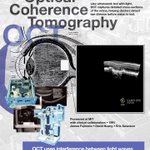
Did you know that light can help doctors see beneath the surface of the human eye? 👁️
Optical coherence tomography (OCT) is a groundbreaking imaging technology that uses reflected light to create detailed, 3D images of tissue. First developed in 1991 by RLE Principal Investigator James Fujimoto, RLE Research Affiliate Eric Swanson, and David Huang, OCT has revolutionized eye care by allowing doctors to detect and monitor diseases such as glaucoma and macular degeneration before irreversible vision loss occurs.
Their pioneering work earned them the 2023 Lasker-DeBakey Clinical Medical Research Award and continues to shape the future of medical imaging.
🔗 Learn more: news.mit.edu/2023/fujimoto-s…
#MITRLE #OpticalCoherenceTomography #MedicalImaging #Innovation #Research
RLE at MIT retweeted
We’ve lost an icon. Margaret Hamilton, a computer science pioneer best known for her work at MIT leading development of the flight software for the Apollo missions to the moon, has died at 90. Read about her legacy via MIT News: news.mit.edu/2026/margaret-h…
4Q with Sharon Jung Han Hsia: Exploring how light could help simplify the next generation of high power electronics. ⚡️
In this 4Q feature, Sharon Jung Han Hsia discusses optically controlled gallium nitride devices and how using light to control power could lead to simpler, more efficient approaches to high power electronics.
Read the full 4Q to learn more about the research and what is next for optically controlled GaN devices.
rle.mit.edu/switching-power-…
#MIT #RLE #4Q #GalliumNitride #GaN #Optoelectronics #PowerElectronics #MITResearch