

Author w/Hussein Agha, TOMORROW IS YESTERDAY: LIFE, DEATH, & THE PURSUIT OF PEACE IN ISRAEL-PALESTINE. Pdt Emeritus & Mideast Pg Dir @CrisisGroup. Yale Lecturer
Joined October 2011
- Tweets8.5K
- Following1.2K
- Followers39.3K
- Likes3.9K


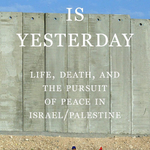


Hussein Agha's and my "Tomorrow is Yesterday: Life, Death, and the Pursuit of Peace in Israel/Palestine" now coming out in Arabic 👇

نبذة عن الكاتبين حسين آغا وروبرت مالي.
«الغد هو الأمس» يصدر قريبًا عن دار هاشم للكتب والنشر بالترجمة العربيّة لعمر فتحي.
احجز نسختك الآن!
للحجز من داخل لبنان
wa.me/96170611220
للحجز من خارج لبنان
wa.me/97433799777
#دار_هاشم
@Omar_fat7y7

Robert Malley retweeted

نبذة عن الكاتبين حسين آغا وروبرت مالي.
«الغد هو الأمس» يصدر قريبًا عن دار هاشم للكتب والنشر بالترجمة العربيّة لعمر فتحي.
احجز نسختك الآن!
للحجز من داخل لبنان
wa.me/96170611220
للحجز من خارج لبنان
wa.me/97433799777
#دار_هاشم
@Omar_fat7y7
Robert Malley retweeted

"A party too timid to end one of the most unpopular wars in modern American history can’t be trusted to end wars at all." Amen!
nytimes.com/2026/11/23/opini…

Robert Malley retweeted
"If Democrats truly oppose the conflict, they should stand behind the corollary: The reckless decision to launch the war is what led to an inevitably unsatisfactory peace, whose price will only worsen over time." nytimes.com/2026/11/23/opini…
Robert Malley retweeted

Trump’s war with Iran is reckless, costly and going nowhere. Congress has the authority, and the responsibility, to act to stop it. @Rob_Malley and @stephenwertheim make the case for why Democrats cannot wait to use the power of the purse to bring this war to an end.
nyti.ms/4tjmJcI
Robert Malley retweeted
Latest Iran war poll: 80% of Dems want to end Iran war “now, regardless of the terms,” compared to 14% who want to “stay the current course" and 3% who want to “escalate militarily." Most Dems want to cut war funding even at risk of government shutdown.
sadat.umd.edu/sites/sadat.um…

Robert Malley retweeted

MUST READ by @Rob_Malley and @stephenwertheim:
"It would be nice if Democrats could oppose the war without facing accusations of abetting an emboldened enemy or causing a government shutdown. But politics does not afford such luxuries. A party too timid to end one of the most unpopular wars in modern American history can’t be trusted to end wars at all."
nytimes.com/2026/11/23/opini…
Robert Malley retweeted

The best time for Democrats to force an end to the Iran war is now:
"Trump has already lost his war no matter what Democrats do. Nothing — not the killing of more Iranian officials, nor the targeting of more of Iran’s military, nor the destruction of more of its energy infrastructure — can bring about a semblance of victory. More war simply means more death and pain for everyone, Americans included.
It would be perverse for Democrats to assume even partial ownership of a misbegotten, illegal and senseless war for fear of owning its termination. If Democrats truly oppose the conflict, they should stand behind the corollary: The reckless decision to launch the war is what led to an inevitably unsatisfactory peace, whose price will only worsen over time." nytimes.com/2026/11/23/opini…

Robert Malley retweeted

Important point: Trump’s leverage on Iran is not derived from military escalation, but a credible path to end the war and allow Iran to rebuild. Whereas Trump’s repeated threats discourage Tehran from making concessions, ending the war can open space for productive negotiations.


@stephenwertheim and me in @nytimes on why Democrats should defund the Iran war:
“To the victor belong the spoils, Mr. Trump has said. Democrats, their victory complete, should unashamedly claim their own, beginning with one power the Constitution gives Congress over war that no president can ignore: the power to refuse to pay for it.”
nytimes.com/2026/11/23/opini…
Robert Malley retweeted

In today’s #MustRead, @Rob_Malley and @stephenwertheim argue that Democrats shouldn’t wait until January to act on the Iran war. They say Congress should use its power over federal funding to push for an end to the fighting now. ⬇️
nytimes.com/2026/11/23/opini…
Robert Malley retweeted

🆕in @NYTimes: "if Democrats fail to act now and Mr. Trump orders new military attacks, the fighting could quickly escalate"
"If Democrats believe the war is as misguided as they say, they should act accordingly. Later won’t be better and is prone to become never."
@NYTopinion


@stephenwertheim and me in @nytimes on why Democrats should defund the Iran war:
“To the victor belong the spoils, Mr. Trump has said. Democrats, their victory complete, should unashamedly claim their own, beginning with one power the Constitution gives Congress over war that no president can ignore: the power to refuse to pay for it.”
nytimes.com/2026/11/23/opini…
Robert Malley retweeted
Democrats should defund the Iran war now. Waiting for the new Congress will give Trump more time to attack Iran and make Democrats complicit in a war that Trump should wholly own.
If Democrats believe the war is as senseless as they say, they should act accordingly, @Rob_Malley and I write in @nytopinion:
nytimes.com/2026/11/23/opini…
Robert Malley retweeted

Interesting and helpful brief on politics around Iraq's Kata'ib Hizbollah by @LahibHigel:
High Stakes in Iraq’s Push to Reclaim Jurf al-Sakhar crisisgroup.org/qna/middle-e… via @crisisgroup

Robert Malley retweeted

Our @CrisisGroup’s take on Iraqi PM Ali al-Zaidi’s gambit in Jurf al-Sakhr. A significant victory after 12 years of government absence, but Kata’ib Hezbollah’s influence over the area did not end today. crisisgroup.org/qna/middle-e…
A must-read on the ICJ’s genocide ruling against Myanmar and its broader implications, by Philippe Sands 👇
nytimes.com/2026/11/20/opini…

Robert Malley retweeted

This is an important post because it is the legal justification Iran would deploy if it decides to attack Gulf States in the near future. Iran will argue it is acting in self defence since the Gulf States are cooperating in an illegal US led blockade that prevents Iran export its oil by ship. Such an escalatory attack is increasingly a serious option inside Iran since it needs to break out of the current neither war nor peace deadlock.
Trump has said he is not interested in a war with Iran at least until the New Year, but he may find Iran operates to a different calendar - ( which of course it does).
Hoping to be proved wrong.

American media coverage treats the naval blockade of Iran as if it were a routine, uncontroversial operation. Reports repeat CENTCOM's figures on ships turned back or disabled and borrow the military's own language of an "ironclad" blockade being "enforced." A reader could easily come away thinking that a port authority was managing maritime traffic. It is nothing of the sort. Under international law, a blockade imposed by one state on the ports of another is an act of aggression.
The point does not rest on interpretation. Article 3(c) of the Definition of Aggression annexed to General Assembly Resolution 3314 (1974) lists "the blockade of the ports or coasts of a State by the armed forces of another State" as an act of aggression. The same words were carried verbatim into Article 8 bis(2)(c) of the Rome Statute at Kampala in 2010. The Charter points the same way. Article 42 names blockade among the measures the Security Council may decide on, which places it in the Council's hands, not in those of a single state acting on its own account. No Council resolution authorises the cordon around Iran's coast.
Washington cannot recast the blockade as self-defence. Under Article 2 of the Definition, the first use of armed force is prima facie evidence of aggression, and the first use of force in this war was the American-Israeli strike of 28 February. Nor do the laws of naval warfare cure the defect. The San Remo Manual governs how a blockade is conducted, not whether it may lawfully be imposed. Every boarding, diversion and strike carried out to enforce it shares that illegality.
Iran's response, then, should not be cast as "defiance." It is the exercise of the inherent right of self-defence under Article 51 of the Charter against an ongoing armed attack.
The Persian Gulf Arab states sustaining the blockade should read Article 3(f) of the same Definition. It classifies as aggression the action of a state in allowing its territory, placed at another state's disposal, to be used by that state for aggression against a third state. Hague Convention XIII (1907) forbids belligerents from using neutral ports and waters as a base of naval operations and obliges neutral states to prevent such use.
Nor can these states present themselves as bystanders. On 9 November, President Trump wrote that "Qatar, Saudi Arabia, UAE, Bahrain, Kuwait, and others" would prefer "a continuation of the Greatest Naval Blockade in History." Later that day, he told reporters that the United States was maintaining the blockade "really at the behest of countries that are their neighbours." By the US president's own account, these states are not merely hosting the blockade. They are asking for it. Some have gone further still: in June, Trump publicly praised the UAE's president as a "warrior" who "was in there fighting." A state that lends its territory to an aggressor, urges it to continue, and joins the hostilities forfeits its neutrality. It is a co-belligerent, and the military installations on its soil that serve the blockade are lawful military objectives.
Robert Malley retweeted

Very important 👇

Is #Iran preparing to break the U.S. naval blockade?
🔹IRGC spokesperson Hossein Mohebbi made several important statements today that offer important insights into Tehran’s current military calculations and its approach to negotiations with Washington.
🔹First, he claimed that Iran has already demonstrated a missile range of 4,500 kilometers, specifically referring to Diego Garcia. This is particularly important given earlier reports that Iran attempted to target the island during the 40-Days War. Although those missiles reportedly failed to reach their destination, Tehran is now openly claiming the capability to threaten U.S. military assets far beyond the Persian Gulf, including in Europe.
🔹More importantly, Mohebbi rejected the description of the current situation as “no war, no peace,” arguing that Iran is already at war and will not tolerate a prolonged war of attrition. He said the conflict would be brought to a definitive conclusion, either on the battlefield or through Washington accepting Tehran’s conditions.
🔹This statement should be read alongside reports that Iran is preparing to resume oil exports despite the U.S. naval blockade. A Fars News Agency report warned that any attempt to stop an Iranian tanker preparing to depart would trigger attacks on energy facilities in six GCC countries. TankerTrackers has also reported preparations to resume Iranian oil exports.
🔹If these reports are accurate, Tehran may be preparing to actively challenge the blockade. The logic is quite clear: if an Iranian tanker successfully passes through, it would undermine the effectiveness of the blockade. If U.S. forces intercept or attack it, Tehran would have a direct trigger for retaliation. Such a move would also suggest that Iran has already considered how to confront or deter U.S. naval forces.
🔹In other words, Tehran appears to be seeking to take the military initiative while leaving Washington with the responsibility for triggering the next escalation.
🔹Mohebbi’s remarks about a potential U.S. ground operation reinforce this assessment. He argued that Iran’s defensive capabilities are significantly stronger on land than in the air or at sea, while questioning Washington’s ability to conduct ground operations. This reflects a broader perception within the Iranian military establishment that the U.S. can inflict substantial damage but lacks the means to force Iran into submission.
🔹On diplomacy, Mohebbi reiterated that Iran will not reopen Hormuz until its seven conditions are met and their implementation is verified. Only afterward would Tehran consider discussing the nuclear issue, and even then, its rights under the NPT – implicitly including domestic uranium enrichment – must be guaranteed.
🔹Another noteworthy point was his confirmation that the earlier decision to accept the MoU had been jointly endorsed by military and diplomatic officials. This appears intended to dismiss reports of divisions within the Iranian leadership and underline that the IRGC was itself part of the decision.
🔹Overall, these remarks suggest that Tehran is increasingly convinced that time and military endurance favor its position, while the Trump administration faces growing constraints on further escalation.
🔹The immediate implication is that Iran may no longer be willing to wait for a diplomatic breakthrough while the blockade continues. Instead, it appears increasingly prepared to challenge the blockade directly, accepting the risk of renewed military confrontation.
🔹The danger, however, is that Tehran’s growing confidence in Washington’s constraints may lead it to underestimate the risk of a much stronger U.S. military response, which could inflict devastating damage on Iran’s energy infrastructure and further weaken its already struggling economy.
Robert Malley retweeted

Iran-US Confrontation: Fragile Deterrence and Three Scenarios for Renewed War
🔹The USS Theodore Roosevelt has reportedly entered CENTCOM’s area of operations, joining two other U.S. aircraft carriers already in the region. It remains unclear whether Washington intends to maintain all three carriers or replace one of the existing deployments. Either way, the U.S. military now has greater operational capacity to conduct strikes against #Iran.
🔹This comes amid continued U.S. reconnaissance flights near Iran’s southern coast, military logistics operations toward the region, and sporadic exchanges of fire. U.S. has conducted strikes against radar and military installations in southern Iran, while Tehran has claimed attacks against American facilities in Bahrain. The latter is particularly significant, as it marks a resumption of Iranian attacks against U.S. military facilities in neighboring Arab countries after a roughly two-month pause.
🔹On the diplomatic front, there are no clear signs of a breakthrough. Despite Qatar’s intensified mediation efforts and its prime minister’s meetings with Trump and Vance last week, fundamental disagreements between Washington and Tehran remain unresolved. The latest military exchanges have further complicated prospects for a negotiated settlement.
🔹The important point here is that what appears to be preventing another large-scale war is primarily a political calculation in Washington regarding its objectives, potential gains, and consequences, rather than a lack of military capability.
🔹Some Iranian analysts and strategists describe the current situation as one of “partial deterrence” or “unstable deterrence.” The argument is that Iran has managed to establish a certain level of deterrence against the U.S., but that this remains fragile and could break down at any moment.
🔹Against this backdrop, three scenarios are being discussed within Iran’s strategic community:
1. Renewed U.S. military campaign: Once Washington completes its military preparations, Trump may decide to resume large-scale operations. One of the ongoing limited confrontations along Iran’s southern coast could provide the immediate trigger or justification.
2. Major Israeli covert operation: Another possibility, reportedly also under consideration in Israel, is a significant covert operation inside Iran aimed at provoking an Iranian military response. If Tehran retaliates against Israeli or American targets, that could provide the justification for renewed war, while shifting responsibility for escalation onto Iran.
3. Prolonged economic and military pressure: Under this scenario, Washington would maintain or intensify the naval blockade, continue building up its military presence, and avoid another full-scale war. The objective would be to gradually weaken Iran economically, hoping that mounting domestic pressure would either destabilize the country or force Tehran into concessions.
🔹Some Iranian analysts also believe this third approach could involve continued, limited covert attacks against energy facilities and other critical infrastructure to maximize the impact of the sanctions.
🔹There is a growing perception in Tehran that the third scenario is Trump's preferred option, partly because such a strategy would likely face little serious opposition from Democrats.
🔹But this is also creating a different calculation on the Iranian side. An increasingly prominent argument is that all three scenarios could ultimately lead to the same outcome for Iran: a gradual weakening of the country’s military, economic, and political position. From this perspective, continuing to exercise restraint may only make Iran more vulnerable over time.
🔹This helps explain the significance of Deputy Foreign Minister Kazem Gharibabadi’s remarks on state television yesterday. By arguing that the war is still ongoing and that Iran retains the right to respond, he appears to be establishing a legal and political justification for possible further Iranian action.
🔹Overall, the current equilibrium appears increasingly difficult to sustain. Washington may still prefer to avoid another major military campaign, but Tehran could eventually conclude that breaking the blockade through escalation is less costly than accepting its continuation.
🔹In other words, the risk of renewed war no longer depends solely on whether Trump decides to attack Iran again. It also depends on whether Tehran concludes that the costs of continued restraint have become greater than the risks of escalation.
Robert Malley retweeted

The "third way" between a deal and more bombing brings the fewest near-term negative consequences: Trump avoids the market reaction that comes with another round of fighting and the political hit of making a deal with Iran.
But the third way isn't really a way at all--Iran is likely to either resist the pressure or lash out more aggressively. axios.com/2026/11/10/trump-i…

« The absence of an immediate war should not be mistaken for de-escalation. As long as the blockade remains in place without a credible diplomatic exit, the risk of another military confrontation will remain real. »

Trump’s Message on Iran: The Gulf Wants No War, but the Status Quo Is Unsustainable
One thing stands out from Trump’s latest post: Gulf states clearly oppose another military confrontation with Iran. I suspect this was the central message conveyed during the meeting itself, as well as in conversations between senior U.S. officials and their Gulf counterparts.
There is a growing and welcome recognition across the Gulf that another war would not serve the interests of these countries. Quite the opposite. They would be among the first to pay the price, particularly if Iran retaliated against energy infrastructure, shipping routes, and other strategic assets.
But the real question is whether the meeting produced a new diplomatic proposal, and more importantly, whether Washington is showing any genuine flexibility. Because one thing should be clear: the current status quo cannot last.
Iran is unlikely to accept an indefinite blockade. Tehran could respond by targeting additional tankers and raising the economic and military costs of maintaining it. At the same time, once the new Congress takes office, the administration could face growing pressure to reconsider a blockade that has failed to produce Iranian capitulation while imposing significant costs on the global economy.
And there is a fundamental problem with Washington's approach: a blockade is a means of applying pressure, not an end in itself. If Tehran refuses to surrender, what exactly is the next step?
To conclude, Gulf states want to avoid escalation, and Trump increasingly appears inclined in the same direction. But preferences are not policy, and diplomatic statements are not a diplomatic breakthrough.
Unless Washington and Tehran find a formula that allows both sides to claim some degree of success, the situation will remain dangerously unstable.
The absence of an immediate war should not be mistaken for de-escalation. As long as the blockade remains in place without a credible diplomatic exit, the risk of another military confrontation will remain real.
#Iran
#IranWar