

Blog for Eng, Architects & Leaders interested in Serverless to transform Business Models. We show you Modern Cloud alongside The Value Flywheel Effect book.
Belfast, Northern Ireland
Joined July 2021
- Tweets1.6K
- Following4.1K
- Followers2.4K
- Likes1.3K







Pinned Tweet
💡 Welcome to The Serverless Edge
We help engineers, leaders, and organisations unlock business value through serverless-first thinking and modern cloud strategy.
The ideas behind our work come from The Value Flywheel Effect — a framework for connecting technology, culture, and strategic value.
🔍 Whether you’re scaling an engineering team, modernising your cloud platforms, or building a culture of continuous improvement — we share the practical tools and principles to make it happen.
🎧 Tune into our Serverless Craic podcast and conference talks to explore real-world stories of transformation.
🚀 If you’re ready to apply The Value Flywheel Effect in your organisation, our consulting and advisory sessions can help you build resilient systems, align teams, and accelerate value delivery.
🔗 Learn more: theserverlessedge.com
#ModernCloud #TheValueFlywheelEffect #TechLeadership #EngineeringExcellence

Most engineering teams don’t have a delivery problem.
They have a momentum problem.
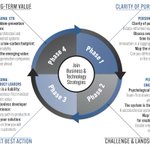
The Value Flywheel Effect connects business + technology strategy through 4 phases:
→ Clarity of Purpose
→ Challenge
→ Next Best Action
→ Long-Term Value
The goal isn’t to move faster.
It’s to make every turn of the flywheel make the next one easier.
Chapter One 👇
linkedin.com/pulse/exploring…
#SoftwareEngineering #TechStrategy

The Value Flywheel Effect didn’t start as a book.
It came from 10–15 years of building, experimenting, learning and spotting the patterns that kept working.
🎙️ Now we’re unpacking the stories and thinking behind it in our podcast series.
No book required.
👉 linkedin.com/pulse/exploring…
#TechStrategy #EngineeringLeadership #ValueFlywheel

That “straightforward” cloud migration just exposed dependencies nobody knew existed.
More planning alone won’t resolve them.
Cynefin helps you recognise when to follow a runbook, call an expert or run a safe-to-fail experiment.
linkedin.com/pulse/cynefin-f…
#Cynefin

A Well-Architected review identifies improvements. Who puts them in the sprint?
SCORP makes it a team habit: review trends, share lessons and turn findings into backlog actions.
Small wins compound.
Team Engineering with SCORP: linkedin.com/pulse/team-engi…

A full calendar. Zero time for deep work.
Sound familiar?
Remote working takes deliberate effort: protect focus, make time for mentoring and know when to meet in person.
8 lessons for technology teams 👇
linkedin.com/pulse/working-r…

AI is making code cheaper to produce. But is it making software better?
The real bottleneck is shifting from writing code to making good decisions.
David Anderson explores why context, architecture and engineering judgement matter more than ever.
👉 theserverlessedge.com/softwa…
#SoftwareEngineering #AI

We knew in the 1980s that measuring developers by lines of code was a bad idea.
Now AI can generate code at extraordinary speed — so measuring output makes even less sense.
More code ≠ more value.
Measure outcomes. Problems solved. User impact.
Not typing speed.
linkedin.com/pulse/developer…
#DeveloperProductivity #SoftwareEngineering #EngineeringLeadership #AI

Wardley Mapping is powerful — but introducing it badly can kill the idea before it starts. 🗺️
Start with the conversation, not the canvas.
Map collaboratively. Focus on user needs. Keep maps visible and evolving.
More:
linkedin.com/pulse/bringing-…
#WardleyMapping #TechStrategy

Before you build it: could it become your cloud provider’s next standard feature?
Wardley Maps help you spot that shift. Five examples covering AI, serverless and AWS CDK:
linkedin.com/pulse/can-wardl…

What if your biggest strategic advantage is knowing what not to do? 🗺️
Wardley Mapping helps teams focus on customer value, spot market shifts and cut distractions.
A Cloud Guru is a great example of clarity creating scale.
Read more 👇
linkedin.com/pulse/unlocking…
#WardleyMapping #TechStrategy

The Value Flywheel Effect isn’t about moving faster.
It’s about creating momentum in the right direction. ⚡
Explore the 12 tenets that connect purpose, engineering, architecture and long-term value — and help teams turn effort into sustainable progress.
👇
linkedin.com/pulse/12-tenets…
#ValueFlywheel #TechStrategy #EngineeringLeadership #SoftwareArchitecture

Wardley Mapping isn’t about creating the perfect map. 🗺️
It’s about finding the one or two things that actually matter.
At Map Camp, David Anderson shared how mapping helped connect business and technology strategy, shape a serverless-first approach, and influence the thinking behind The Value Flywheel Effect.
The real value?
Not the map itself.
The conversations, decisions and action it creates.
Read more: linkedin.com/pulse/map-camp-…
#WardleyMapping #TechStrategy #Serverless #ValueFlywheel

Your first Wardley Map will probably be wrong.
That’s not a reason to avoid mapping. It’s part of learning how to map.
When we first discovered Wardley Mapping, it felt like common sense. Actually creating useful maps was much harder.
We over-mapped.
We missed users.
We worried whether things were in the “right” place.
And for a while, we could understand other people’s maps better than we could create our own.
The breakthrough came through practice — especially mapping with other people.
Because the real value isn’t producing a perfect diagram.
It’s the conversation the map creates.
In our latest newsletter, we look back at our journey with Wardley Mapping and share what helped us move from confusion to using it as a practical tool for strategy, including:
🗺️ Starting with customer needs
🗺️ Understanding evolution
🗺️ Moving from individual to group mapping
🗺️ Knowing when to simplify
🗺️ Turning maps into decisions and action
Wardley Mapping is a key part of The Value Flywheel Effect, but you don’t need to understand everything before you begin.
Start small. Map something. Discuss it. Change it.
linkedin.com/pulse/began-for…
What was the hardest part of Wardley Mapping for you when you first started?
#WardleyMapping #TechStrategy #SoftwareArchitecture #EngineeringLeadership #ValueFlywheel

The best engineering teams aren’t the ones with the most heroes.
They’re the ones that don’t need heroes in the first place.
We’ve spent years celebrating the engineer who stays up all night fixing the production incident.
But real engineering excellence looks very different.
It’s about building systems and practices that prevent the incident from happening:
→ Reliable software
→ Fast feedback loops
→ Strong testing and automation
→ Well-architected systems
→ Meaningful DORA metrics
→ Less technical debt
→ Continuous improvement
“Slow is smooth, and smooth is fast.”
Investing in quality can feel slower in the short term. But constantly firefighting, fixing preventable problems and accumulating technical debt is far slower.
Engineering excellence isn’t about writing more code or shipping more features.
It’s about creating an engineering system that can deliver business value reliably, repeatedly and sustainably.
We explore what engineering excellence really means — and how organisations can build a problem prevention culture rather than a superhero culture.
🔗 Read the full article: linkedin.com/pulse/engineeri…
What does engineering excellence look like in your organisation — and how are you measuring it?
#EngineeringExcellence #SoftwareEngineering #EngineeringLeadership #DevOps #DORA #SoftwareArchitecture

The code passes every test.
The spec is satisfied.
And the software still shouldn’t exist.
That’s the ceiling of spec-driven development.
Specs give AI coding agents guardrails. But guardrails aren’t judgement.
They don’t capture the conversations, assumptions, ownership, architectural context or changing evidence behind a decision.
As AI makes implementation cheaper, the real risk isn’t bad code.
It’s building the wrong thing faster.
In our latest article, we explore what needs to sit above the specification — and why trust infrastructure may be the missing layer.
👉 Read: Spec-Driven Development Has Hit Its Ceiling: theserverlessedge.com/spec-d…
Can your team still explain why a decision was made six months later?
#SoftwareEngineering #AI #SpecDrivenDevelopment #SoftwareArchitecture #EngineeringLeadership

“Code is a liability. The system is the asset.”
Long-term value is not created by using AI to ship quickly today and firefighting tomorrow.
It comes from building resilient systems, reducing technical debt and embedding engineering excellence from the start.
The goal is simple: create more space for innovation — and less need to fix the same problems again.
🔗 Read the latest newsletter: linkedin.com/pulse/long-term…
#ValueFlywheel #EngineeringExcellence #TechnicalDebt #SoftwareArchitecture #TechLeadership

Our podcast has over 5,000 downloads! buzzsprout.com/1908105/achie…

“What’s the first small step you can take today to add business value?”
That’s the heart of Next Best Action, Phase 3 of the Value Flywheel.
Don’t wait for the perfect plan.
Take action. Get feedback. Adjust. Keep moving.
Because strategy only creates value when it becomes action.
🔗 Read the latest newsletter: linkedin.com/pulse/next-best…
#ValueFlywheel #BusinessValue #TechStrategy #Leadership #SoftwareEngineering

“Show me the person who knows it all, and I’ll show you the fool.”
That line from a computer science teacher has stayed with us.
In technology, nobody has the full picture.
Leaders may understand the strategic direction. Architects may see the wider system. But engineers working closest to the technology understand its hidden constraints, dependencies and failure points.
That is why Challenge is the second phase of the Value Flywheel.
Not challenge for the sake of winning an argument.
Not engineers being asked to critique a strategy that has already been decided.
And certainly not challenge being used as a weapon.
Healthy challenge means creating a safe environment where people can question assumptions, test ideas and improve the direction together.
Techniques such as Wardley Mapping, Event Storming and Threat Modelling help because the team challenges the map, model or system — not the individual.
When leaders silence challenge, talented engineers disengage.
When leaders actively invite it, teams surface risks earlier, make better decisions and create stronger feedback loops.
You hired intelligent people.
Give them clarity of purpose, put the right guardrails in place — and let them challenge the plan.
Read more about Challenge, Phase Two of the Value Flywheel:linkedin.com/pulse/meeting-c…
How easy is it for engineers to challenge strategy in your organisation?
#ValueFlywheel #TechStrategy #EngineeringLeadership

1
102