

🔬 Smart science facts • Space 🚀 Physics ⚛️ Biology 🧬 Tech 🤖 • Learn something new every day
Science Hub
Joined March 2026
- Tweets1.8K
- Following2.7K
- Followers27.6K
- Likes312





Sperm counts have been falling worldwide. Men on GLP-1 drugs moved them in the other direction.
Doctors in Bucharest, Romania, followed 108 men with obesity, type 2 diabetes or both for a full year after they started semaglutide (the drug in Ozempic and Wegovy) or liraglutide (Victoza and Saxenda).
The men lost about 20 kilograms (44 pounds) on average, and their semen tests changed too. Sperm concentration rose from about 63 to 87 million per milliliter, the share of sperm swimming forward jumped from 23% to 38%, and the share with a normal shape went from about 3.1% to 4.5%. Meanwhile, total testosterone rose by about 30% and estrogen fell. The study is published in the journal Biomedicines.
Obesity and diabetes are known to drag down testosterone and sperm quality, and male factors are involved in roughly half of couples' fertility problems. With millions of men of reproductive age now on these drugs, knowing what they do to fertility matters, and this is one of the larger year-long looks so far.
That said, the study had no comparison group, so it can't show the drugs caused the changes, and some or all of it may simply come from the weight loss. Also, about a third of the men who started dropped out, and nobody measured whether the men were actually more fertile. The authors say it doesn't justify using these drugs as a fertility treatment yet, but it makes a strong case for proper controlled trials.
source: Persu, C., Ciofu, I., Proca, T., Popescu, G. S., Cartas, R. N., Chirca, N., & Cauni, V. (2026). Twelve months of GLP-1 receptor agonist therapy is associated with improved sperm quality and hormonal profile in men with obesity and/or type 2 diabetes: A prospective cohort study. Biomedicines, 14(11), 2546.

The Pacific Ocean is hotter than has ever been recorded.
El Niño is a natural climate pattern in which a huge pool of warm water spreads across the tropical Pacific, and scientists measure its strength by how much warmer than normal the sea surface is in a stretch of the central Pacific.
In September, that number hit 3.11°C, beating the daily record set in 2015, and September as a whole was the warmest month for that region since records began in the mid-1800s.
Analyzing 656 forecast runs from 14 climate models, Carbon Brief found that this event is likely to peak around 4°C in December, more than a degree above the previous record. Climate scientist Zeke Hausfather called it "simply staggering" and said it "may end up being the strongest El Niño event in the past millennium."
El Niño reshuffles weather around the planet by changing where the ocean releases heat into the air. This one has already fueled fires in Indonesia and powerful typhoons in the western Pacific, and because global temperatures lag the Pacific by a few months, Carbon Brief puts the chance that 2027 becomes the hottest year on record at 96%.
That said, no forecast model has ever been tested against an El Niño this large, and the models ran a little warm earlier this year, so the exact peak is still uncertain. Also, the thousand-year comparison is a scientist's estimate based on climate records reconstructed from sources like corals, not direct measurements. Even so, the next few weeks will show just how big this event gets, and how much of the world's weather it rewrites.
source: Carbon Brief. (2026, November 6). 'Simply staggering': Rapidly developing 'super El Niño' on track to peak in December. Carbon Brief.

Starting this week, students who don’t meet vaccination requirements are banned from an Indiana school district.
Decisive enforcement in Indiana reduced non-compliant student cases from 32 to just two as Goshen Community Schools begins excluding unvaccinated children without exemptions.
Goshen Community Schools in Indiana began enforcing its annual health compliance policy on Monday, November 23, barring students who fail to meet state immunization requirements from attending class.
District administrators reported immediate results from the push: the number of non-compliant students plummeted from 32 on Friday to just two by this week’s deadline update. The policy applies to all state-mandated vaccines, aiming to maintain safe, disease-free learning environments across all grade levels.
To regain admittance, families must supply up-to-date vaccination records, provide proof of an upcoming medical appointment, or file an approved religious or medical exemption. Goshen's guidelines allow students with documented medical exemptions or valid religious waivers to attend school without receiving every mandated vaccine. School officials emphasized that these routine compliance measures ensure the district meets state standards while offering clear pathways for families to fulfill requirements.
source: Goshen Community Schools. (2026). Immunization Compliance and Exclusion Policy.

🚨 Scientists Just Spoke to People Inside Their Dreams — And Got Answers Back.
What if your dreams were no longer a silent world locked inside your mind?
In a groundbreaking scientific breakthrough, researchers have achieved the first-ever two-way communication with people while they were dreaming. Yes — while participants were asleep and actively dreaming, scientists were able to ask them questions… and receive answers in real time through eye movements and subtle facial signals.
For centuries, dreams were seen as mysterious experiences that vanished the moment we woke up. But this discovery changes everything. It proves that the dreaming mind may be far more aware, responsive, and connected than we ever imagined.
During REM sleep — the stage where vivid dreams happen — participants answered simple math questions, responded yes or no, and even held basic conversations while remaining fully asleep. Imagine realizing you are dreaming… and someone from the outside world speaks to you.
The possibilities are enormous.
Scientists believe this technology could one day help treat nightmares, PTSD, trauma, anxiety, and sleep disorders by allowing therapists to interact with patients during their dreams. Researchers also think dream communication could unlock new ways to study memory, creativity, learning, and consciousness itself.
Some experts believe this could eventually lead to dream-based training simulations, enhanced problem-solving during sleep, or even exploring the subconscious mind in ways never before possible.
For the first time in human history, dreams are no longer completely unreachable.
The line between sleep and reality is beginning to blur — and your mind may soon be able to talk back.

Noah’s Ark researchers say their lab results align with Biblical dates.
A U.S. lab dated wood from the famous 'Noah's Ark' site in Turkey to between 2400 and 2200 B.C., the research team says.
The wood came from the Durupınar formation, a 515-foot-long, boat-shaped mound near Mount Ararat in eastern Turkey that has fascinated ark hunters since it showed up in aerial photos in 1959.
A team led by Cenker Atila of Sivas Cumhuriyet University drilled there from June to September and pulled up burned fragments from about 30 feet down. On Nov. 22, Atila announced that a U.S. laboratory dated two samples to between 2400 and 2200 B.C. The team says the pieces still show growth rings and sharp cuts that could be tool marks.
That age falls inside some proposed dates for the biblical flood, which is why the claim spread so fast. Labs in Switzerland and Turkey will now check the dates and try to identify the type of wood and whether it carries traces of pitch.
To be clear, this comes from the search team itself, and it hasn't released a full scientific report on how the samples were dated or recovered. Even its deputy leader, Andrew Jones, says the results don't prove the formation is the ark, and earlier studies concluded its shape is natural geology.
On top of that, old wood can end up underground in many ways, including an ancient fire. But the independent lab results due next will show whether this find holds up.
source: Moeed, A. (2026, November 24). 4,300-year-old wood with signs of tool marks found at site linked to Noah's Ark.

A cancer drug that once only existed in the bark of old trees can now be made in the leaves of a fast-growing plant.
Taxol, also called paclitaxel, is a chemotherapy drug used against breast, ovarian and lung cancers. Plants make it through a long chain of chemical steps, and for decades nobody knew all of them.
A team led by Sotirios Kampranis at the University of Copenhagen finally pieced the full recipe together by testing combinations of enzymes and tracking each intermediate chemical.
They then moved more than 20 genes from the Pacific yew into Nicotiana benthamiana, a fast-growing relative of tobacco that labs use as a living factory, and the plant produced taxol at levels comparable to yew tree material. The work is published in Nature Chemical Biology.
When taxol was discovered, it was stripped from the bark of Pacific yews, which killed trees that take 70 to 100 years to mature, and about two trees were needed to treat one patient. Today it's made from yew needles and cell cultures, but that's still costly, and the active ingredient sells for more than $20,000 a kilogram. A plant that grows in weeks could change that.
That said, the genes were only switched on temporarily in the leaves, and making plants that pass the whole recipe on to their offspring is what the team calls the next big challenge. On top of that, nobody has scaled it up yet. But Kampranis says the approach could eventually make taxol cheaper and easier to get, especially in low-income countries.
source: University of Copenhagen. (2026, November 23). Recipe for one of the world's most important cancer drugs uncovered: Tobacco plants could produce the medicine [Press release]. Study by Fan, Z., Kampranis, S. C., and colleagues, Nature Chemical Biology.

GPS, satellite internet, and weather forecasts would all go dark within days of one nuclear detonation in orbit.
Basically all sattelites would die.
Physicists at the University of Wisconsin-Madison and Princeton modeled a 1-megaton nuclear device exploding 500 km (310 miles) above the South Atlantic and tracked what would happen to about 13,000 satellites. The flash itself would disable fewer than 3% of them.
The real damage comes from an artificial radiation belt: the blast pumps charged particles into Earth's magnetic field, and they keep hitting satellites on every orbit. In the main scenario, about 25% fail after one day, 78% after three days and 98% within a week.
Even satellites built to handle three times the radiation only last a few days longer, and a much smaller 100-kiloton bomb still wipes out about 90% within a month.
This isn't purely hypothetical. In 1962, the U.S. Starfish Prime test exploded 1.4 megatons about 400 km above the Pacific, knocked out streetlights in Hawaii, and its radiation belt crippled several satellites, including Telstar 1, the first to relay live TV. Today we depend on satellites for GPS, weather forecasts, banking and internet.
That said, the study is a preprint that hasn't been peer reviewed yet, and its failure points use illustrative radiation limits rather than real specs for each spacecraft. But the authors say the results make a strong case for keeping nuclear weapons out of space, something the 1967 Outer Space Treaty already bans.
source: Petersen, Z., Qin, H., Thiele, S., & Philippe, S. (2026). Effects of a nuclear detonation in low Earth orbit. arXiv preprint arXiv:2611.09827.

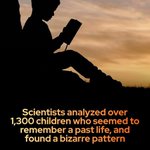
Scientists analyzed over 1,000 cases of alleged human reincarnation — and found a very bizarre pattern.
For more than 60 years, the University of Virginia's Division of Perceptual Studies has collected cases of young children whose families say they talk about memories of a previous life.
A team led by cognitive neuroscientist Saeedeh Sadeghi analyzed 1,678 of these cases in which investigators had identified a specific person the child seemed to describe. In the 1,319 cases with clear dates, the median gap between that person's death and the child's birth was 16 months.
But the gap was shorter when the death was sudden, such as an accident, violence or an unexpected medical crisis: about 12 months, compared with 21 months for deaths people saw coming.
The pattern held after the team accounted for factors like whether the families already knew each other and what they believed about reincarnation.
This is not evidence that reincarnation is real, and the researchers say they are staying agnostic about what's behind it. The cases rely on family accounts and investigators' judgments about which past person matches a child's statements, and sudden deaths tend to be talked about more, which could make them easier to link to a child's stories.
The effect is also small, explaining only about 2 to 3 percent of the variation in timing. Still, it's an odd pattern in one of the largest collections of these reports ever studied.
source: Sadeghi, S., et al. (2026). A large-scale analysis of temporal patterns in children's purported past-life memories: Shorter intervals following unexpected deaths. Psychology of Consciousness: Theory, Research, and Practice.

Want to control your dreams? Neuroscientists figured out how you can train your brain to wake up inside your dreams.
In fact, people learned how to lucid dream after just one month of training.
Researchers at the University of Trento in Italy recruited 38 students who couldn't remember having a lucid dream, one where you realize you're dreaming, in the past three years.
One group meditated to sharpen awareness of their own thoughts, then explored strange VR worlds where objects defied physics and scenes changed abruptly, practicing reality checks along the way.
Twice a week for a month, they trained while keeping dream diaries. That group reported about four times as many lucid dreams as a group that only did reality checks, and far more than a group that practiced in realistic VR.
The idea is that rehearsing "is this real?" in dreamlike settings carries over into actual dreams. Lucid dreaming is being studied as a way to ease nightmares and explore consciousness. This was a small study, and because only one group meditated, it can't tell whether the meditation or the weird VR did the trick; the team is now testing it without meditation.
source: Signorelli, A., De Pisapia, N., et al. (2026). Virtual reality as a metacognitive training tool for lucid dreaming. Frontiers in Psychology.
Live Science. (2026, October 30). Neuroscientists reveal method to train people to have lucid dreams.

Research shows cancer risk cancels it out literally any benefit of alcohol.
It doesn’t help your body. It‘s literally killing you.
An expert team led by Kevin Shield of the University of Toronto, with researchers from Columbia University and elsewhere, reviewed more than 7,200 scientific articles on alcohol-related diseases and injuries.
They combined those findings with large national health datasets to estimate lifetime risks at different drinking levels. They found no overall protective effect at any amount.
Risk rose for both men and women above one drink a day, and at 14 drinks a week, the equivalent of two a day, about 1 in 25 people would be expected to die from alcohol-caused disease or injury.
The idea that moderate drinking is good for your heart has been popular for decades. Small amounts may slightly lower the risk of some heart problems, but the researchers found that cancer, liver disease and other harms outweigh it.
The report was commissioned to inform the latest US dietary guidelines, and an accompanying editorial says its findings were sidelined.
source: George, S., Naimi, T. S., Keyes, K. M., Rehm, J., Justice, A., Shield, K. D., et al. (2026). Alcohol intake and health study: No protective effect at low levels, with mortality increasing to 1 in 25 at 14 drinks per week. Journal of Studies on Alcohol and Drugs, 87(4), 621.

A 60-year-old man with melanoma that had spread to his lymph nodes received a custom mRNA cancer vaccine.
Now, Russian doctors say it worked.
The patient is a 60-year-old man from Russia's Kursk region whose skin melanoma, first found in 2021, came back in 2025 and spread to his lymph nodes.
In April, doctors in Moscow gave him the first dose of NeoOncovac, a vaccine developed by the Gamaleya Center and the National Medical Research Radiological Centre. It's built from the genetic profile of each patient's own tumor, so it teaches the immune system to recognize that specific cancer and attack it, working alongside standard immunotherapy drugs.
Now Alexander Gintsburg, the Gamaleya Center's scientific director, says the man has completed the full course, his metastases have disappeared, and monthly whole-body CT scans over roughly four months have found no new tumors.
Melanoma that spreads is one of the hardest skin cancers to beat, and personalized mRNA vaccines are one of the most closely watched ideas in cancer research right now, with Moderna and Merck testing a similar shot in large trials. Russia's health ministry has already cleared NeoOncovac for clinical use in melanoma, which makes this first case a high-profile test.
That said, this is one patient, described in interviews by the vaccine's own developers, and no data has been published or peer reviewed. Also, he was getting surgery and immunotherapy too, so it's impossible to say how much the vaccine itself did. Doctors plan to keep scanning him for the next three years, and results from more patients will show whether this early success holds up.
source: Gazeta.Ru. (2026, November 11). Interview with Alexander Gintsburg, scientific director of the Gamaleya National Research Center for Epidemiology and Microbiology, on the first patient treated with the NeoOncovac personalized cancer vaccine. Gazeta.Ru.

AI has taken over all the creative domains. We’ve gotten everything backwards.
As generative artificial intelligence moves rapidly into creative domains like writing and digital art, a growing public backlash demands a shift in tech priorities toward automating dangerous physical labor instead.
For decades, the promise of robotics and automation was clear: deploy machines to shoulder the world's dirtiest, most dangerous, and physically demanding jobs, from deep-sea waste cleanup to underground mining operations.
Yet, the current wave of artificial intelligence has inverted that vision. Rather than prioritizing physical safety and relieving workers from hazardous labor, tech innovation has poured heavily into generative tools that replicate human writing, visual art, and executive presentations.
This pivot leaves millions of creative professionals facing unexpected economic displacement while high-risk manual labor remains disproportionately reliant on human hands.
This unexpected technological trajectory has sparked a profound cultural debate about societal priorities and the true purpose of automation. Critics argue that automating human creativity strip-mines the very activities that bring fulfillment and meaning to human life, while failing to solve urgent environmental and industrial hazards.
As algorithmic models increasingly dominate content generation, public pressure is mounting on developers and policymakers to realign robotic engineering with its original purpose—protecting human lives from physical danger rather than replacing human self-expression.
source: Pew Research Center. (2025). U.S. Workers Are More Worried Than Hopeful About Future AI Use in the Workplace. Pew Research Center.

The plastic in your takeout container fuels colon cancer by starving out one of your gut's bodyguards.
Researchers at Central South University in China gave mice a chemical treatment that triggers colorectal cancer, then fed some of them polystyrene nanoplastics, particles about 50 nanometers wide.
Polystyrene is the plastic in foam takeout boxes, cups and lots of food packaging. The plastic-fed mice developed far more tumors. Tagged with a glowing marker, the particles were seen piling up inside the cells lining the colon and damaging their tiny finger-like surface.
The plastic also depleted Faecalibaculum rodentium, a gut bacterium that makes propionate, a compound that helps protect against tumors, and it ramped up Th17 cells, a type of immune cell that drives inflammation.
The study, published in Molecular Cancer, matters because colorectal cancer is rising fast in younger adults, and scientists are hunting for reasons why. The American Cancer Society expects about 158,850 new U.S. cases this year, and nanoplastics are now found almost everywhere, from bottled water to human blood.
That said, this was done in mice whose cancer was triggered by chemicals, at doses likely well above what people normally take in, and the protective bacterium is a rodent species. Still, it shows a clear pathway from plastic to gut microbes to cancer, and the authors say the microbiome could become a target for blunting pollution-linked cancer risk.
source: Jiang, F., Jiang, Z., Zhang, P., et al. (2026). Polystyrene nanoplastics promote colorectal tumorigenesis via gut microbiota-metabolite-Th17 cell axis. Molecular Cancer.

Research shows cancer risk cancels it out literally any benefit of alcohol.
It doesn’t help your body. It‘s literally killing you.
An expert team led by Kevin Shield of the University of Toronto, with researchers from Columbia University and elsewhere, reviewed more than 7,200 scientific articles on alcohol-related diseases and injuries.
They combined those findings with large national health datasets to estimate lifetime risks at different drinking levels. They found no overall protective effect at any amount.
Risk rose for both men and women above one drink a day, and at 14 drinks a week, the equivalent of two a day, about 1 in 25 people would be expected to die from alcohol-caused disease or injury.
The idea that moderate drinking is good for your heart has been popular for decades. Small amounts may slightly lower the risk of some heart problems, but the researchers found that cancer, liver disease and other harms outweigh it.
The report was commissioned to inform the latest US dietary guidelines, and an accompanying editorial says its findings were sidelined.
source: George, S., Naimi, T. S., Keyes, K. M., Rehm, J., Justice, A., Shield, K. D., et al. (2026). Alcohol intake and health study: No protective effect at low levels, with mortality increasing to 1 in 25 at 14 drinks per week. Journal of Studies on Alcohol and Drugs, 87(4), 621.

A nasal treatment just reversed age-related memory loss, bringing recall back to youthful levels in old mice.
The team now plans to start trials in humans.
Researchers at the University of Sydney packed mRNA, the same kind of genetic instructions used in COVID vaccines, into tiny fat bubbles and gave it as nose drops.
The mRNA tells cells in the nose to make BDNF, a protein that keeps brain cells healthy and helps them form new connections, and from there it can reach the brain without having to cross the blood-brain barrier.
In 18-month-old mice, which is elderly for a mouse, the drops brought learning and memory up to the level of young mice and more than doubled the number of newly forming brain cells. In mice bred to develop Alzheimer's, twice-weekly drops kept memory from sliding further.
BDNF levels fall as we age and drop even further in Alzheimer's, but the protein itself is hard to deliver because it breaks down quickly and can't easily get into the brain. Getting the body to make its own BDNF right next to the brain gets around both problems with a simple, needle-free treatment.
That said, this has only been tested in mice, and as the team points out, human noses are quite different from mouse noses. Also, the drops protected memory without clearing the amyloid plaques that build up in Alzheimer's. The researchers now plan animal safety studies and hope to start the first human trials within about two years.
source: Bergamasco, M., Clark, T., Loo, L., Fujikake, K., Carr, R., Scarborough, H., Ponta, A., Holsinger, R. M. D., & Neely, G. G. (2026). Non-invasive Bdnf mRNA therapy improves cognition in ageing and Alzheimer's mouse models. Advanced Science.

Erythritol, the sweetener in countless keto and sugar-free foods, damages the brain’s barrier and is linked to a 25% higher odds of stroke, new research shows.
Researchers at Huazhong University of Science and Technology in Wuhan, China, used a method called Mendelian randomization, which uses genetic variants as a natural experiment.
They looked at people whose genes push their blood levels of erythritol higher, and found they had about 25% higher odds of ischemic stroke, the kind caused by a blocked blood vessel.
It was the strongest link among the sweeteners they tested, and it held after accounting for blood pressure, diabetes and cholesterol. Computer analyses then flagged three genes, MMP9, TLR4 and HIF1A, involved in inflammation, low oxygen and damage to blood vessel walls.
The study, in the International Journal of Molecular Sciences, adds to earlier warnings. A 2023 Cleveland Clinic study of more than 4,000 people tied higher erythritol levels to heart attack and stroke and found it made platelets clot more easily. In 2025, University of Colorado Boulder researchers showed that one drink's worth of erythritol made brain blood vessel cells produce less of the molecules that relax vessels and break up clots. Stroke strikes more than 795,000 Americans a year.
That said, this new work relied on genetics and computer modeling and didn't track what anyone actually ate, and the authors say it isn't direct proof that erythritol causes stroke. Still, with three different kinds of evidence now pointing the same way, it strengthens the case for clinical trials on a sweetener millions of people use every day.
source: Zhong, A., Yu, F., Xia, C., et al. (2026). Risk of erythritol-associated ischemic stroke: Integrated genetic, transcriptomic, and machine learning evidence. International Journal of Molecular Sciences, 27(17), 7811.

Brain scans show teens who spend more time on their phones have less gray matter.
Researchers at the University of Eastern Finland scanned the brains of 44 healthy teenagers aged 16 to 19 and asked about their screen time, smart device use and physical activity.
Teens who spent more time on screens had smaller gray matter volume in the medial temporal lobe, a region central to memory and learning. But they also had larger volumes in parts of the frontal lobe involved in attention, planning and decision-making, and in the visual areas at the back of the brain.
Fitness told its own story: teens with better strength and speed had a larger parietal lobe but a smaller hippocampus.
Lead researcher Hannamari Skog says the larger areas could reflect how much attention and visual processing games and apps demand, or they could signal a delay in the normal pruning that makes the teenage brain more efficient. It's a pressing question, since American teens now average about eight hours a day of entertainment screen time.
That said, the study was very small and captured one moment in time, so it can't show that screens caused these differences, and screen time was self-reported. Also, the data were collected in 2018 and 2019, before the pandemic changed screen habits. Still, it's a useful early look, and following teens over several years is the way to find out what these differences mean.
source: Skog, H., Määttä, S., Säisänen, L., et al. (2026). Associations of screen time, physical activity and neuromuscular fitness with brain structure in adolescents. NeuroImage: Reports, 6(4), 100431.

A dentist explains why miswak is still one of the best natural tools for oral care:
Miswak: Strengthens enamel with natural minerals, fights plaque & gum issues, freshens breath, and helps prevent stains from tea & coffee—keeping teeth naturally white.
Scientists watched the brain flip between a face it was seeing and a face it was hiding, about 15 times every second.
Researchers at UC Berkeley, led by Janis Hesse and Doris Tsao, recorded thousands of individual neurons in two rhesus monkeys using ultra-thin electrode probes.
The monkeys looked at a trick display: one face was shown to one eye, then a second face was flashed to the other eye. The flashed face is the one people consciously see, while the first is still there but pushed out of awareness.
Instead of simply silencing the hidden face, the same face-sensitive cells in the temporal and frontal lobes alternated between the two, spending about 60 milliseconds on each before switching back.
That matters because scientists have long hunted for a specific spot where consciousness lives.
These results hint that timing, not just location, decides what reaches awareness: the brain keeps both options alive and rapidly picks which one gets the spotlight. It's an early preprint, not yet peer reviewed, based on two monkeys.
source: Hesse, J. K., Lanfranchi, F. F., McGrory, C., Shi, Y., Engel, T. A., & Tsao, D. Y. (2026). Rapid alternation of conscious and suppressed stimulus representations in the primate brain [Preprint]. bioRxiv.

A decade-long study reveals that too much coffee can actually weaken bones.
For millions of women, safeguarding bone health is a critical aspect of aging safely, with osteoporosis affecting one in three women over the age of 50.
Now, a 10-year study conducted by Flinders University has illuminated how our morning rituals impact our skeletal strength.
Researchers tracked the beverage habits and bone scans of nearly 10,000 older women and discovered that regular tea drinkers had significantly higher bone mineral density in their hips than non-tea drinkers. This skeletal boost is likely driven by catechins—antioxidant-rich plant compounds in tea that stimulate bone-building cells and minimize age-related bone loss.
Coffee drinkers, however, must navigate a more delicate balance. While enjoying a moderate two to three cups of coffee daily proved completely harmless, consuming more than five cups a day was linked to decreased bone density, particularly in women with higher lifetime alcohol consumption.
Researchers note that excessive caffeine can hinder calcium absorption, though adding a splash of milk can help offset this effect. Ultimately, health experts suggest that small, daily adjustments—like swapping a heavy coffee habit for a comforting cup of tea—can be an easy, enjoyable strategy to prevent fractures and preserve lifelong mobility.
source: Liu, E., et al. (2025). Longitudinal Association of Coffee and Tea Consumption with Bone Mineral Density in Older Women: A 10-Year Repeated-Measures Analysis in the Study of Osteoporotic Fractures. Nutrients.
