UC San Diego Health Moores Cancer Center (@UCSDCancer) header
UC San Diego Health Moores Cancer Center (@UCSDCancer) profile picture

NCI-designated & Comprehensive. Research, clinical trials, transformative care, survivorship, public-policy changing discoveries. #DeliveringDiscoveries

San Diego, California
Joined December 2021
Photo by UC San Diego Health Moores Cancer Center (@UCSDCancer)Photo by UC San Diego Health Moores Cancer Center (@UCSDCancer)Photo by UC San Diego Health Moores Cancer Center (@UCSDCancer)Photo by UC San Diego Health Moores Cancer Center (@UCSDCancer)Photo by UC San Diego Health Moores Cancer Center (@UCSDCancer)Photo by UC San Diego Health Moores Cancer Center (@UCSDCancer)Photo by UC San Diego Health Moores Cancer Center (@UCSDCancer)Photo by UC San Diego Health Moores Cancer Center (@UCSDCancer)Photo by UC San Diego Health Moores Cancer Center (@UCSDCancer)Photo by UC San Diego Health Moores Cancer Center (@UCSDCancer)
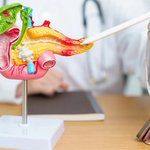
Pancreatic cancer symptoms are often vague and easy to overlook. Dr. Andrew Lowy shares 6 warning signs to know, from jaundice to new-onset diabetes, and when to see your doctor. 🔗 health.ucsd.edu/news/feature… #PancreaticCancerAwarenessMonth
26
New research from UC San Diego School of Medicine and Moores Cancer Center helps explain why immune-based cancer treatments can be riskier with age. Studying mice, researchers found that an immune stimulant called polyIC helps shrink liver tumors, but causes severe liver damage and death in older mice at the same dose. The reason: immune cells called neutrophils invade the liver after treatment and release high levels of TNF, a potent inflammatory compound. This surge of TNF causes rapid liver damage. When the researchers neutralized TNF in a separate experiment, liver toxicity was prevented. Comparing their mouse findings to human data, the team found that high levels of TNF-producing neutrophils were associated with worse survival in older patients with liver cancer. Together, these findings suggest that targeting these immune cells could be a promising strategy to make immunotherapies safer and more effective for older patients with liver cancer. #CancerResearch #Immunotherapy #LiverCancer #UCSanDiego #MooresCancerCenter #Oncology #Aging
36
Congratulations to Moores member Rebecca Rakow-Penner, MD, PhD, on her TEDxSanDiego Salon: Believe in Breakthroughs talk, “Whole-Body MRI, Designed for Women,” now available on YouTube. Dr. Rakow-Penner, a radiologist and MRI physicist, discusses how whole-body MRI, despite its growing popularity, was designed around men’s bodies and is not built to detect the diseases that matter most to women. She calls for whole-body MRI, head to toe, to be built specifically for the patient on the table. Watch the full talk: lnkd.in/gGVMu3gp #MooresCancerCenter #TEDxSanDiego #Radiology #WomensHealth
1
76
Gregory Botta, MD, PhD, discusses in Becker’s Hospital Review how expanded access to daraxonrasib, an investigational treatment for metastatic pancreatic cancer, is creating new opportunities for patients. He also highlights the importance of early molecular testing and clinical trials as targeted therapies continue to advance. Read more: bit.ly/3UCgJ1W #PancreaticCancer #CancerResearch #PrecisionMedicine #ClinicalTrials #MooresCancerCenter
56
We’re proud to share that Aditya Bagrodia, MD, FACS, of Moores Cancer Center at UC San Diego Health has been appointed Vice Chair of the National Comprehensive Cancer Network (NCCN) Testicular Cancer Guidelines Panel. In this national leadership role, Dr. Bagrodia will help set panel priorities, guide discussions and oversee the development of evidence-based guidelines that inform testicular cancer care nationwide. His appointment highlights the clinical expertise and national leadership of Moores faculty in advancing standards of cancer care. #MooresCancerCenter #TesticularCancer #NCCN #GenitourinaryOncology #TesticularCancer #NCCN #GUOncology #CancerResearch #MooresCancerCenter
81
Congratulations to Moores member Debashis Sahoo, PhD, on his TEDxSanDiego Salon: Believe in Breakthroughs talk, “Finding What Stays True in Medical Research,” now available on YouTube. His talk examines how AI can help identify invariant biological patterns within the complexity of human biology, and how these discoveries could make science more reliable and medicine more precise. Watch the full talk: bit.ly/48Kcch3 #MooresCancerCenter #TEDxSanDiego
60
The Great American Smokeout, observed November 19, encourages people to take steps toward a tobacco-free life. Through its work with the California Department of Health and the Asian Smokers’ Quitline, Moores Cancer Center researchers contribute to efforts that connect people with tobacco and nicotine cessation support. In FY25, 32,115 people received tobacco and nicotine cessation counseling through Kick It California. Learn more about this impact in our FY25 Annual Report: bit.ly/4iUU3TK #GreatAmericanSmokeout #KickItCalifornia #CancerPrevention #MooresCancerCenter
49
In this episode of “The Science Of,” David Gonzalez, PhD, discusses the importance of microbes, their roles in human health and the impact of antibiotics on gut microbiomes. Listen Now: bit.ly/3WG2Ct3
39
Congratulations to Moores member Miguel Reina-Campos, PhD, on his TEDxSanDiego Salon: Believe in Breakthroughs talk, “Urban Design for the Immune System,” now available on YouTube. When immune cells fail, tumors can progress, but correcting the cells themselves does not always work. Dr. Reina-Campos explores a different question: whether the problem lies not only in the cells, but in the tissue structures they move through, and whether redesigning that environment could help immune cells do their job. Watch the full talk: lnkd.in/g9ncgUv3 Learn more about the Reina Lab: reinalab.org/ #MooresCancerCenter #TEDxSanDiego #CancerResearch #Immunology
1
69
A new analysis of the RadComp randomized trial, co-authored by Moores member James Urbanic, MD, has been published in the International Journal of Radiation Oncology, Biology, Physics. Among 1,160 breast cancer patients, proton therapy delivered a significantly lower mean whole-heart dose than photon therapy (0.89 vs. 2.99 Gy[RBE]; P < .001). Doses to the left ventricle, left atrium and left anterior descending artery were also lower with protons. Patient-reported cardiac-related outcomes were favorable through 6 months post-treatment, and no cardiac dose parameters were associated with early changes in health-related quality of life. Read the study: bit.ly/4t8kbOD #BreastCancer #RadiationOncology #ProtonTherapy #RadComp #MooresCancerCenter
1
76
This Movember, we're highlighting research that is changing how testicular cancer is detected and monitored. Aditya Bagrodia, MD, a Moores Cancer Center member and urologic oncologist at UC San Diego Health, helped develop the first mRNA blood test for testicular cancer to become available in the United States. Developed through a decade of research, the test offers a less-invasive approach to detecting and monitoring testicular cancer, helping physicians make more informed, personalized treatment decisions while potentially reducing the need for repeated CT imaging. As we recognize Movember and its focus on men's health, this advancement underscores the importance of continued research, early detection and improving care for people affected by testicular cancer. Learn more: Read about this advancement: bit.ly/4t1aaT0 Watch Dr. Bagrodia discuss his work: bit.ly/4iWHhTo #Movember #TesticularCancer #MensHealth #CancerResearch #MooresCancerCenter
5
118
Congratulations to Moores member Leslie Crews, PhD, on her TEDxSanDiego Salon: Believe in Breakthroughs talk, “Cancer as an Ecosystem,” now available on YouTube. Drawing on ecology, stem cell biology and cancer research, Dr. Crews presents a framework for understanding cancer not only as tumor cells to be destroyed, but as a disrupted ecosystem that may be restored. She discusses findings in blood cancer research, immune aging and next-generation therapies, and how rebuilding cellular ecosystems could inform the future of cancer treatment. Watch the full talk: lnkd.in/g_iMscBy #MooresCancerCenter #TEDxSanDiego #CancerResearch
1
3
152
In this episode of “The Science Of,” Nicolas Lopez-Galvez, PhD discusses how environmental exposures may affect health across the lifespan and why strong community partnerships and clear science communication matter. Listen Now: bit.ly/4iNKjJR
44
Moores Cancer Center member Gene Yeo, PhD, co-led a study published in Nature Communications that mapped how the SARS-CoV-2 genome interacts with key viral proteins. The findings identified interactions that, when blocked, reduced viral replication in animal and human lung cells, suggesting potential treatments that could remain effective as coronaviruses evolve. Read more: bit.ly/4BPFIPP
104
Danielle Glorioso, executive director of the UC San Diego Stein Institute for Research on Aging, received multidisciplinary care for advanced colorectal cancer at Moores Cancer Center at UC San Diego Health. Following radiation, chemotherapy and surgery, she learned she was cancer-free. Now, she's sharing her story to raise awareness about cancer prevention and early detection. She recently joined Samir Gupta, MD, and Bassel El-Rayes, MD, for a lecture on cancer and aging, highlighting the importance of screening and research. Her experience underscores the importance of initiatives like PREDICT at Moores Cancer Center, which is advancing innovative approaches to cancer prevention and early detection, including for colorectal cancer. We're grateful to Peter Vu, MD; Michael Sherer, MD; and Nicole Lopez, MD, for their compassionate care, and to Danielle for sharing her story. Read more: bit.ly/4zi6fmz
1
80
In this special episode of “The Science Of,” students Max and Zahra are joined in the studio by partners from the Elementary Institute of Science (EIS) and Moores Cancer Center to reflect on their experiences in the program. Listen Now: bit.ly/3U9LEm0
52
People Behind the Mission Spotlight: Meet Ann Valentine! As Manager for Oncology Supportive Care at Moores Cancer Center, Ann oversees Patient Navigation, Patient and Family Support Services, and the Resource Centers at Moores and the McGrath Outpatient Pavilion. Her work helps ensure patients and families have the guidance and support they need through every stage of their cancer journey. Get to know Ann in this Q&A: bit.ly/4f9OMFr #PeopleBehindTheMission #MooresCancerCenter #UCSanDiego #PatientNavigation #OncologySupportiveCare #CancerSupport
59
Haydee Ojeda-Fournier, MD, FACR, FSBI, Grillo-Marxuach Family Endowed Medical Director in Breast Imaging, is featured in RSNA News on breast cancer screening during pregnancy and lactation. As senior author of a recent RadioGraphics article, she notes that digital mammography can be safely performed throughout pregnancy and lactation and that biopsy should not be delayed. Read more: bit.ly/4zqeRZ0 #BreastCancer #BreastImaging #RSNA #MooresCancerCenter
1
131
This Pancreatic Cancer Awareness Month, meet Shanna Thomas, whose participation in the PRECEDE early detection initiative at Moores Cancer Center helped identify precancerous changes before they became invasive cancer. Read her story: bit.ly/4vVLITA #PancreaticCancerAwarenessMonth
45
Moores Cancer Center member Samir Gupta, MD, Sam. M. Walton Endowed Chair in Cancer Research, is an author on a new @NEJMEvidence report using SEER data. It found that U.S. colorectal cancer incidence rose from 36.7 to 38.3 per 100,000 between 2022 and 2023, the first apparent increase since 2000. The authors call for continued surveillance. Read more: bit.ly/4z5ohs1 #ColorectalCancer #CancerResearch #MooresCancerCenter
1
89