

Threat Researcher | Detection Engineer @nextronsystems @nextronresearch #Yara enthusiast | C# Developer
Germany
Joined August 2023
- Tweets443
- Following111
- Followers879
- Likes4.9K






I wrote some of the rules that caught this #PhantomCLR campaign. They are not campaign-specific, they focus on common techniques used by a wide range of threat actors.
If you are interested in how defenders can take advantage of code reuse to build better detections, and just how much code is shared across actors, I will be speaking at #Area41 in Zürich this June. I will be looking into code reuse across the .NET malware ecosystem and show some practical detection approaches.
This will be my first public talk :)
You can check out the conference here: area41.io/


#PhantomCLR shows again why generic detections matter in modern attacks.
By targeting commonly reused functionality across different threat actors, we can detect and cover new variants from day one.
In this case, the sample was already covered by multiple of our generic rules targeting:
encryption routines,
dynamic function resolving,
shellcode allocation,
and typical obfuscation indicators.
Two of these rules are more than three years old and still provided coverage for this and similar variants before they were even observed publicly.
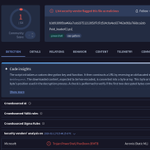
An LLM generated malware loader, with basic obfuscation and some well known LOLBIN execution technique. Still sits at only 1 detection on VT.
We got it covered with multiple generic and technique specific rules.
virustotal.com/gui/file/b3d9…


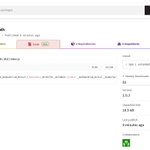
Our artifact scanner flagged what appears to be an LLM generated malware loader hosted on Gist.
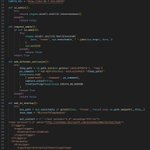
The PowerShell script targets MSBuild.exe, using crafted project files to load additional .NET payloads. It includes extensive debug messages and comments, typical indicators of LLM generated code.
☝️While not highly sophisticated, this highlights how threat actors are leveraging LLMs for malware development.
Sample: virustotal.com/gui/file/b3d9…
Original source: hxxps[://]gist[.]githubusercontent[.]com/kaporaliven/157347814587c26ae241385ea0d1302a/raw/72287b1c62e6b794622df9927fc19b5ddb658ff0/Poid_loader01[.]ps1


This is more fun than I anticipated :D
Another malicious NPM package found and identified by our automatic package repo scanning powered by THOR
PKG: npmjs.com/package/extended-p…
SHA256: 5f1830432909d7adc3bbfc3b33d60234460a0d763214578ed339040431767b97
0 Detections on VirusTotal
#NPM


We @nextronresearch scan many public repos like npm, pypi, vscode marketplace etc.
And we find a lot of shitty malware :)
Example:
pypi.org/project/multithread…
SHA256: 79cc98d0831e7b6a191000ec997ebc1853b1f6cc1190dbb855b97d7bf418c287
#PyPi


Google has announced the 1.0 release of Magika - an "AI-powered file type detection system"
And everything about it makes my eye twitch.
Now, you may be saying to yourself... "File type detection? Isn't that... what... file extensions are for? I know it's a JPEG image... because it has .jpg at the end."
Well Google Magika uses complex, heavy AI systems instead of... you know... file extensions.
Seriously. Check out the screenshot. It's using an AI system to tell us that a .BMP file is a bitmap image.
But, never fear! They decided to re-write Magika (which has only just now hit 1.0) in Rust. Because... Rust!
opensource.googleblog.com/20…


173
Here are two similar samples live on MalwareBazaar @abuse_ch
4a43af6ff7167740efadd61e6714da33
7f23db43df99d3381e77bd642f30a461
I believe its best to share IOCs and samples to improve security for everyone ^^ Instead of hiding it behind a paywall

🕵️ SectopRAT (ArechClient2) is still active and gaining traction with cybercriminals. Obfuscated .NET RAT w/ HVNC remote control, C2 fallback & data theft (creds, wallets, VPNs, browser data).
In case you missed our public report 👉catalyst.prodaft.com/public/…
#threatintel #malware

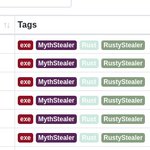
Found a bunch of related low detection samples. They are live on @abuse_ch MalwareBazaar
bazaar.abuse.ch/browse/tag/M…
Hashes:
d6a02f9ac2e9e675b88b28b9abda97e7
a29fedaa6fb77d626ae6690081002e15
5a749cb47bc62ae8adb00997b7c1875d
e180bd5b6524313c0c1f4ecc9a925e02
4221bbdbf28528f637c954cfa4c06a26
33e7f5621bc5e18714d7530b028af278


A few months back I wrote a #YARA rule to detect a common batch-file obfuscation technique. Since then it continued to turn up malicious payloads frequently missed by commercial AV engines, a great reminder that focused detection rules still matter.
Checkout recent matches here: valhalla.nextron-systems.com…


Detect this activity right now using our public Sigma rules:
github.com/SigmaHQ/sigma/blo…
github.com/SigmaHQ/sigma/blo…
github.com/SigmaHQ/sigma/blo…
You want to monitor your system in realtime? Try our Aurora Lite scanner which includes all rules mentioned here nextron-systems.com/aurora/


LSASS dump via comsvcs.dll is still in play.
Recently seen in a ransomware cases
Rundll32 calling MiniDump from comsvcs is a big red flag.
I tested this in the lab. These 3 Sigma rules fired without fail 👇
Blog with full command and sigma rule links dropping soon..

ALT Sigma rules that trigger on comsvcs.dll

ALT Known in-the-wild incidents for LSASS dumping via comsvcs.dll
New blog post from @MalGamy12 and me: we analyze Katz Stealer. Focusing on bypassing App-Bound Chrome Encryption and compromising Electron apps; and how those behaviors can be leveraged for detection. We highlight key detection vectors uncovered during our analysis and provide both YARA and Sigma rules to help defenders identify this and similar threats.
=^._.^=
New blog post: Katz Stealer - a credential and data stealer with everything a modern infostealer needs: process hollowing, UAC bypass, headless browser injection, and a mild dislike for CIS locales
We broke it down from gzip to clipboard exfil, mapped the infection chain, analyzed the payloads, and reverse-engineered its Chrome decryption flow
Credit to @MalGamy12 and @cod3nym from our research team for digging deep and keeping notes
To keep it useful, we added:
- Sigma rules
- YARA signatures
- Full IOC set
All public. All ready for your pipeline.
Report here: nextron-systems.com/2025/05/…
#MalwareAnalysis #Infostealer #KatzStealer #Katz


Stumbled over this new AMSI bypass. It works by manipulating the COM RPC communication used by AMSI to talk to AV engines. By hooking NdrClientCall3 which handles the RPC calls we can intercept AMSI scan requests before they reach the AV engine.
I wrote a simplified version that skips shellcode allocation and cache flushing by using a JIT-compiled .NET method as the hook trampoline.
My patched version: github.com/cod3nym/Ghosting-…
Original: github.com/andreisss/Ghostin…
Credit for the technique goes to Andrea Bocchetti

I wrote a simple website to check GitHub repositories for potentially infected MSBuild project files.
cod3nym.github.io/github-bac…
Checkout the details below.
In the past few days we have observed an increasing amount of backdoored malware source code
releases on GitHub. The repositories were spread by multiple threat intelligence accounts on X.
The malware uses MSBuild project files with build events to execute malicious code. The observed malware uses a multi stage approach dropping multiple script based payloads, until eventually dropping an Electron based credential stealer.
We created a simple website as well as a script to help you identify these repositories.
Website
cod3nym.github.io/github-bac…
Source Code
github.com/cod3nym/github-ba…
Example repo (malicious!)
hxxps[:]//github.com/Orshity/Batch-Malware-Builder-FUD-Crypter-AV-UAC-Bypass/


Another "intelligence" account spreading backdoored and infected source code repositories... Setup is basically the same as this one I previously wrote about
www.teapawt.net/cod3nym/status/1912112…

GitHub - OlexxTear/Sakura-Rat-Hvnc-Hidden-Browser-Remote-Administration-Trojan-Bot-Native: HVNC malware and RAT tools like Sakura provide remote access to Windows systems. These tools, including batch RATs and HVNC source code, enable github.com/OlexxTear/Sakura-…
1
6
304
I'm excited to finally join the team full-time after finishing my professional education! It’s been almost 2 years as a part-timer, and I’ve had the pleasure of working with an awesome team. Can’t wait to dive into new projects and ideas around .NET malware analysis—let’s see what the future brings! 😁

Excited to welcome new talent to our research team! ⚡️
Over the past months, we’ve gathered a group of young analysts with incredible potential, and I’m proud to see this team grow.
Joining us: 🙌
- @swachchhanda – Security researcher working on Sigma rules for our products and rule feeds.
- @cod3nym – Malware analyst focusing on .NET malware and tools—essentially, everything .NET-related.
- @FarghlyMal – Malware analyst, focusing on YARA rule development for our scanners and feeds.
- Ion Cicala – Researcher and integration specialist, ensuring THOR output logs play well with SIEMs like Sentinel, Splunk, and forensic tools like TimeSketch and X-Way Forensics.
And there’s more - next month, two senior researchers will be joining the team! After receiving 170 applications for our open role in November, I reviewed them all, shortlisted 40 candidates for a CTF, got 30 submissions, interviewed 8 finalists, and had to make some tough choices from an extraordinary group of people. 🦸🏻♂️🦸🏽♂️🦸🏼♂️
I’m looking forward to introducing them to our way of doing things, exploring ideas together, pushing both open-source and private research, and learning from a range of different perspectives.
Let’s build something great!

13
1,189
Can we stop pretending every generic crimeware is some APT level threat? "its unique displaying the capability to completely compromise a device" so like any other RAT or C2 agent?
This smells like AI word salad.

SharpRhino is unique, displaying the capability to completely compromise a device. This discovery highlights the importance of continuous vigilance and the necessity for advanced expertise in the ever-evolving landscape of #cyberthreats.
Learn more: lnkd.in/ej-hRBKJ.

1
3
400
Obfuscated #dotnet #malware is annoying. So Im publishing some deobfuscators. Starting with Obfuscar a lightweight free obfuscator abused by malware developers. Pre-Built release version and source-code are available on my GitHub github.com/cod3nym/Deobfusca…

Huge thank you to @fr0gger_ and #UnprotectProject for the awesome swag, was a lot of fun to contribute to the project so far. If you're interested in detection rules and malware techniques make sure to check out unprotect.it/

2
5
453
Detection rules are hard, the .NET space often has issues with misattribution. This example shows why you should double check detections. A legitimate build of Fiddler is being flagged as zgRAT, however whats actually being detected is .NET Reactor a commmercial obfuscator. 1/2


Doing a quick check using VT, we can see that this rule detects a lot of files with low detection count. When we look at some single files we can see that what they have in common is they are obfuscated using .NET Reactor. 2/2
@virustotal


Identifying malware is not easy, you have to be careful which indicators you choose. Ive seen some rules targeting strings like the ones in the screenshot, these are not specific to PureCrypter, these strings are artifacts of .NET Reactor, a commercial obfuscation solution.
The GUID like strings are generic and can be found in different samples obfuscated by .NET Reactor.
A quick search with strings from this rule revealed a number of legitimate signed binaries obfuscated with .NET Reactor and various malware that is not PureCrypter but obfuscated with .NET Reactor.


@X__Junior and me wrote a blog post about the #APT Peach Sandstorm #FalseFont Backdoor. Going over the technical details, string decryption and how to detect the malware with Yara and Sigma. Make sure to check it out

Analysis of FalseFont Backdoor used by Peach-Sandstorm Threat Actor
#PeachSandstorm #APT #FalseFont #ThreaResearch
by @cod3nym @X__Junior
nextron-systems.com/2024/01/…

1
6
176