

The funder-researcher collaboration and open-access journal for research in the life and biomedical sciences | @eLifeCommunity
Cambridge, UK
Joined September 2011
- Tweets26.4K
- Following692
- Followers177K
- Likes12.5K






This important study shows that long-range somatostatin-expressing neurons in the ventrolateral periaqueductal grey project to the rostral ventromedial medulla selectively suppress pain responses during conditioned fear.
elifesciences.org/reviewed-p…
1
5
1,281
Loose coupling between Ca<sup>2+</sup> channels and release sensors as a synaptic correlate of higher-order brain function
elifesciences.org/articles/1…

1
5
2,495
Out-of-balance growth enables cost-free synthesis of the flagellum and other proteins in a single bacterium
elifesciences.org/articles/1…

1
1,690
In our latest blog, our Early-Career Advisory Group reflects on supporting our shift to a publish-review-curate model and shares their priorities for the year ahead.
Read the full update ⬇️
elifesciences.org/inside-eli…

1
2
903
Plasticity associated with adoption of social roles in clown anemonefish
elifesciences.org/articles/1…
2,161
This paper provides a highly valuable tool to study EMT and wound regeneration or metastasis. Experiments provide compelling data suggesting that TGF beta signaling and actin polymerization promote movement of epithelial cells into the pores.
elifesciences.org/articles/1…
Cell cycle-coupled CK1δ turnover, autoinhibition, and activity
elifesciences.org/articles/1…
2,234
A GCN1-independent activator of the kinase GCN2
elifesciences.org/articles/1…

foxQ2 marks fast-acting interneurons including dopaminergic neurons of mushroom bodies and central complex in the beetle Tribolium castaneum
elifesciences.org/articles/1…
2
2,357
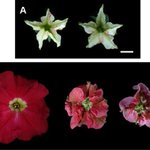
October’s most-read Plant Biology paper investigates the action of a floral homeotic transcription factor in different cell types, with solid evidence that PhDEF shows more extensive binding and regulatory effects in the epidermis than in the mesophyll: elifesciences.org/articles/1…

ALT Two wico flowers with pigmentation defects (middle and right flowers), with a WT flower on the left for comparison. Scale bar = 1 cm.
1,298
Integration of ATAC- and RNA-sequencing identifies chromatin and transcriptomic signatures in classical and non-classical zebrafish osteoblasts and indicates mechanisms of <i>entpd5a</i> regulation
elifesciences.org/articles/1…
Tracking West Nile virus dynamics using viral loads from trapped mosquitoes
elifesciences.org/articles/1…
4
3,016
In this study the authors carry out transcriptomic and epigenomic experiments to study open chromatin regions and transcripts that change upon larval settlement in the sponge Amphimedon.
elifesciences.org/articles/1…
1
3
2,959
Light-entrained chromatin priming poises rapid metamorphosis in a marine sponge
elifesciences.org/articles/1…
1
2,597
Open source laser-scanning photostimulation for neuroscience with Zapit
elifesciences.org/articles/1…
Small brown planthopper infestation enhances it reproduction and insecticide tolerance by manipulating glucose distribution and levels in rice
elifesciences.org/articles/1…
1
4
4,053
Heterogeneous responses to embryonic critical period perturbations within the Drosophila larval locomotor circuit
elifesciences.org/articles/1…
7
3,965
The transcription factor BCL11A restores differentiation potential to aged oligodendrocyte progenitor cells
elifesciences.org/articles/1…
SARS-CoV-2 main protease inhibition through dimerization promotion by peptidomimetic inhibitors and disruption by ebselen
elifesciences.org/articles/1…
2
3,128
Genetic canalization of nutrient resorption in the widespread grass Phragmites australis under salt stress
elifesciences.org/articles/1…
2
3,195