

Building Kai https://www.teapawt.net/t.co/7FFToZ0W6Q
Philadelphia
Joined December 2015
- Tweets2.2K
- Following815
- Followers2.6K
- Likes6.8K





Researchers at the University of Namur looked at about 1,800 PRs that maintainers had flagged as AI slop. About 98 percent were closed without being merged, usually within about six hours, and hundreds were closed with no reason given. I think that's pretty reasonable when you're one person maintaining something for free, but it means a lot of PRs get judged by who sent them.
These were PRs that maintainers had already called slop, not a random sample of AI PRs. Other research on agent PRs on GitHub found human PRs merged about 77% of the time vs. about 38-65% for agents, so the gap is real but a lot smaller. arxiv.org/abs/2611.15159 arxiv.org/abs/2507.15003

1
21


This week we're getting ready to ship something for open source maintainers. I think they have the worst version of the review problem right now, and most of them are doing it for free. More on that tomorrow.
1
135
If you use an AI code reviewer, roughly what share of its comments do you actually act on? I'm trying to get a sense of it from people who aren't us.
1
109
Some teams are trying to get to 1,000 PRs a week now, and most of that code is written by agents. I think at that point code review is mostly a cost problem. Anthropic and OpenAI can review all their own code because they aren't paying the prices they charge everyone else, but most teams are paying those prices.
2
104


Kai is code review with verification.
Before it posts a finding, it opens the code and checks whether the problem is real. If it can't confirm it, you never see it.
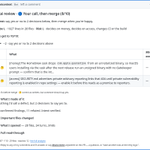
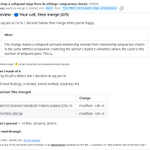
On a 1,027-line pull request it raised 11 possible problems, opened all 28 files, and ruled out every one. What it posted was a clean review and the 2 decisions that need a person.

1
3
232
Kai is version control first. It's built in three layers.
1. Version control built on a semantic graph. The graph maps how your code connects, and it tracks how that map changes over time.
2. A harness that reads and writes code through that graph.
3. A code reviewer that uses both.
The reviewer is the smallest part. The real power is in the versioned graph and the harness, and I think that graph is what the future of AI coding runs on.
2
2
214
In the next version of Kai, the reviewer works like a teammate.
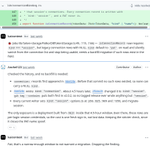
You can talk it through a finding. On this PR the author showed Kai the git history, and Kai said "Fair. Dropping the finding."
You can also ask it to fix things. It makes the fix itself instead of handing it off to someone else.


KaiContext: a semantic graph with version control built in. We build it from your last 50 commits, then review with small open models + custom MCP tools. Low cost, verified every step. Same code, same score, every time.
kaicontext.com
1
4
173
We’re grinding on Kai’s code-review benchmark score.
With almost no effort we jumped a lot. Then we got stuck on the missing ~10 percentage points from the leader.
Kai’s reviews were already strong - with bugs still in our reviewer we were scoring above CodeRabbit and Greptile. The leftover gap looks like tiny bugs on our side. Clearing those should put us over the top of the board, we hope.
We’ll keep you posted.
1
138