

🛠 🍎 👾 Objective-See'ing & DoubleYou'ing
Maui, HI
Joined October 2013
- Tweets10.8K
- Following1K
- Followers41.7K
- Likes17.2K





Pinned Tweet
Stoked for the next (ad)venture: "DoubleYou" techcrunch.com/2024/04/25/ex…
Cofounded w/ long-time friend @hexlogic, we're empowering those building security tools for Apple devices 🍎🛡️
And by bootstrapping this venture, our core value of democratizing security remains our focus!

#OBTS (day 3), now live-streaming on the @objective_see's YouTube channel: youtube.com/channel/UCQycc8V… 🎥


“Property 2009 let the app supply a token with audiomxd’s PID and pidversion, making the daemon treat the app as itself and allow recording without a TCC check.” 👀
rtx.meta.security/exploitati…
LuLu is the free, open-source firewall for macOS! 🔥🛡️
We (@objective_see) have been hard at work making LuLu even better, with new features, additional localizations, bug fixes, and a refreshed UI.
And as always, it's 100% free and open source! ❤️
Grab the latest version from:
objective-see.org/products/l…

Congrats on the milestone! 🥳
And mahalo David (@dps) for reaching out & being so open to candid bug bounty feedback! 🙏🏽
Stoked our Foundation's work led to more ack'd bugs. Payouts TBD; but w/ @Meta's 2x match for non-profits hopefully turning 🐛 into 💰 for @objective_see! 😇

We've now paid out more than $1M in @muse bug bounties. That includes $300,000 to a security researcher who found the most critical bug we've seen in Muse. muse.ai/blog/securing-muse

Apple, can we (please) have Endpoint Security for iOS now!? @AppleSupport @Apple 🙏🏽🥺

"@PhorionTech has detected a backdoor in the official Claude Code for VS Code extension bundle on Open VSX that drops a persistent SSH backdoor across macOS, Linux, and Windows." 🫣
Read More:
phorion.io/blog/offical-clau…


Neat ChatGPT bug 🐛
Found manually (even after @OpenAI “pointed Astra at its own systems until it ran out of bugs")
Local (unpriv'd) attacker:
• Hijack your Dot
• Take over your account
• Access protected macOS files
+more 👀
@OpenAI's $500 bounty donated to @objective_see

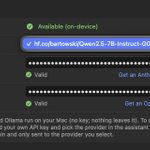
TaskExplorer now natively integrates with Ollama 🤖
...so you can bring your favorite local LLM to the party!
Latest version available here:
objective-see.org/products/t…


I've just (re)written TaskExplorer
Think Process Monitor but for macOS, open source, & much more powerful 💪🏽
Highlights:
• CLI + JSON export
• On-device AI assistant
• Code signing + VirusTotal context
• Live process/file/dylib/network activity
objective-see.com/products/t…


Smart way to limit AI agents! 👏
But, @Apple, please don't make Full Disk Access changes harder for macOS Endpoint Security tools!
They (per your design) require FDA plus a special entitlement you only grant after vetting, so please keep them easy for users to install! 🙏
But its not secure 😩 Exhibit A: prompt injection (via local attack against ChatGPT)


Apple is already understandably annoyed by poorly written/insecure/greedy AI agents/assistants insisting on Full Disk Access, and then once granted/obtained, abusing that, to access <all the things>.
...that didn't take long!

Apple says it will add new controls around macOS’s Full Disk Access permission, warning that increasingly capable AI agents make broad access to users’ files, messages, mail, and browsing history riskier.
spr.ly/6010BGvtfn

I'd say patch, but at this point, it (still) doesn't matter 🫠
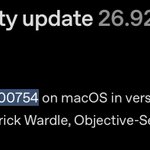
Mahalo to @WIRED for covering our initial research into ChatGPT (CVE-2026-100754)
Traditionally, protecting the privacy & security of Apple users meant focusing on malware & attackers...now, AI agents belong in that threat model too 🤖⚠️
More bugs reported, so stay tuned... 👀
The hardest part was getting Dots working in Europe, to test the exploit 😅

One of my favorite parts of #OBTS is the students.
Congrats to this year's scholars, stoked to meet you all!

CVE-2026-100754: ChatGPT's code-signing checks on macOS/Windows can be bypassed by (local, unprivileged) attackers, who then inherits the agent's trust:
💉 Inject prompts
👀 Read private chats
🔓 Access TCC-protected files
🍪 Steal cookies/auth tokens/browsing sessions

Security & privacy used to mean fighting malware and hackers
...now, we have to add "AI agents" to that threat model 🤖 😅
Mahalo to the @nytimes for spotlighting some of our recent ChatGPT research & bugs!
nytimes.com/2026/09/29/techn…


Hooray, hot-fixed! 😍 Kudos on the quick patch (& full disclosure FTW) 🙏🏽
But there was a 'remote' exploit vector: a simple ClickFix attack could deliver the hijack giving a *remote* attacker complete access then to every victim device running Muse
See: arstechnica.com/security/202…

We appreciate this report and have issued a hotfix to the Muse Mac app. This was a local privilege escalation attack, not a remote exploit. Using it to do harm therefore requires malicious code already running on the user’s machine under their user account and the practical risk to users of the Muse Mac app was therefore quite low. Nonetheless, we have issued a hotfix to the app to address the issue.
We take every report of a possible security problem very seriously, including those that arrive as published exploit code (like this one). We strive to be extremely transparent about privacy and security in Muse as we know this is important to maintain your trust. Therefore, here’s a little more detail on this issue:
- Muse's dictation is powered by a server-side speech model. The app shipped with an internal setting that allows the endpoint used by this feature to be redirected to a different URL, which is useful during debugging and development.
- The setting lives in the app's local preferences, which macOS allows any program running under your user account to modify. Changing this requires malicious code already running on your Mac. This is not remotely exploitable, and it does not involve Muse's servers or the Secure VM that isolates agent tasks.
- Overriding this setting would let an attacker proxy audio dictation requests and capture the access tokens the Muse app uses to drive the Muse agent – expanding malware already present on your computer into the Muse agent. Our hotfix removes the endpoint setting from production builds entirely, which closes this vulnerability.
- We are grateful for the work of the security research community and potential security issues can be responsibly disclosed via our bug bounty program, which pays up to $300,000 for exactly this class of finding. bugbounty.meta.com/

And once a Mac is exploited, you can interact with any of the users "connected" devices also running Muse.
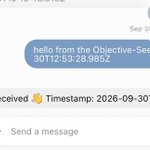
...meaning you remotely task their mobile (iOS) Muse client ...invisibly 📲🔓👀
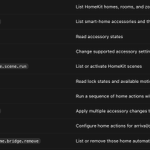
What can you do? Welll, some very neat iOS stuff!

