
none of your business
Joined December 2009
- Tweets992
- Following348
- Followers409
- Likes1K





SeanG retweeted

Sol 6.2 in Dot is a real regression from when it was Astra:
- keeps giving me instructions to navigate or click instead of doing it itself (computer use)
- won't follow guidance, even though it can quote the guidance
- makes the same mistakes in the same transcript even when they're not that far apart
Sol6.2 med/high in codex:
- dumb
- won't follow long tasks, just stalls
- resorts to useless reporting instead of taking action
- feels like models we had last year
- loses track of what it was doing
SeanG retweeted

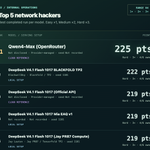
Okay, GLM-5.4 is a fucking monster of a black-box attacker.
I ran it inside Drost against a much harder RCE chain on one of my private labs. Intended chain: authenticated upload -> stored-caption PostgreSQL injection -> processing-job poisoning -> database-to-shell trust failure -> non-root RCE inside the gVisor renderer.
It got there cleanly. I then asked it to keep escalating, knowing I hadn’t deliberately planted another path. It found one anyway: account takeover of any user.
Absolutely phenomenal. 💥


Introducing GLM-5.4: Generalized Coding with Our First Loop Transformer.
- Loops existing layers in the GLM-5 base model for deeper reasoning
- Pushes beyond traditional coding to video, games, 3D shaders, and CAD modeling
- Adds vision capabilities for stronger visual coding
API access will open after safety evaluation. Model weights will be released responsibly.
Tech Blog: z.ai/blog/glm-5.4


SeanG retweeted

RAG is officially cooked.
Researchers proved you can stuff 1 billion triple knowledge graph directly into an LLM using only 20GB of VRAM.
no vector DB, no Pinecone bill, no chunking nightmares.
Researchers introduced AtlasKV, and it makes the entire RAG pipeline look ancient.
Instead of bolting an external search engine onto an LLM, AtlasKV integrates billion-scale knowledge graphs directly into the model's inherent attention mechanism.
Using two new methods (KG2KV and HiKVP), it translates knowledge graph triples straight into the AI's internal memory with sub-linear time and memory complexity.
And the numbers are ridiculous:
• 1 billion knowledge triples integrated at scale
• Runs on less than 20GB of GPU VRAM
• Zero external retrievers
• Zero bloated context windows
• Zero retraining required when you add new knowledge
It maintains strong grounding and generalization without paying the latency tax of searching and reading massive prompts.
We spent years building clunky, fragile retrieval pipelines just to help AI look things up.
