

🥑DevRel | 🧑💻Co-Founder ➝ @Studio1HQ 📤Newsletter ➝ @DailyAI_Insight ⚡️Check ➝ https://www.teapawt.net/t.co/IEMldaIjad
Jezero Crater, Mars 🇮🇳
Joined June 2019
- Tweets15.5K
- Following673
- Followers2.2K
- Likes15.7K



Mr. Ånand retweeted

Being Youngest Speaker in a Google's Event gives different level of satisfaction 🙂↕️
Spoke at @GDGRajkot DevFest Rajkot 26, on Mobile Observability & tools like Firebase Crashlytics & @measure_sh
Just a beginning, many more sessions to come 🚀
Session Count #18 till date!

If you’re attending @aiDotEngineer Sydney
Make sure to check out these sessions 👇

Super stoked to be heading to @aiDotEngineer Sydney this December to give a talk and lead a hands-on workshop! 🇦🇺
Dec 8: AI Sandboxes: Running Coding Agents Safely in Production-Grade Environments with @Docker Sandboxes
Dec 9: Beyond the Context Window: Building Shared Agent Memory
I'll also be attending @NeurIPSConf, excited for a week packed with AI research and AI Engineering!
If you're attending either event, let's connect!

3
107
Mr. Ånand retweeted

Some communities take months to find their people... Ours found 300+ in a matter of days.
To everyone who joined, shared a link, or brought a friend along: you’ve made this space feel alive from the start.
We’re grateful, and we’re committed to growing it the right way, with real conversations, real collaboration, and real builders.
Here’s to what we build next.

Mr. Ånand retweeted
/ship in Claude Code gets a finished change ready to merge.
→ Commits your work, pushes the branch and opens the PR
→ Reviews it with /code-review
→ Works on failing checks, merge conflicts and review comments, and pushes fixes
→ /steward does the same for a PR that's already open, minus the review
You keep working while it handles the PR, and you still do the merge.
code.claude.com/docs/en/ship…

Mr. Ånand retweeted
GPT-6.2 Astra built the same ice cathedral scene as Fable 5.2 for about a tenth of the cost
Fable 5.2: $81.10, 1h 56m
GPT-6.2 Astra: $8.20, 40m

GPT-6.2 Astra vs Fable 5.2 🧊
GPT-6.2 Astra is almost 10x cheaper and almost 3x faster than Fable 5.2. 🤯
But the quality is nowhere near Fable 5.2. 😬
Mixed feelings.
Same Cathedral of Ice prompt:
Fable 5.2: $81.10 · 1h 56m 52s
GPT-6.2 Astra: $8.20 · 40m 34s
For coding and debugging, GPT-6.2 Astra is going to be a game changer.
For UI design and visuals, Fable 5.2 is still far ahead.
Cheap and fast, or the best quality? 👀
Mr. Ånand retweeted
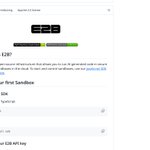
𝟵 𝗼𝗽𝗲𝗻-𝘀𝗼𝘂𝗿𝗰𝗲 𝘀𝗮𝗻𝗱𝗯𝗼𝘅𝗲𝘀 𝗳𝗼𝗿 𝘁𝗵𝗲 𝗰𝗼𝗱𝗲 𝘆𝗼𝘂𝗿 𝗔𝗜 𝗮𝗴𝗲𝗻𝘁 𝘄𝗿𝗶𝘁𝗲𝘀
→ E2B
Cloud sandboxes for AI-generated code, started and controlled from a Python or JS SDK
→ microsandbox
Local microVMs that boot in under 100 ms, and your secret keys never enter the VM
→ sandbox-runtime
Anthropic's tool built for Claude Code. Limits which files and hosts a process can reach, no container needed
→ gVisor
Google's application kernel written in Go. Its runsc runtime plugs into Docker and Kubernetes
→ Firecracker
The microVM project AWS built to speed up Lambda and Fargate
→ Kata Containers
Containers where each one gets its own lightweight VM
→ Bubblewrap
Unprivileged sandboxing used by Flatpak, and what sandbox-runtime uses on Linux
→ Apple container
Linux containers as lightweight VMs on Apple silicon Macs, needs macOS 26
→ Coder
Self-hosted workspaces for devs and their agents, defined in Terraform, shut down when idle


okay 👀

We’re sharing an update about a recent security incident involving some of 1Password’s backend systems. 𝗡𝗼 𝗰𝘂𝘀𝘁𝗼𝗺𝗲𝗿 𝘃𝗮𝘂𝗹𝘁 𝗰𝗼𝗻𝘁𝗲𝗻𝘁, 𝗶𝗻𝗰𝗹𝘂𝗱𝗶𝗻𝗴 𝘀𝗲𝗰𝗿𝗲𝘁𝘀, 𝗽𝗮𝘀𝘀𝘄𝗼𝗿𝗱𝘀 𝗮𝗻𝗱 𝗼𝘁𝗵𝗲𝗿 𝘃𝗮𝘂𝗹𝘁 𝗶𝘁𝗲𝗺𝘀, 𝗼𝗿 𝘁𝗵𝗲 𝗸𝗲𝘆𝘀 𝘁𝗵𝗮𝘁 𝗽𝗿𝗼𝘁𝗲𝗰𝘁 𝘁𝗵𝗲𝗺 𝘄𝗲𝗿𝗲 𝗮𝗰𝗰𝗲𝘀𝘀𝗲𝗱 𝗼𝗿 𝗰𝗼𝗺𝗽𝗿𝗼𝗺𝗶𝘀𝗲𝗱 𝗱𝘂𝗿𝗶𝗻𝗴 𝘁𝗵𝗶𝘀 𝗶𝗻𝗰𝗶𝗱𝗲𝗻𝘁. We have confirmed that all customer vaults and credentials remain secure. Our services continue operating normally.
Independent cybersecurity experts have been engaged to validate our containment approaches and remediation efforts.
While we took immediate steps to contain the incident, the attacker gained access to some of our backend systems and accessed a limited amount of customer account information from a subset of our customers, including names and email addresses.
No action is required by customers, their 1Password accounts remain secure. As always, please keep alert to unexpected phishing attempts.
Your vault secrets are encrypted with keys that only you hold, so we can’t access them, and they cannot be retrieved from our systems.
You can read more about the steps we’ve taken on our blog at: 1password.com/blog/update-on…

1
62
Mr. Ånand retweeted
Ever wondered what's actually inside a jet engine, a fan motor or even your electric toothbrush?
Kids wonder even more. They just can't open the thing up.
So I built Cutaway, a learning app for students and anyone curious. Type a machine's name or upload a photo, and it turns into a 3D model you can break down every internal components to learn from.
→ Slice it, turn it, make it see-through
→ Tap any part for an expert explainer
→ Watch the flow animate, then take it apart step by step
→ Read the cross-section diagram
→ Test yourself with a quiz at the end
The whole thing, from the 3D parts to the explainers, is being built by Kimi K3.1 Pro 🔥

Kimi K3.1 Pro lands on Nebius Token Factory from day 0.
Moonshot’s latest open-weight model delivers coding performance close to Opus 5.5 on Terminal-Bench 4.0.
Build the app you’ve been imagining. Turn financial reports into a working model. Bring an interactive 3D world to life.
Build with Kimi K3.1 Pro → tokenfactory.nebius.com/?mod…


Mr. Ånand retweeted
MCP servers that are actually useful
→ Chrome DevTools MCP
Useful for frontend debugging: your agent controls a live Chrome and reads network requests, console errors with source-mapped stack traces and performance traces
github.com/ChromeDevTools/ch…
→ Playwright MCP
Useful for browser automation and tests: Microsoft's server drives pages through the accessibility tree, so no vision model needed
github.com/microsoft/playwri…
→ Measure MCP
Useful for mobile: your agent queries crashes, traces, sessions and bug reports from Android, iOS, Flutter and React Native apps
measure.sh/docs/mcp
→ GitHub MCP Server
Useful for repo work: issues, PRs and Actions runs from your agent, with a hosted remote version too
github.com/github/github-mcp…
→ Firecrawl MCP
Useful for getting the web into context: search and scrape pages into clean Markdown, parse PDFs
github.com/firecrawl/firecra…
→ Cloudflare MCP servers
Useful if you deploy on Cloudflare: separate servers for docs, containers, Browser Run and more, each at its own /mcp URL
github.com/cloudflare/mcp-se…
→ Grafana MCP
Useful for debugging production: PromQL against Prometheus and LogQL against Loki, from your agent
github.com/grafana/mcp-grafa…
→ Terraform MCP
Useful for infra work: Terraform Registry lookups plus HCP Terraform workspaces and runs
github.com/hashicorp/terrafo…


Mr. Ånand retweeted
. @Recursive_SI built Flint from scratch in under four months. Then came launch day.
Together, we brought Flint to a dedicated production endpoint on Nebius Token Factory.
In its first 113 hours, it served 2.26M requests while meeting Recursive’s targets:
• Time to first token
• Decode speed
• End-to-end latency
Here is how Recursive brought Flint to a hosted API, and what the first hours of production traffic showed 👇
Mr. Ånand retweeted
you can now change T3 Code itself by asking its own agent, and the UI updates while you're using it
it's nightly-only so far. a non-dev on stable asked their agent for it anyway, and the agent cloned the source. they're running a fork now

Mr. Ånand retweeted
Uncle Bob turned his clean-code rules into an agent skill, and it has 5,800 GitHub stars since 25 Oct.
What I like is that it doesn't trust the agent's taste. ub-mode pairs the rules with tools that measure: every function under a CRAP score of 10, duplicate blocks at 0.8 similarity or higher removed, and mutation testing to find code the tests don't really check.
Rules in a prompt are easy for an agent to drift from. A number it has to get under is harder to argue with.
Catch: the gates need his companion tools (crapper, dryer, mutator) installed.
github.com/unclebob/ub-mode

Mr. Ånand retweeted

if your RAG retrieval is mid, swapping embedding models probably won't save you.
> grab a big pile early (k=2,000) to double your odds of finding the answer
> use a fast cross-encoder to cut that down to the top 20
> let an LLM rerank just those 20 (sending 100+ costs 5x more for almost zero gain)
> stop averaging multiple rerankers together. it costs way more and the clueless models just outvote the smart one
great research from @CShorten30 and the @weaviate_io team.

Mr. Ånand retweeted

Our open-source project Agent Network gives agents an identity.
If they’re directly from a user, then they get tied to the user’s identity. If they’re autonomous, they get their own identity.
This way:
Access to resources like databases, internal servers, documents, etc can all be explicitly allowed or denied PER agent, and it’s not just a free for all. Agents can reach LLM APIs through a private, secure endpoint, but only when they’re allowed to.
You can track the things specific agents are doing or accessing.
You can set budget controls for a group of users and agents, plus which models they’re allowed to call. So if Gary from engineering keeps eating your team's tokens with Fable 5.5 trying to center a div, you can cut him off.
NO MORE API KEYS just point your agent at your private endpoint (something like 𝚑𝚝𝚝𝚙𝚜://<𝚗𝚊𝚖𝚎>.𝚗𝚎𝚝𝚋𝚒𝚛𝚍.𝚊𝚒) where you would normally paste your API key in the .env, nothing to leak, nothing that people can copy across dozens of projects and never rotate and then upload to github accidentally and then you have a 50,000 dollar API bill whoops
We’re in the middle of the biggest cybersecurity crisis we have ever seen in the history of the internet, and a big part of that is agents and agent security.
So please do an audit, look at how you're handling AI API keys, and think about how you're handling agent security. Don't be the person who deletes the prod database or spends $8000 on a single run or leaks the API key.
Docs: docs.netbird.io/agent-networ…
GitHub: github.com/netbirdio/netbird…

Mr. Ånand retweeted
one alpine scene prompt, 4 models. GPT-6 Astra was done in 51 minutes, Qwen 4 Max kept going for almost 5 hours
GPT-6 Astra: 51m · $17.82
Gemini 4 Argon: 2h 01m · $11.61
Fable 5.2: 3h 02m · $209.50
Qwen 4 Max: 4h 56m · $12.03
the 5 hour run is also the one where you have to go looking for the plane
Qwen 4 Max vs Fable 5.2 vs Gemini 4 Argon vs GPT-6 Astra 🛩️
Alibaba's top model vs three American frontier models. 🇨🇳🇺🇸
Same Alpine Gold prompt:
Qwen 4 Max: $12.03 · 4h 56m 36s
Fable 5.2: $209.50 · 3h 02m 54s
Gemini 4 Argon: $11.61 · 2h 01m 35s
GPT-6 Astra: $17.82 · 51m 10s
Qwen 4 Max worked for almost 5 hours. 🤯
Longer than Fable 5.2. Almost 6x longer than GPT-6 Astra.
Now look at what it made. 😬
Almost 5 hours for that? 😱
Qwen 4 Max is nowhere near the frontier. Not even close.
Is Qwen 4 Max overhyped? 👀
Mr. Ånand retweeted
A Google DeepMind engineer gave two agents the same prompt 10 times: "Generate me an image of a dog and save it to dog.jpg".
- SDK + an up-to-date docs skill: 355.9k tokens, 126.1s on average
- the new gemini-api CLI: 50.5k tokens, 64.9s
Both picked the same image model every run. The gap was the doc reading, installing pillow and writing a one-off script around the call.
His own caveat: the sandbox didn't have pillow, so your local gap may be smaller.
If your agent writes a throwaway script every time it needs a tool, a CLI with a good --help might be the cheaper fix.
Which tool would you wrap in a CLI for your agent first?

Mr. Ånand retweeted
𝗧𝗵𝗲 𝗖𝗹𝗮𝘂𝗱𝗲 𝗖𝗼𝗱𝗲 𝘁𝗲𝗮𝗺 𝗿𝗲𝗮𝗱𝘀 𝗥𝗘𝗩𝗜𝗘𝗪.𝗺𝗱 𝗳𝗿𝗼𝗺 𝘁𝗵𝗲 𝗯𝗮𝘀𝗲 𝗯𝗿𝗮𝗻𝗰𝗵, 𝗻𝗲𝘃𝗲𝗿 𝗳𝗿𝗼𝗺 𝘁𝗵𝗲 𝗣𝗥, 𝘀𝗼 𝗮 𝗰𝗵𝗮𝗻𝗴𝗲 𝗰𝗮𝗻'𝘁 𝗲𝗱𝗶𝘁 𝘁𝗵𝗲 𝗿𝘂𝗹𝗲𝘀 𝘁𝗵𝗮𝘁 𝗷𝘂𝗱𝗴𝗲 𝗶𝘁
Claude writes and reviews about 90% of that team's code now. Addy Osmani wrote up how they check all of it.
When a check still fails after 3 rounds, Claude stops and calls a human.
There's a 39-item reliability checklist, and every item has a trigger you can spot in a diff. A typical change only fires 3 to 10 of them. One example: if message types change, check that old sessions still load with --resume.
Each commit carries a stamp saying how it got checked, and "none" counts as a stamp. A new commit gate starts in observe mode, logging what it would have blocked before anyone switches on enforce.
Flaky tests don't get retries or sleeps. If Claude can't track down why it flakes, the test is deleted and the reason written down.
claude.dev/blog/how-the-clau…

